

FIRST SIGHT · THREAT ADVISORY
Lazarus Group (DPRK)-Linked Operators Claim Exploitation of Two Critical PHP-Core RCE Vulnerabilities, Expanding Target Scope from 216 to 581 Hosts
CYFIRMA has obtained the operators’ original target list, comprising 216 internet-facing servers across 10 countries, spanning government, banking, telecommunications, infrastructure providers, and other sectors. Between 25 and 29 October, the operators reported exploiting CVE-2026-109618 and CVE-2026-109619, both reported with a CVSS v4.0 score of 9.2, and expanded their claimed target scope to 581 hosts.
Version 4 incorporates the captured 216-host target list and 24 additional suspected source IP addresses. The attribution assessment has been raised to HIGH confidence.
TLP:CLEAR
| REFERENCE CYF-FS-2026-1029-PHP2SHELL-DPRK |
ISSUED 29 OCT 2026 |
SEVERITY CRITICAL |
CVSS v4.0 9.2 |
Four advisories issued over eight days. This consolidation presents them newest-first; each is reproduced in full below under a dated banner.
| VERSION | DATE ISSUED | WHAT THIS VERSION ADDED |
| Version 4 | 29 Oct 2026 | First Sight re-issue. Operators claim the target set grew from 216 to 581 hosts; full exploitation detail, masked channel transcript and the captured 216-host list (masked). |
| Version 3 | 24 Oct 2026 | Operators reported a completed 216-host target set and 21 compromised scan-node IPs; channel update and tradecraft. |
| Version 2 | 23 Oct 2026 | 17 suspected source IPs observed performing PHP web-shell tooling and upload-progress session poisoning. |
| Version 1 | 22 Oct 2026 | Original pre-attack advisory: Lazarus-ecosystem attribution, vulnerability detail, attack path, IOCs, detection content and impact assessment. |
This threat advisory is released as TLP:CLEAR. Disclosure is not limited and it may be distributed without restriction, subject to standard copyright rules. All channel conversations are masked.
LATEST RELEASE
First Sight re-issue. Operators claim the previously identified 216-host set has been expanded to 581 hosts. Full exploitation detail, masked channel transcript and the captured 216-host list (masked in the final octet).
V4 · 29 OCT 2026 · BOTTOM LINE
PHP2Shell (v4) tracks Korean-speaking operators, assessed with high confidence as North Korean (DPRK) state-nexus operators of the Lazarus Group ecosystem with a dual financial and espionage mandate, exploiting two unauthenticated remote-code-execution flaws in PHP core. Operators have moved from reconnaissance into active exploitation and claim to have expanded the target set from 216 to 581 hosts. Assessed risk: Critical where internet-facing PHP remains unpatched. The 581 figure is an adversary statement; CYFIRMA independently captured the original 216-host list.
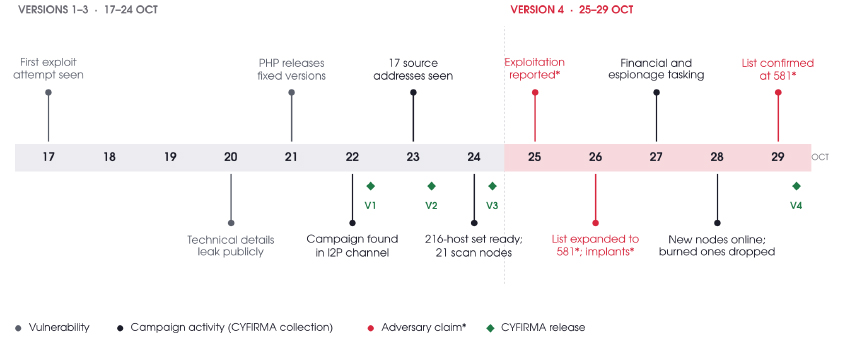
* Adversary claim, not independently verified.
TARGET SET CLAIMED
581 hosts, expanded from the original 216 (adversary claim)
ORIGINAL SET CAPTURED
216 host list obtained by CYFIRMA across 10 countries
CVSS v4.0
9.2 two unauthenticated RCE flaws in PHP core
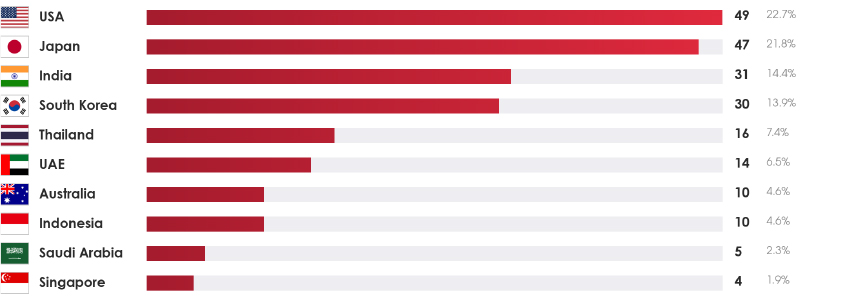
148 Asia-Pacific 68.5%
49 North America 22.7%
19 Middle East 8.8%
96 USA and Japan combined 44.4%
V4 · 29 OCT 2026 · TWO UNAUTHENTICATED PHP-CORE RCE FLAWS
Both flaws rely on PHP’s longjmp()-based “bailout”, which aborts a request mid-operation and can leave internal state half-built or pointing at freed memory. In worker-based deployments a follow-up request on the same worker inherits that stale state. Operators adapt public PoC code, rank it with a local AI model, lab-validate, then apply low-and-slow pacing with node rotation and burn discipline. Successful hits are followed by PHP web-shell deployment.
CVE-2026-109618 – RCE via out-of-memory corruption
CVE-2026-109619 – RCE via stale global state (session upload-progress)
V4 · 29 OCT 2026 · MAPPED TO MITRE ATT&CK
| # | PHASE | ANTICIPATED ACTIVITY |
| 1 | Reconnaissance | Passive banner/version fingerprinting; country- and sector-segmented list building; probing of multipart endpoints and session upload-progress; AI-assisted ranking of public PoCs. |
| 2 | Resource development | Adaptation of public exploit code; staging; lab validation. |
| 3 | Initial access | Crafted multipart/form-data POST exploiting CVE-2026-109618 or -109619 (highest success on Apache mod_php prefork). |
| 4 | Execution and persistence | Command execution as the web-worker user; PHP web-shell deployment; cron and SSH-key implants. |
| 5 | Credential access and collection | Harvesting of wp-config.php, .env, DB credentials and API keys; memory disclosure; OPcache file reads. |
| 6 | C2 and impact | Loader fetch-and-run; outbound C2; cryptomining, ransomware precursors, lateral movement and data exfiltration. |
V4 · 29 OCT 2026 · SCAN AND STAGING ADDRESSES · BLOCK / MONITOR
Suspected source addresses associated with adversarial activity (PHP web-shell tooling and upload-progress session-poisoning). Treat as BLOCK / MONITOR.
| # | SOURCE ADDRESS | HANDLING |
| 1 | 152.237.230.31 | BLOCK / MONITOR |
| 2 | 117.83.155.42 | BLOCK / MONITOR |
| 3 | 152.237.230.36 | BLOCK / MONITOR |
| 4 | 85.11.190.112 | BLOCK / MONITOR |
| 5 | 138.199.43.94 | BLOCK / MONITOR |
| 6 | 23.234.113.169 | BLOCK / MONITOR |
| 7 | 118.186.18.243 | BLOCK / MONITOR |
| 8 | 2.59.133.151 | BLOCK / MONITOR |
| 9 | 141.98.255.246 | BLOCK / MONITOR |
| 10 | 156.225.28.97 | BLOCK / MONITOR |
| 11 | 178.249.214.6 | BLOCK / MONITOR |
| 12 | 64.11.92.102 | BLOCK / MONITOR |
| 13 | 161.97.178.84 | BLOCK / MONITOR |
| 14 | 161.97.179.152 | BLOCK / MONITOR |
| 15 | 47.250.155.133 | BLOCK / MONITOR |
| 16 | 186.22.19.172 | BLOCK / MONITOR |
| 17 | 119.59.101.74 | BLOCK / MONITOR |
| 18 | 185.177.72.45 | BLOCK / MONITOR |
| 19 | 32.236.50.30 | BLOCK / MONITOR |
| 20 | 32.236.55.80 | BLOCK / MONITOR |
| 21 | 223.178.86.187 | BLOCK / MONITOR |
| 22 | 112.245.227.143 | BLOCK / MONITOR |
| 23 | 95.179.220.151 | BLOCK / MONITOR |
| 24 | 79.193.197.168 | BLOCK / MONITOR |
V4 · 29 OCT 2026 · 25 TO 29 OCTOBER · CHATS MASKED
Masked channel screenshots
Screenshots of the 25 to 29 October 2026 exchange, reproduced with operator handles, channel identifiers, the node/IP list and most message content masked. Post numbers and timestamps are retained; the masked transcript below carries the readable content. Where post numbers or timestamps shown in the screenshots differ from the transcript, the transcript reflects CYFIRMA’s original capture.
Channel thread (forum view)
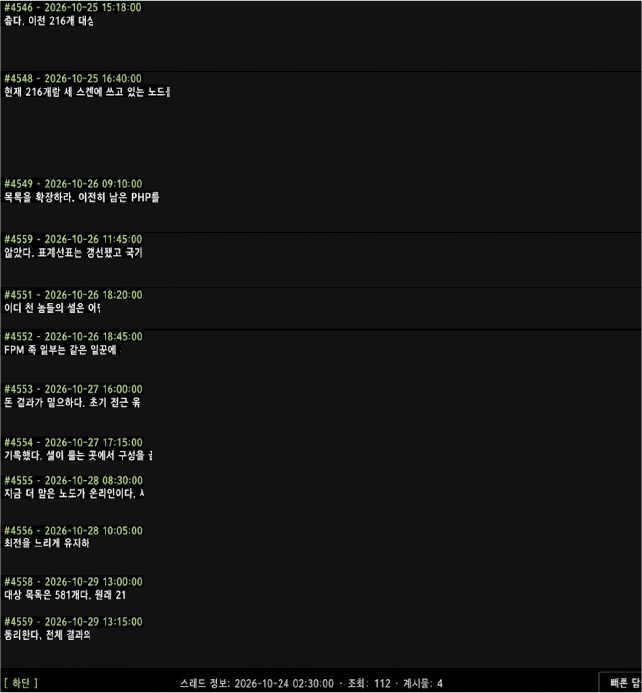
FIGURE 4.1 Closed channel thread, 25 to 29 October 2026. Handles, channel identifiers, node/IP list and most message content masked.
Direct message view
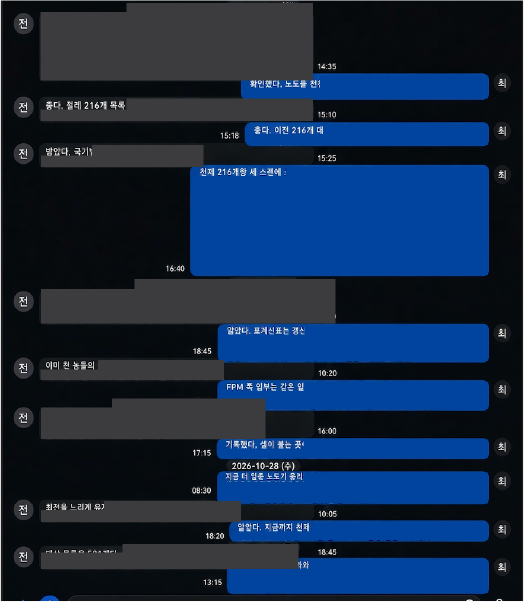
FIGURE 4.2 Direct-message view of the same exchange, 25 to 29 October 2026. Masked as in Figure 4.1.
Masked transcript
Masked English translation of the closed-channel exchange, 25–29 October 2026. The two participants are shown as Operator 1 and Operator 2; the single node/IP list posted in the channel is withheld.
Operator 1 25 Oct · 14:20
First pass results on the 216 are in. The multipart OOM path is landing cleanly on the mod_php prefork boxes; session-upload progress on the FPM ones is slower but usable. Web shells are opening.
Operator 2 25 Oct · 14:35
Confirmed. I am rotating the nodes slowly and dropped two that started getting filtered. I have updated the sheet.
Operator 1 25 Oct · 15:10
Good. Can you send me the original 216 list again? I want to cross-check the ones we already touched.
Operator 2 25 Oct · 15:18
Sure. Sharing the previous 216 target list now (attached file).
Operator 1 25 Oct · 15:25
Got it. Looking at the country split, plenty of infrastructure providers, telco, government and bank ranges are still in there.
Operator 2 25 Oct · 16:40
The nodes I am currently using for the 216 and for the new scanning are: (node/IP list withheld). Rotating through them so nothing stays hot for too long.
Operator 1 26 Oct · 09:10
Expand the list. Pull in the next tier that still banners old PHP. We have now 581. Government and banks first, then logistics and trading platforms.
Operator 2 26 Oct · 11:45
Understood. Spreadsheet is updated. I am using the public PoC ranking from the local model and lab-validated both paths again. Same node list covers the old 216 and the new additions.
Operator 1 26 Oct · 18:20
How are the shells looking on the ones we already hit? Any that need a second pass with the session-poisoning sequence?
Operator 2 26 Oct · 18:45
A few on FPM needed the follow-up request on the same worker. OOM path was cleaner on prefork. Most of the high-confidence 216 already have something planted.
Operator 1 27 Oct · 16:00
We need financial outcome and anything that leads to financial, trading or wallet material. Espionage on the government ones is the parallel track. Once we have a shell, go lateral: config files, .env, DB creds.
Operator 2 27 Oct · 17:15
Noted. I am pulling configs where the shell sticks. Some of the South Korean, Japanese, USA, Thailand, Indonesia and India ranges look promising.
Operator 2 28 Oct · 08:30
More nodes online. Session poisoning plus a follow-up on the same worker is the reliable sequence for 109619; 109618 is cleaner on prefork. Burned addresses are out.
Operator 1 28 Oct · 10:05
Keep the rotation slow. If any start attracting attention, drop them immediately.
Operator 2 28 Oct · 10:20
Understood. Current batch is holding. I will mark anything that shows filtering and pull it.
Operator 1 29 Oct · 13:00
Target list is at 581. Original 216 still the highest confidence. Continue the paced checks and the shells.
Operator 2 29 Oct · 13:15
Agreed. Full results and the refined shortlist are being updated in the sheet. The original 216 set is still the priority.
V4 · 29 OCT 2026 · PATCH · BLOCK · PRESERVE · HUNT · ISOLATE
V4 · 29 OCT 2026 · ORIGINAL 216-HOST LIST · ADDRESSES MASKED
The original 216-host target list, by country. Each address is masked in its final octet so organisations can check their own /24 ranges without re-identifying an individual host.
| COUNTRY | HOST COUNT |
| South Korea | 30 |
| Japan | 47 |
| Thailand | 16 |
| Indonesia | 10 |
| Saudi Arabia | 5 |
| Australia | 10 |
| USA | 49 |
| Singapore | 4 |
| UAE | 14 |
| India | 31 |
| Total | 216 |
South Korea (30 hosts)
| 1.226.82.xxx | 1.234.2.xxx | 1.234.20.xxx | 1.234.80.xxx |
| 1.234.82.xxx | 112.144.165.xxx | 116.42.122.xxx | 118.219.233.xxx |
| 118.42.13.xxx | 119.206.205.xxx | 121.131.194.xxx | 121.160.153.xxx |
| 14.6.17.xxx | 175.118.124.xxx | 175.126.111.xxx | 175.126.176.xxx |
| 175.198.162.xxx | 175.215.123.xxx | 183.97.195.xxx | 211.110.1.xxx |
| 211.110.226.xxx | 211.206.125.xxx | 211.43.15.xxx | 211.49.99.xxx |
| 218.38.12.xxx | 218.48.72.xxx | 219.240.39.xxx | 221.153.188.xxx |
| 222.239.78.xxx | 59.5.26.xxx |
Japan (47 hosts)
| 118.27.111.xxx | 202.238.241.xxx | 125.30.84.xxx | 150.31.182.xxx |
| 202.238.242.xxx | 126.59.129.xxx | 218.183.52.xxx | 60.67.104.xxx |
| 202.228.201.xxx | 202.228.201.xxx | 210.140.191.xxx | 210.140.191.xxx |
| 210.152.10.xxx | 210.152.120.xxx | 153.150.33.xxx | 153.121.45.xxx |
| 153.121.52.xxx | 153.121.77.xxx | 153.121.77.xxx | 160.16.145.xxx |
| 163.43.209.xxx | 163.43.225.xxx | 163.43.29.xxx | 111.87.226.xxx |
| 113.36.110.xxx | 113.37.207.xxx | 121.111.155.xxx | 122.219.47.xxx |
| 125.50.174.xxx | 125.50.174.xxx | 153.145.177.xxx | 153.150.58.xxx |
| 153.156.0.xxx | 153.160.56.xxx | 175.134.8.xxx | 180.42.71.xxx |
| 203.180.251.xxx | 210.160.212.xxx | 61.117.144.xxx | 110.67.136.xxx |
| 122.131.18.xxx | 124.219.164.xxx | 146.160.242.xxx | 182.171.73.xxx |
| 202.223.49.xxx | 223.135.153.xxx | 58.70.228.xxx |
Thailand (16 hosts)
| 110.164.157.xxx | 110.164.166.xxx | 110.170.129.xxx | 110.170.129.xxx |
| 110.170.129.xxx | 110.170.78.xxx | 119.46.118.xxx | 119.46.201.xxx |
| 119.76.191.xxx | 125.26.107.xxx | 125.27.182.xxx | 183.88.214.xxx |
| 183.88.218.xxx | 183.88.218.xxx | 183.89.208.xxx | 61.91.110.xxx |
Indonesia (10 hosts)
| 180.250.72.xxx | 182.10.106.xxx | 182.9.237.xxx | 36.66.7.xxx |
| 36.88.234.xxx | 36.88.49.xxx | 36.94.134.xxx | 36.94.2.xxx |
| 36.94.72.xxx | 36.95.119.xxx |
Saudi Arabia (5 hosts)
| 178.81.215.xxx | 37.216.224.xxx | 37.224.13.xxx | 37.76.239.xxx |
| 46.251.150.xxx |
Australia (10 hosts)
| 101.174.30.xxx | 110.175.187.xxx | 110.175.195.xxx | 120.151.47.xxx |
| 124.187.52.xxx | 14.203.95.xxx | 203.221.43.xxx | 203.49.157.xxx |
| 49.176.218.xxx | 61.68.82.xxx |
USA (49 hosts)
| 100.11.100.xxx | 100.38.170.xxx | 104.15.231.xxx | 104.179.196.xxx |
| 104.63.236.xxx | 108.236.242.xxx | 108.73.139.xxx | 108.85.100.xxx |
| 12.203.23.xxx | 12.6.196.xxx | 173.12.125.xxx | 173.59.31.xxx |
| 174.50.103.xxx | 174.59.19.xxx | 209.64.57.xxx | 24.4.18.xxx |
| 24.5.195.xxx | 45.17.108.xxx | 45.29.56.xxx | 66.73.190.xxx |
| 67.187.209.xxx | 67.190.141.xxx | 68.94.187.xxx | 69.213.238.xxx |
| 71.105.11.xxx | 71.183.10.xxx | 71.185.221.xxx | 71.191.40.xxx |
| 71.192.1.xxx | 71.200.14.xxx | 72.69.211.xxx | 73.135.29.xxx |
| 73.169.193.xxx | 73.199.122.xxx | 73.213.218.xxx | 73.38.11.xxx |
| 73.98.132.xxx | 74.94.106.xxx | 75.50.42.xxx | 75.52.96.xxx |
| 75.66.63.xxx | 96.80.59.xxx | 96.95.43.xxx | 98.114.8.xxx |
| 98.115.153.xxx | 99.147.222.xxx | 99.149.104.xxx | 99.32.85.xxx |
| 99.65.57.xxx |
Singapore (4 hosts)
| 119.234.136.xxx | 203.126.35.xxx | 203.127.45.xxx | 58.185.17.xxx |
UAE (14 hosts)
| 151.253.188.xxx | 195.200.17.xxx | 195.229.199.xxx | 195.229.199.xxx |
| 195.26.226.xxx | 46.151.25.xxx | 5.195.25.xxx | 87.199.198.xxx |
| 87.199.207.xxx | 89.110.112.xxx | 89.124.65.xxx | 89.124.97.xxx |
| 94.200.121.xxx | 94.200.29.xxx |
India (31 hosts)
| 110.225.252.xxx | 115.240.52.xxx | 115.240.65.xxx | 115.241.97.xxx |
| 115.243.103.xxx | 115.245.167.xxx | 115.245.222.xxx | 115.246.89.xxx |
| 117.216.139.xxx | 117.239.177.xxx | 117.239.231.xxx | 117.239.31.xxx |
| 117.240.136.xxx | 117.248.201.xxx | 117.250.69.xxx | 117.254.196.xxx |
| 122.166.179.xxx | 122.166.253.xxx | 122.176.109.xxx | 122.176.133.xxx |
| 122.176.21.xxx | 122.176.46.xxx | 122.176.46.xxx | 122.179.155.xxx |
| 47.247.242.xxx | 47.29.139.xxx | 59.92.113.xxx | 59.92.53.xxx |
| 59.92.53.xxx | 59.93.129.xxx | 59.97.238.xxx |
SUPERSEDED BY A LATER VERSION
Operators reported a completed 216-host target set and 21 compromised scan-node IPs, distinct from the earlier staging addresses. Channel update and scanning tradecraft.
V3 · 24 OCT 2026 · CHANNEL ACTIVITY
BOTTOM LINE
On 24 October 2026 (~01:47–02:22) the operators reported completion of an initial target set: 216 hosts still unpatched or only partially mitigated for PHP2Shell. They stated that active weakness checks run from a separate set of 21 compromised nodes, with low-volume, paced scanning and burn discipline. Roughly a third of the set had already been touched. Block or closely monitor the 21 scan-node addresses, in addition to the 17 listed in Version 2.
V3 · 24 OCT 2026 · 216-HOST SET · NODE ROTATION
| ATTRIBUTE | DETAIL |
| Hosts identified | 216 hosts that still look unpatched or partially exposed to PHP2Shell; first batch reported ready ~01:47 on 24 Oct 2026. |
| Geographic coverage | Stated priorities: USA, Japan, Thailand, Indonesia, South Korea, Australia, Taiwan, India, Singapore, UAE, Saudi Arabia and the EU. |
| Sector mix | Government, financial institutions, logistics, airports/aviation, manufacturing and online transaction platforms. |
| Selection criteria | Hosts bannering the fixed versions, or behind heavy filtering, were dropped. The remaining 216 still advertise older PHP. |
| Scan progress | About a third of the 216 (~72) had been touched by ~02:10; first full pass and a refined shortlist due later on 24 Oct. |
| Next step | From the highest-confidence shortlist, the operators will decide which public approaches are worth adapting. |
Scanning tradecraft
| TRADECRAFT | OBSERVATION |
| Infrastructure separation | New scan nodes are separate from the earlier preparation addresses (operator-confirmed ~02:04). |
| Low-and-slow pacing | Volume kept low and paced so not every target is lit up at once; no broad noisy sweeps. |
| Node rotation | Operators rotate through the node list, logging which addresses respond with the expected indicators. |
| Burn discipline | Nodes showing filtering or rate-limiting are marked, pulled from the active set and not reused. |
V3 · 24 OCT 2026 · 21 ADDRESSES · BLOCK / MONITOR
21 suspected source addresses the operators named as the nodes running their PHP weakness checks, observed performing PHP web-shell tooling and upload-progress session poisoning. Described as compromised, so some may belong to victim organisations; block at the perimeter and hunt for prior contact. These supplement the 17 in Version 2.
| # | SOURCE ADDRESS | ACTIVITY | HANDLING |
| 1 | 142.93.155.162 | Web-shell tooling / session poisoning | BLOCK / MONITOR |
| 2 | 134.122.38.73 | Web-shell tooling / session poisoning | BLOCK / MONITOR |
| 3 | 5.255.114.109 | Web-shell tooling / session poisoning | BLOCK / MONITOR |
| 4 | 165.22.232.198 | Web-shell tooling / session poisoning | BLOCK / MONITOR |
| 5 | 159.223.59.200 | Web-shell tooling / session poisoning | BLOCK / MONITOR |
| 6 | 192.177.131.13 | Web-shell tooling / session poisoning | BLOCK / MONITOR |
| 7 | 94.154.42.149 | Web-shell tooling / session poisoning | BLOCK / MONITOR |
| 8 | 173.249.16.178 | Web-shell tooling / session poisoning | BLOCK / MONITOR |
| 9 | 170.64.224.137 | Web-shell tooling / session poisoning | BLOCK / MONITOR |
| 10 | 170.64.226.40 | Web-shell tooling / session poisoning | BLOCK / MONITOR |
| 11 | 45.148.10.80 | Web-shell tooling / session poisoning | BLOCK / MONITOR |
| 12 | 152.237.230.29 | Web-shell tooling / session poisoning | BLOCK / MONITOR |
| 13 | 146.70.194.93 | Web-shell tooling / session poisoning | BLOCK / MONITOR |
| 14 | 185.157.109.60 | Web-shell tooling / session poisoning | BLOCK / MONITOR |
| 15 | 143.246.213.138 | Web-shell tooling / session poisoning | BLOCK / MONITOR |
| 16 | 144.91.70.51 | Web-shell tooling / session poisoning | BLOCK / MONITOR |
| 17 | 217.60.196.124 | Web-shell tooling / session poisoning | BLOCK / MONITOR |
| 18 | 151.253.243.219 | Web-shell tooling / session poisoning | BLOCK / MONITOR |
| 19 | 23.106.131.214 | Web-shell tooling / session poisoning | BLOCK / MONITOR |
| 20 | 173.249.16.192 | Web-shell tooling / session poisoning | BLOCK / MONITOR |
| 21 | 45.148.10.201 | Web-shell tooling / session poisoning | BLOCK / MONITOR |
V3 · 24 OCT 2026 · 24 OCTOBER · CHATS MASKED
Masked channel screenshots
Screenshots of the closed I2P forum thread and the associated direct-message exchange, 24 October 2026, original Korean text. Operator handles, the channel name, the I2P destination, all IP addresses and most message content are masked; post numbers and timestamps are retained. The scan-node addresses named in the exchange are listed in Section 02. Where post numbers or timestamps shown in the screenshots differ from the transcript, the transcript reflects CYFIRMA’s original capture.
Channel thread (forum view)
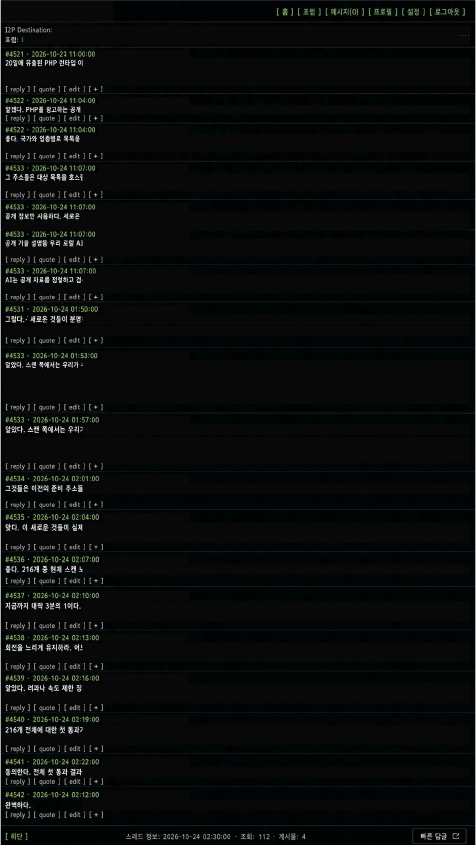
FIGURE 3.1 Closed I2P forum thread, 24 October 2026. Handles, channel name, I2P destination, IP addresses and most message content masked.
Direct message view
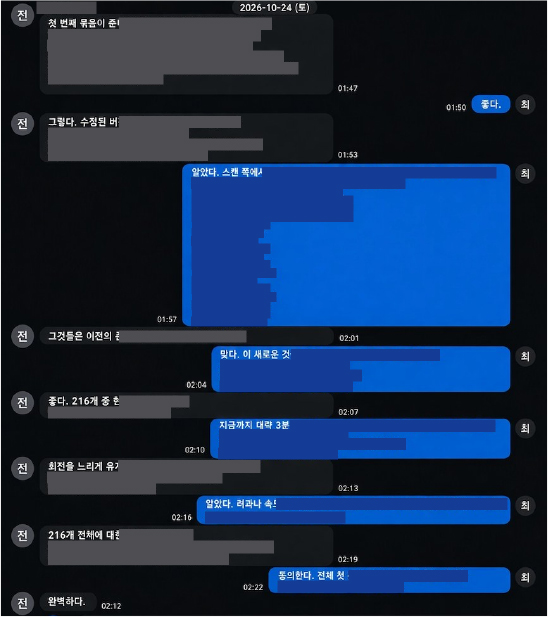
FIGURE 3.2 Direct-message exchange between Operator 1 and Operator 2, 24 October 2026, ~01:47 to 02:22. Masked as in Figure 3.1.
Masked transcript
Masked English translation of the closed-channel exchange, 24 October 2026 (~01:47–02:22). The participants are shown as Operator 1 and Operator 2; the scan-node list named in the channel is withheld (see Section 02).
Operator 1 ~01:47
The first batch is ready. We have 216 hosts that still look unpatched or partially exposed across the priority regions. Mix of government, financial, logistics, airports, manufacturing and online transaction platforms. The spreadsheet is at the collection point.
Operator 2 ~01:50
Good.
Operator 1 ~01:53
Yes. Anything bannered the fixed versions or sat behind heavy filtering was dropped. Remaining 216 are the ones that still advertise older PHP. Sector and country tags are already in the sheet.
Operator 2 ~01:57
Understood. On the scanning side, I have been using the additional compromised infrastructure we picked up. These are the nodes currently running the PHP weakness checks: (scan-node list withheld; see Section 02).
Operator 1 ~02:01
Those are separate from the earlier staging addresses, correct?
Operator 2 ~02:04
Correct. These new ones are the ones actually running the checks. Volume is still low and paced so we do not light everything up at once. No broad noisy sweeps.
Operator 1 ~02:07
Good. How many of the 216 have already been touched by the current scan nodes?
Operator 2 ~02:10
Roughly a third so far. I am rotating through the node list and logging which addresses respond with the expected indicators. Results are going back into the same spreadsheet under a separate column.
Operator 1 ~02:13
Keep the rotation slow. If any of those nodes start getting blocked or attract attention, drop them immediately and move to the next. Do not reuse burned addresses.
Operator 2 ~02:16
Understood. I will mark any node that shows signs of filtering or rate-limiting and pull it from the active set. So far the current batch is holding.
Operator 1 ~02:19
Once the first pass across all 216 is finished, send the shortlist of the highest-confidence ones. We will decide from there which public approaches are worth adapting.
Operator 2 ~02:22
Agreed. I should have the full first-pass results and the refined shortlist ready later today.
V3 · 24 OCT 2026 · BLOCK · HUNT · PATCH
| PRIORITY | ACTION |
| P1 · NOW | Block or closely monitor traffic from the 21 addresses in Section 02 at the perimeter and host level, in addition to the 17 published in Version 2. |
| P1 · NOW | Hunt web/WAF/proxy logs for prior contact with the listed addresses, and review web roots for unexpected PHP files. Review extended time windows, as the scanning is low-volume and paced. |
| P2 · TODAY | Prioritise patching of internet-facing hosts that still advertise older PHP; the operators removed hosts bannering the fixed versions from their target set. |
| CONTINUING ACTIONS The recommendations in Versions 1 and 2 remain in force — patch to 8.5.12+ / 8.4.27+ / 8.3.36+ / 8.2.35+, restart all workers, isolate unpatchable PHP, hunt from 17 October 2026, and block the 17 addresses in Version 2. This version adds the 21 addresses above. |
|
SUPERSEDED BY A LATER VERSION
17 suspected source IPs observed in the preceding 8 hours performing PHP web-shell tooling and upload-progress session poisoning. Treat as additional hunting and blocking indicators.
V2 · 23 OCT 2026 · NEW SOURCE INFRASTRUCTURE
BOTTOM LINE
CYFIRMA identified 17 suspected source IP addresses that, within the preceding 8 hours, were performing PHP web-shell tooling and upload-progress session poisoning. The activity is consistent with the exploitation and post-exploitation behaviour anticipated in Version 1. Block or closely monitor the 17 addresses at the perimeter and host level; the Version 1 actions remain in force.
V2 · 23 OCT 2026 · 17 ADDRESSES · BLOCK / MONITOR
| TECHNIQUE | DESCRIPTION |
| PHP web shell tooling | Deployment or use of PHP-based web shells for remote code execution, persistence and post-exploitation on compromised web servers. |
| Upload progress session poisoning | Exploitation of PHP’s session upload-progress feature via crafted multipart/form-data to poison session data, enabling RCE or session hijacking under certain configurations. |
17 suspected source addresses identified in the last 8 hours. Several may be shared or anonymising infrastructure; block at the perimeter and hunt in logs for prior contact.
| # | SOURCE ADDRESS | ACTIVITY | HANDLING |
| 1 | 102.207.250.188 | Web-shell tooling / session poisoning | BLOCK / MONITOR |
| 2 | 94.154.43.185 | Web-shell tooling / session poisoning | BLOCK / MONITOR |
| 3 | 75.119.143.189 | Web-shell tooling / session poisoning | BLOCK / MONITOR |
| 4 | 117.203.73.63 | Web-shell tooling / session poisoning | BLOCK / MONITOR |
| 5 | 146.190.107.103 | Web-shell tooling / session poisoning | BLOCK / MONITOR |
| 6 | 95.217.164.124 | Web-shell tooling / session poisoning | BLOCK / MONITOR |
| 7 | 124.122.142.142 | Web-shell tooling / session poisoning | BLOCK / MONITOR |
| 8 | 188.80.228.122 | Web-shell tooling / session poisoning | BLOCK / MONITOR |
| 9 | 134.209.181.133 | Web-shell tooling / session poisoning | BLOCK / MONITOR |
| 10 | 134.209.252.157 | Web-shell tooling / session poisoning | BLOCK / MONITOR |
| 11 | 119.63.72.54 | Web-shell tooling / session poisoning | BLOCK / MONITOR |
| 12 | 138.68.161.170 | Web-shell tooling / session poisoning | BLOCK / MONITOR |
| 13 | 95.216.5.90 | Web-shell tooling / session poisoning | BLOCK / MONITOR |
| 14 | 103.21.161.105 | Web-shell tooling / session poisoning | BLOCK / MONITOR |
| 15 | 115.96.27.126 | Web-shell tooling / session poisoning | BLOCK / MONITOR |
| 16 | 185.207.232.121 | Web-shell tooling / session poisoning | BLOCK / MONITOR |
| 17 | 78.47.85.99 | Web-shell tooling / session poisoning | BLOCK / MONITOR |
V2 · 23 OCT 2026 · BLOCK
| PRIORITY | ACTION |
| P1 · NOW | Block or closely monitor traffic from the 17 listed addresses at the perimeter and host level. |
| CONTINUING ACTIONS The Version 1 recommendations (22 October 2026) remain in force — patch to 8.5.12+ / 8.4.27+ / 8.3.36+ / 8.2.35+, restart all workers, isolate unpatchable internet-facing PHP, and hunt from 17 October 2026. This update adds the IP-based control above. |
|
SUPERSEDED BY A LATER VERSION
Original pre-attack advisory. Lazarus-ecosystem attribution, PHP2Shell vulnerability detail, expected attack path, indicators of compromise, detection content and impact assessment.
V1 · 22 OCT 2026 · PRE-ATTACK NOTIFICATION
BOTTOM LINE
CYFIRMA assesses with HIGH confidence that a Korean-speaking operator, suspected to be a North Korean state-nexus actor affiliated with the Lazarus Group ecosystem (MODERATE confidence), is actively staging a global offensive campaign against internet-facing PHP vulnerable to PHP2Shell (CVE-2026-109618 and CVE-2026-109619). Treat every internet-facing PHP host below 8.5.12 / 8.4.27 / 8.3.36 / 8.2.35 as exposed. Patch immediately and restart all workers; hunt back to 17 October 2026 (earliest known exploitation).
The campaign was first surfaced through CYFIRMA closed-source collection on 22 October 2026 (~11:00 JST), when actors coordinating via a closed I2P channel discussed global reconnaissance and attack planning against all web-accessible assets carrying the two PHP flaws. Tasking explicitly prioritised national government agencies, banks and financial institutions, manufacturing, logistics, shipping, airports and aviation, online transaction platforms, trading companies and construction firms across the United States, Japan, Thailand, Indonesia, Korea, Australia, Taiwan, India, Singapore, UAE, Saudi Arabia and the European Union. Fifteen pieces of campaign infrastructure were shared in-channel for staging and launch. No launch date was stated; the first filtered target list was expected by 25 October 2026.
ASSESSED ACTOR
DPRK state-nexus operator; suspected Lazarus (APT38 / Hidden Cobra / ZINC) affiliation
IMMINENCE INDEX
78/100 active scanning and early in-the-wild exploitation; launch readiness discussed
CVSS v4.0
9.2 CVE-2026-109618 and CVE-2026-109619 — unauthenticated RCE in PHP core
IMMINENCE INDEX: 78 / 100
Targets identified (all internet-facing PHP); public exploit tooling circulating; active scanning and early in-the-wild exploitation observed globally; DPRK channel discussing launch readiness and sector prioritisation. The absence of confirmed mass successful compromise attributable to this specific actor keeps the index below 90.
V1 · 22 OCT 2026 · ASSESSMENTS AND CONFIDENCE
V1 · 22 OCT 2026 · DESIGNATION · CLUSTERS · ATTRIBUTION
| ATTRIBUTE | DETAIL |
| Designation | Lazarus Group ecosystem; Korean-speaking operator, small team. |
| Attribution | State-nexus · North Korea (DPRK). Reconnaissance General Bureau (RGB) / Bureau 121 and subordinate offensive cyber units. |
| Known aliases | APT38, Hidden Cobra, ZINC, Diamond Sleet. Related clusters: BlueNoroff, Andariel, Kimsuky. |
| Attribution confidence | MODERATE — rests on behavioural and linguistic indicators rather than definitive infrastructure or malware-family overlap. |
| Operational style | Disciplined, access-focused. Harvests public PoCs, ranks them with AI, lab-validates before use, avoids noisy scanning. |
The Lazarus ecosystem at a glance
| CLUSTER (ALIASES) | PRIMARY MANDATE | RELEVANCE TO PHP2SHELL |
| Lazarus Group (APT38, Hidden Cobra, ZINC, Diamond Sleet) | Financial theft at scale; destructive operations; espionage | Documented use of compromised web servers and web shells for C2 and staging; opportunistic mass-RCE weaponisation. |
| APT38 / BlueNoroff (Sapphire Sleet, Stardust Chollima) | Financial institutions, SWIFT networks, cryptocurrency and DeFi theft | BFSI and crypto/trading platforms are top-tier targets in the intercepted tasking. |
| Andariel (Silent Chollima, Onyx Sleet, DarkSeoul) | Espionage against defence, aerospace, healthcare; opportunistic ransomware | Watering-hole and web-server compromise tradecraft; ransomware precursor risk. |
| Kimsuky (Velvet Chollima, Emerald Sleet, APT43) | Strategic intelligence collection; spear-phishing; credential theft | May consume web-server footholds for collection and onward credential harvesting. |
Attribution assessment
SUPPORTS DPRK / LAZARUS
UNCERTAINTIES
Net assessment: MODERATE confidence in Lazarus-ecosystem affiliation. Confidence would rise on infrastructure or tooling overlap with a named cluster, a launch statement, or confirmed compromises; and fall if collection indicates an unaffiliated Korean-speaking criminal group.
V1 · 22 OCT 2026 · COLLECTION SOURCE · TARGET TIERS
| ATTRIBUTE | DETAIL |
| Platform | I2P (Invisible Internet Project), closed channel. |
| Channel | 2026년 6월 민준 (June 2026 Minjun). |
| Observed handles | Two operators, active since March 2026 (handles withheld; anonymised as Operator 1 and Operator 2 in the masked transcript). |
| Activity | Closed sharing of target lists, exploit-hosting infrastructure, tasking and prioritisation; discussion of global reconnaissance against web-accessible PHP carrying the two CVEs. |
Target verification — prioritised targeting from intercepted tasking
| PRIORITY | SECTORS | GEOGRAPHIES |
| Tier 1 | National government agencies; banks and financial institutions | US, Japan, Korea, UAE, EU, Thailand, Indonesia, Saudi Arabia |
| Tier 2 | Manufacturing; logistics, shipping and ports; airports and aviation | Thailand, Indonesia, Australia, Taiwan, India, Japan, UAE |
| Tier 3 | Online transaction / trading platforms; trading companies; construction | Singapore, UAE, Saudi Arabia, and broader EU |
Assets in scope: all internet-facing PHP runtimes — PHP-FPM, Apache mod_php, php-cgi, FrankenPHP, LiteSpeed (LSAPI), and embedded PHP in appliances and hosting control panels (cPanel, Plesk). Highest risk: unpatched Apache mod_php. No specific hosts were named in-channel at this stage.
Masked channel screenshots
Screenshots of the closed I2P forum thread and the associated direct-message exchange, 22 October 2026, ~11:00 to 11:31 JST. Operator handles, channel identifiers, staging addresses and most message content are masked. Where post numbers or timestamps shown in the screenshots differ from the transcript, the transcript reflects CYFIRMA’s original capture.
Channel thread (forum view)
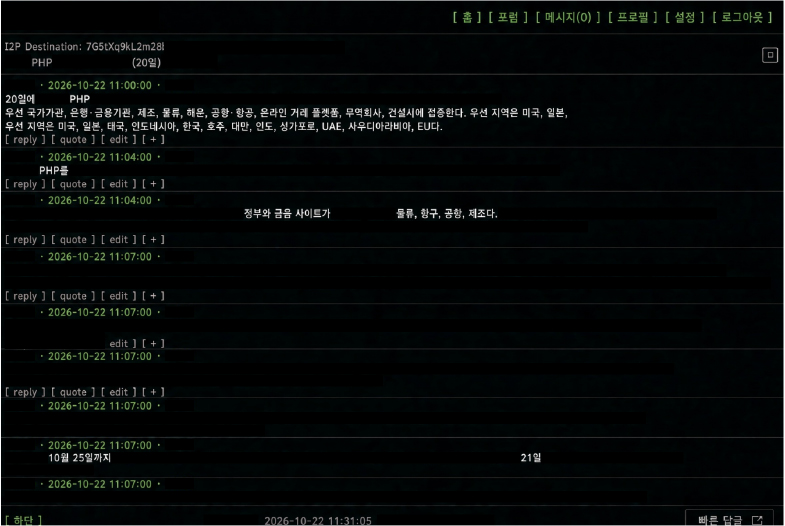
FIGURE 1.1 I2P forum thread on the PHP runtime issue leak (20 October) and reconnaissance plan, 22 October 2026, ~11:00 to 11:31 JST.
Direct message view
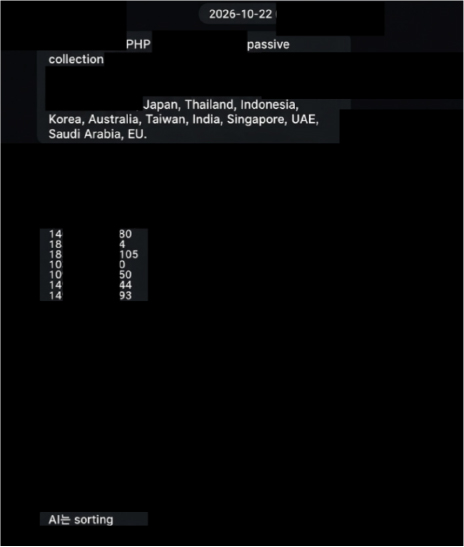
FIGURE 1.2 Direct-message exchange between Operator 1 and Operator 2, 22 October 2026: target countries, staging addresses (masked) and AI-assisted sorting.
Masked transcript
Masked English translation of the closed-channel exchange, 22 October 2026 (~11:00–11:31 JST). The participants are shown as Operator 1 and Operator 2; staging and collection addresses referenced in the channel are withheld.
Operator 1 ~11:00
We need to move on the PHP runtime issues that leaked on the 20th. Patches are out but a lot of internet-facing systems will still be slow. Focus first on national agencies, banks and financial institutions, manufacturing, logistics, shipping, airports and aviation, online transaction platforms, trading companies and construction firms. Priority regions: USA, Japan, Thailand, Indonesia, Korea, Australia, Taiwan, India, Singapore, UAE, Saudi Arabia and the EU.
Operator 2 ~11:04
Understood. I will start passive collection of public banners and version strings for anything advertising PHP. We stay off anything that looks already heavily monitored.
Operator 1 ~11:07
Good. Separate the list by country and sector so we can prioritise government and financial sites first, then logistics, ports, airports and manufacturing. Use the staging and collection points we already shared.
Operator 2 ~11:12
I will treat those addresses as intermediaries for hosting the target lists. I will not perform active scans. I am also pulling the public GitHub notes and researcher write-ups to see which approaches look more reliable before we invest time.
Operator 1 ~11:15
Use public information only. Do not invent new primitives. Check the differences between the out-of-memory path and the stale-state path. We want something that works against common Apache and FPM setups without needing local access.
Operator 2 ~11:19
I will feed the public technical descriptions into our local AI for reconnaissance and to rank which public repositories claim the right mechanism versus the incomplete or conditional ones. Then I will manually verify the promising ones in a controlled lab before any wider use.
Operator 1 ~11:23
AI is only for speed on sorting and validation of open material. Final decisions stay with us. Once we have a shortlist of likely-vulnerable hosts we expand carefully. No broad noisy scanning that lights up every sensor at once.
Operator 2 ~11:27
Agreed. I will produce the first country-and-sector target spreadsheet by 25 October. Collection points stay on the infrastructure we already discussed. I will also flag any hosts that appear to have already applied the 21 October patches.
Operator 1 ~11:31
Perfect. Keep everything inside the channel. Next update when the first filtered list is ready and when we have a clearer view of which public approaches are worth adapting.
V1 · 22 OCT 2026 · CVE DETAIL · EXPOSURE · VERSIONS
Both vulnerabilities share one root cause: PHP’s longjmp()-based “bailout” aborts a request mid-operation and leaves internal state half-built or pointing at freed memory. In worker-based deployments a subsequent request handled by the same worker inherits that stale state.
CVE-2026-109618 — RCE via out-of-memory corruption
CVE-2026-109619 — RCE via stale global state
Exposure by deployment (SAPI)
| SAPI | CVE-2026-109618 (OOM) | CVE-2026-109619 (STALE STATE) |
| Apache mod_php | Confirmed, full unauth RCE, default limits, prefork | Confirmed |
| PHP-FPM | Susceptible per source analysis; no full exploit shown | Upload-progress path validated |
| FrankenPHP | Likely (similar to mod_php) | Not immune; no default consumer found |
| LiteSpeed (LSAPI) | Likely, unvalidated | Conditional |
| php-cgi | At risk per PHP | At risk per PHP |
Affected and fixed versions
| BRANCH | STATUS | FIX |
| 8.5 | Supported | 8.5.12 |
| 8.4 | Supported | 8.4.27 |
| 8.3 | Security-only | 8.3.36 |
| 8.2 | Security-only | 8.2.35 |
| 8.1, 8.0, 7.4 | End of life | Minimal source backports only; distribution / LTS vendor builds (e.g. cPanel EasyApache 4, CloudLinux alt-php, TuxCare, Plesk); confirm branch coverage with the vendor |
| 7.3 and older, 5.4+ | End of life | No fix; migrate or isolate |
| EXPLOITABILITY NOTE Triggering the bug is easy; reliable code execution is not. The attacker must land a follow-up request on the same worker and shape heap data into the freed space, otherwise the worker crashes or responds normally. VulnCheck (22 October, 19:00 ET) reports RCE on x86-64 with ASLR enabled against PHP 8.4.10 to 8.4.26; its memory leak works on ARM64 but RCE is not yet functional there; at least one public PoC bypassed ASLR on x86-64 for a single version (8.4.26). Non-RCE outcomes already demonstrated: worker crash (DoS), arbitrary file read via OPcache, and ~67 KB process-memory disclosure. |
||
V1 · 22 OCT 2026 · MAPPED TO MITRE ATT&CK
| PHASE | ANTICIPATED ACTIVITY | ATT&CK |
| Reconnaissance | Passive banner/version fingerprinting; country- and sector-segmented list building; probing of multipart endpoints and session upload-progress; AI-assisted ranking of public PoCs. | T1595.002 · T1590.005 |
| Resource Development | Acquisition/adaptation of public PHP2Shell exploit code; staging on campaign infrastructure; lab validation. | T1588.005 · T1608.001 · T1583.004 |
| Initial Access | Exploitation of CVE-2026-109618 / -109619 via crafted multipart/form-data for unauthenticated RCE; highest success on Apache mod_php. | T1190 |
| Execution & Persistence | Command execution as web-worker user; PHP/ASP web-shell deployment in web roots; cron and SSH-key implants; abandoned-config persistence. | T1059.004 · T1505.003 · T1053.003 · T1098.004 |
| Credential Access & Collection | Harvesting of wp-config.php, .env, DB credentials and API keys; ~67 KB memory disclosure via PHPSESSID; config/file reads via OPcache. | T1552.001 · T1005 |
| C2 & Impact | Loader fetch-and-run from staging host (Mirai convention); outbound C2; cryptomining, ransomware, lateral movement, data exfiltration. | T1105 · T1210 · T1041 · T1496 · T1486 |
V1 · 22 OCT 2026 · INFRASTRUCTURE · C2 · HASHES · BEHAVIOUR
From intercepted conversation and corroborating open-source telemetry; deploy to perimeter, EDR and DNS controls. Campaign-infrastructure addresses are shared/anonymisation infrastructure — monitor and hunt rather than blind-block. Entry 16 in table A appears once, only in the direct-message exchange, and may be an actor typo of entry 4; included as a precaution.
A. Campaign infrastructure (captured from adversary conversation)
| # | IPV4 | PRIORITY |
| 1 | 146.70.114.180 | MONITOR & HUNT |
| 2 | 146.70.114.182 | MONITOR & HUNT |
| 3 | 147.175.149.67 | MONITOR & HUNT |
| 4 | 147.78.168.57 | MONITOR & HUNT |
| 5 | 109.56.219.150 | MONITOR & HUNT |
| 6 | 158.173.75.178 | MONITOR & HUNT |
| 7 | 185.203.18.54 | MONITOR & HUNT |
| 8 | 185.235.212.105 | MONITOR & HUNT |
| 9 | 103.77.210.80 | MONITOR & HUNT |
| 10 | 128.90.176.13 | MONITOR & HUNT |
| 11 | 138.199.34.201 | MONITOR & HUNT |
| 12 | 145.255.150.25 | MONITOR & HUNT |
| 13 | 149.102.232.44 | MONITOR & HUNT |
| 14 | 149.102.232.93 | MONITOR & HUNT |
| 15 | 158.173.242.133 | MONITOR & HUNT |
| 16 | 147.78.168.67 | MONITOR & HUNT |
B. Suspected C2, payload and scanner infrastructure (open-source)
| INDICATOR | TYPE | CONTEXT | PRIORITY |
| 92.118.112.100 | IPv4 | Dropper staging host | BLOCK FIRST (egress) |
| http://92.118.112.100/nfs | URL / staging | Mirai-style loader fetched to /tmp, run with arg ‘php’ | BLOCK FIRST (egress) |
| 103.216.220.92 | IPv4 | Pre-disclosure exploit attempt, 17 Oct (Amazon MadPot) | MONITOR & HUNT |
| 31.223.184.166 | IPv4 | Shared anonymisation infrastructure | MONITOR & HUNT |
| 37.19.200.5 | IPv4 | Shared anonymisation infrastructure | MONITOR & HUNT |
| 134.209.159.64 | IPv4 | Shared anonymisation infrastructure | MONITOR & HUNT |
| 103.114.163.188 | IPv4 | Shared anonymisation infrastructure | MONITOR & HUNT |
| 95.217.98.37 | IPv4 | Shared anonymisation infrastructure | MONITOR & HUNT |
| 85.11.167.243 | IPv4 | Scanning with php2shell-scan user-agent (second sensor network) | MONITOR & HUNT |
| 45.198.224.169 | IPv4 | Scanning with php2shell-scan user-agent (second sensor network) | MONITOR & HUNT |
| 109.71.252.97 | IPv4 | Exploitation attempts against both CVEs (second sensor network) | MONITOR & HUNT |
| php2shell-scan/109618 | User-Agent | Leak-derived scanner (Amazon, VulnCheck, ELLIO) | DETECT |
| Mozilla/5.0 (php2shell-poc) | User-Agent | Public-PoC exploitation (VulnCheck, Vega) | DETECT |
| uname -a; id; echo JACKALPOC | Command / canary | Blind-RCE validation; JACKALPOC in a response = execution | DETECT |
C. Malware hashes
| HASH | TYPE | FAMILY / NOTE |
| 0c5486f0…360d1486 | SHA-256 | ‘nfs’ second stage (ELF x86-64, stripped, 179,632 bytes) |
| b61a098fc62a2c2696e196dca78da71a | MD5 | ‘nfs’ second stage |
D. Behavioural and host indicators (highest value)
V1 · 22 OCT 2026 · LIKELIHOOD · IMPACT · SEVERITY
| DIMENSION | ASSESSMENT |
| Likelihood | HIGH. Public exploit tooling is circulating; scanning and early exploitation confirmed by multiple vendors before and immediately after patch release on 21 October 2026. A disciplined DPRK-nexus actor is actively planning sector- and geography-specific targeting. |
| Potential impact | CRITICAL. Unauthenticated RCE on internet-facing PHP enables web-shell deployment, credential and configuration theft, data exfiltration, ransomware and lateral movement, independent of the CMS or framework. Lazarus-ecosystem targeting extends the worst case to financial theft, destruction and long-term espionage. |
| Overall severity | CRITICAL. Confidence HIGH in the vulnerability and general threat; attribution to the Lazarus ecosystem MODERATE. |
| Time sensitivity | IMMEDIATE. The remediation window is open but closing rapidly. End-of-life PHP (8.1 and earlier) has no upstream fix and requires migration or verified backports. Forensic visibility is poor, so detection must lean on process and network telemetry, and investigations should start from 17 October 2026. |
V1 · 22 OCT 2026 · PATCH · ISOLATE · HUNT
| PRIORITY | ACTION |
| P1 · NOW | Inventory every PHP runtime (VMs, containers, Kubernetes, appliances, CI/CD, shared hosting, bundled PHP). Prioritise internet-facing systems; confirm the live web-serving process version (Apache/FPM), not only the CLI binary. |
| P1 · NOW | Patch to PHP 8.5.12+, 8.4.27+, 8.3.36+ or 8.2.35+ (or a verified distribution backport). Restart ALL PHP workers; a reload that keeps old workers alive leaves the stale state in place. |
| P1 · NOW | Isolate or take offline any internet-facing PHP that cannot be patched within hours. Highest priority: Apache mod_php. Apply per-CVE temporary controls (memory_limit, max_input_nesting_level, upload-progress disabled, WAF) until patched. |
| P2 · 72H | Hunt for reconnaissance or exploitation since 17 October 2026: malformed multipart POSTs, session upload-progress anomalies, OOM/worker crashes, new PHP files, and any contact with the Section 06 indicators. |
| P2 · 72H | If compromise is suspected, preserve volatile evidence BEFORE patching (a restart destroys the -109619 state), capture memory and logs, isolate the host, rebuild from a trusted image, and rotate all secrets reachable from the PHP worker. |
| P3 · 7 DAYS | Notify relevant national CERTs and sector coordination channels; brief leadership; watch for I2P egress and Lazarus-linked exploitation; track updates on DeCYFIR through the launch window. |
| DETECTION The strongest single signal is a PHP or web-server process spawning something it never normally spawns. Request-side signals (malformed multipart, upload-progress fields, JACKALPOC canary, php2shell-* User-Agents) are useful but noisy. Deploy the Sigma and Splunk content from the source advisory and hunt from 17 October 2026 onward. |
|
V1 · 22 OCT 2026 · CONFIDENCE · CONTACT
This advisory consolidates CYFIRMA closed-source channel collection (I2P human-intelligence monitoring), verified vulnerability intelligence (PHP Security Team advisories GHSA-w8hw-w9fx-j79w and GHSA-6wmf-4rv5-p3rp), open-source in-the-wild exploitation telemetry (Amazon MadPot, Cloudflare, Hadrian, Patchstack, VulnCheck, ELLIO, Vega), public exploit/PoC evidence (Wiz / Calif / OpenAI, Datadog Security Labs, VulnCheck, GitHub, JFrog, AhnLab ASEC), and historical Lazarus tradecraft analysis. No exploit code was executed or independently tested.
Confidence justification. HIGH confidence in the vulnerability and the general threat (technical details, targeting intent and channel activity are directly observed or independently verified). MODERATE confidence in specific attribution to the Lazarus ecosystem, which rests on language, operational pattern and historical tradecraft rather than definitive infrastructure or tooling overlap.
THREAT ADVISORY · ALL VERSIONS
HANDLING
TLP:CLEAR. Public release; may be shared without restriction. All channel conversations in this consolidation are masked; operator handles are anonymised and exchanged host/IP lists are withheld.
CYFIRMA THREAT INTELLIGENCE
[email protected]
Consolidation of CYF-EWR-2026-1022 (v1–v3) and CYF-FS-2026-1029 (v4) · Reference CYF-FS-2026-1029-PHP2SHELL-DPRK
