
The FIFA World Cup 2026 has significantly elevated the global cyber threat landscape, creating an attractive environment for cybercriminals, hacktivists, and nation-state actors seeking financial gain, disruption, espionage, and public visibility. As one of the world’s largest sporting events, the tournament’s extensive digital ecosystem-including ticketing platforms, broadcasting services, hospitality providers, travel operators, payment systems, telecommunications, and critical infrastructure-has become a high-value target for a broad spectrum of cyber threats.
During the tournament, cybercriminal activity has intensified, with phishing campaigns, fake ticketing websites, credential harvesting, malicious mobile applications, fake streaming services, and AI-powered social engineering campaigns targeting millions of fans worldwide. Attackers are increasingly leveraging generative AI to create convincing phishing emails, cloned websites, multilingual scams, and deepfake content, making fraudulent campaigns more scalable and difficult to detect.
Simultaneously, hacktivist groups continue to exploit the tournament’s global visibility by conducting distributed denial-of-service (DDoS) attacks, website defacements, and coordinated disinformation campaigns intended to maximize media attention and disrupt digital services. Although these operations are often politically motivated rather than financially driven, they pose a significant risk to the availability of public-facing infrastructure and the reputation of organizations associated with the event.
The tournament also presents opportunities for nation-state threat actors to conduct cyber espionage against government agencies, telecommunications providers, transportation networks, broadcasters, and other critical infrastructure supporting the event. Such actors are likely to exploit the increased operational tempo and expanded attack surface to gain persistent access, collect intelligence, and target strategic assets while avoiding immediate detection.
Organizations supporting or participating in the FIFA World Cup should maintain heightened cyber vigilance by strengthening identity security, continuously monitoring for phishing and credential abuse, securing public-facing infrastructure against DDoS attacks, validating third-party supply chains, and enhancing threat intelligence and incident response capabilities. As the tournament progresses toward its final stages, the combination of increased public attention, high-profile matches, and global media coverage is expected to further amplify cyber activity, making proactive defence and continuous monitoring essential to maintaining operational resilience.
The FIFA World Cup 2026 continues to present an attractive target for a wide range of cyber threat actors due to its global audience, extensive digital ecosystem, and high public visibility. The tournament’s dependence on online ticketing, digital broadcasting, mobile applications, social media platforms, cashless payment systems, and QR code-based services has significantly expanded the attack surface, providing numerous opportunities for cybercriminals, hacktivists, and other malicious actors to exploit both organizations and spectators.
As the tournament progresses, threat actors are increasingly leveraging phishing campaigns, fraudulent online services, AI-enabled social engineering, disinformation operations, and disruptive cyber activities to achieve financial gain, spread misinformation, or generate widespread disruption. These attacks not only target fans through scams and credential theft but also seek to impact the availability, integrity, and trustworthiness of tournament-related digital services and public communications.
This section presents observed cyber threat activity identified during the tournament alongside analytical assessments of how these threats are likely to evolve throughout the remaining fixtures. The assessment focuses on the following key threat areas:
Threat Overview
The FIFA World Cup 2026 continues to attract significant ticketing fraud and betting-related cyber activity, with cybercriminals exploiting high demand for match tickets and wagering opportunities. Threat actors register lookalike domains impersonating FIFA, authorized ticketing partners, hospitality providers, and licensed betting operators to deceive supporters into purchasing counterfeit tickets or creating accounts on fraudulent betting platforms. These campaigns commonly advertise discounted tickets, VIP hospitality packages, last-minute seat availability, and promotional betting bonuses, encouraging victims to disclose payment information, personal details, and account credentials.

Attackers distribute these scams through phishing emails, sponsored advertisements, messaging applications, QR codes, and social media platforms, often using convincing branding and AI-generated content to increase credibility. In addition to financial fraud, these campaigns enable credential theft, identity compromise, and subsequent account takeover attacks.

Threat intelligence has identified fraudulent ticketing websites, fake betting platforms, and phishing infrastructure impersonating FIFA, official hospitality providers, and licensed betting operators. Threat actors continue to register lookalike domains advertising discounted tickets, VIP packages, hospitality offers, and promotional betting bonuses to deceive supporters into submitting personal information, payment card details, and account credentials.
These campaigns are primarily distributed through phishing emails, sponsored advertisements, messaging applications, QR codes, and social media platforms.
As interest in the tournament continues to grow, particularly around the Semi-finals and Final, financially motivated actors are likely to expand these campaigns. Compromised credentials obtained through phishing may subsequently be used in credential stuffing attacks against ticketing portals, financial services, email accounts, and other online platforms.
The global demand to watch FIFA World Cup matches has resulted in a surge of malicious streaming websites and unauthorized broadcasting applications. Threat actors continue to exploit supporters searching for free or low-cost live streams by creating fake streaming portals that closely resemble legitimate broadcasters and streaming providers.

Victims are commonly instructed to install browser extensions, media codecs, or mobile applications that instead deliver information-stealing malware, Remote Access Trojans (RATs), banking malware, or adware. Other platforms redirect users to phishing pages requesting subscription payments or account credentials before access to the stream is granted. These campaigns primarily target stored browser credentials, authentication cookies, banking information, and cryptocurrency wallets, enabling attackers to monetize compromised accounts and financial data.
Malicious streaming websites continue to target supporters seeking free or low-cost access to FIFA World Cup matches. These platforms frequently impersonate legitimate broadcasters and encourage users to install browser extensions, media players, or mobile applications that instead deliver information-stealing malware, Remote Access Trojans (RATs), banking malware, or adware.
Several fraudulent streaming services also harvest payment information, authentication cookies, browser credentials, and cryptocurrency wallet data.
Unauthorized streaming platforms are expected to remain active throughout the remainder of the tournament due to sustained global demand for live match broadcasts. These services will likely continue evolving to evade takedowns through rapid domain rotation and infrastructure changes.
The FIFA World Cup continues to provide an attractive platform for hacktivist groups seeking international visibility, political messaging, and media attention. Rather than focusing solely on technical disruption, hacktivists increasingly combine cyber operations with psychological and information operations to maximize operational impact and public exposure.
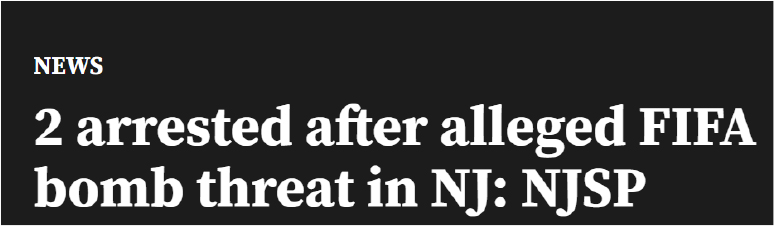
Common activities include Distributed Denial-of-Service (DDoS) attacks, website defacements, data leak claims, and coordinated social media campaigns targeting tournament-related organizations. Threat actors may also exploit the global audience by issuing false bomb threats, fabricated security alerts, or evacuation notices targeting stadiums, transportation hubs, airports, and fan zones. These campaigns are intended to create disruption, attract media attention, and undermine confidence in tournament security.
Hacktivist groups continue to exploit the FIFA World Cup’s international visibility by promoting DDoS attacks, website defacements, data leak claims, and coordinated online messaging targeting governments, tournament stakeholders, and organizations associated with the event.
False bomb threats and fabricated security alerts have also demonstrated the potential for cyber-enabled psychological operations capable of disrupting tournament activities and generating widespread media attention.
Hacktivist activity is likely to remain elevated throughout the tournament, particularly during high-profile matches where operational disruption and media coverage can maximize visibility. Although many campaigns are intended to generate publicity rather than cause lasting technical damage, they may significantly affect public confidence and operational continuity.
Social media platforms remain one of the primary vectors for the rapid dissemination of misinformation and disinformation throughout the FIFA World Cup. Threat actors continue to exploit X, Facebook, Instagram, Telegram, TikTok, and WhatsApp to distribute false information designed to mislead supporters, damage organizational credibility, or redirect users toward phishing and fraud campaigns.
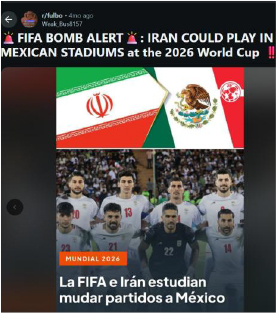
Observed themes include fake ticket giveaways, counterfeit hospitality offers, fabricated security incidents, false match announcements, phishing advertisements, manipulated images, AI-generated videos, and impersonation of FIFA officials, broadcasters, sponsors, and participating teams. The increasing availability of Generative AI has significantly improved the realism, speed, and scale of these campaigns.

Threat actors continue to leverage X, Facebook, Instagram, Telegram, TikTok, and WhatsApp to distribute misinformation and disinformation relating to the tournament.
Observed campaigns include fake ticket giveaways, phishing advertisements, fabricated security advisories, AI-generated images, manipulated videos, fake match announcements, and impersonation of FIFA officials, sponsors, broadcasters, and participating teams.
Generative AI is expected to further increase the scale and sophistication of misinformation campaigns during the remaining tournament fixtures, making rapid verification and coordinated public communications increasingly important.
Alleged Argentina Football Association (AFA) Database Leak
Incident Status
Status: Alleged
Verification: Unconfirmed
Affected Organization: Argentine Football Association (AFA)
Impact on FIFA Infrastructure: No evidence identified
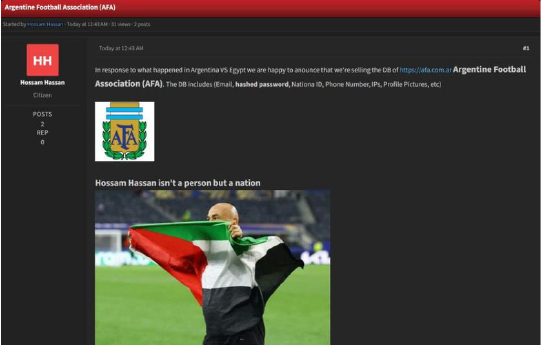
During the tournament, a threat actor operating under the alias “Hossam Hassan” advertised the alleged sale of a database purportedly belonging to the Argentine Football Association (AFA) on an underground cybercrime forum. The actor claimed the database contained email addresses, hashed passwords, national identification numbers, telephone numbers, IP addresses, and profile images.
The post referenced the Argentina–Egypt match and appeared to be intended to capitalize on the increased visibility surrounding the FIFA World Cup.
At the time of writing, the claim remains unverified, and no publicly available evidence indicates that FIFA infrastructure, FIFA World Cup systems, or official FIFA digital services have been compromised. The incident should therefore be treated as an alleged data leak affecting a national football association rather than a confirmed compromise of FIFA systems.
Although unverified, the incident demonstrates how threat actors continue to exploit major sporting events to increase the visibility of alleged breaches, support extortion attempts, and encourage phishing or credential reuse attacks targeting football organizations and supporters.
The FIFA World Cup 2026 continues to present an elevated cyber threat environment driven by its global visibility, extensive digital ecosystem, and reliance on interconnected online services supporting tournament operations. Cybercriminals continue to exploit the event through ticketing fraud, phishing campaigns, fake betting platforms, malicious streaming services, QR code phishing, and AI-enabled social engineering, while hacktivist groups maintain interest in conducting DDoS attacks, website defacements, false security alerts, and information operations designed to maximize disruption and media attention.
Threat intelligence collected during the tournament indicates that financially motivated campaigns remain the most prevalent threat to supporters, whereas disruptive cyber operations continue to present operational risks for broadcasters, telecommunications providers, sponsors, and other organizations supporting tournament activities. At the time of writing, no publicly available evidence indicates a confirmed compromise of FIFA’s core infrastructure or official FIFA World Cup 2026 systems. The alleged Argentina Football Association (AFA) database leak should therefore be considered an unverified incident affecting a national football association rather than FIFA infrastructure.
As the tournament approaches its concluding fixtures, cyber activity is expected to increase in both volume and sophistication, particularly surrounding the Semi-finals and Final. Maintaining operational resilience will require continuous threat intelligence, rapid incident response, coordinated information sharing, and close collaboration between FIFA, broadcasters, host governments, telecommunications providers, sponsors, venue operators, cloud service providers, and national cybersecurity agencies.
| Finding | Confidence |
| FIFA-themed phishing campaigns | High |
| Fake ticketing and betting infrastructure | High |
| Fake streaming platforms | High |
| Social media disinformation | Moderate-High |
| Hacktivist disruption | Moderate |
| AFA alleged database leak | Low (Unverified) |
| Confirmed compromise of FIFA infrastructure | Low (No public evidence) |
FIFA
Broadcasters & Media Partners
Host Governments & National Cybersecurity Agencies
Telecommunications & Cloud Service Providers
Sponsors, Hospitality Providers & Commercial Partners
Financial Institutions & Payment Providers
Strategic Future Focus
