

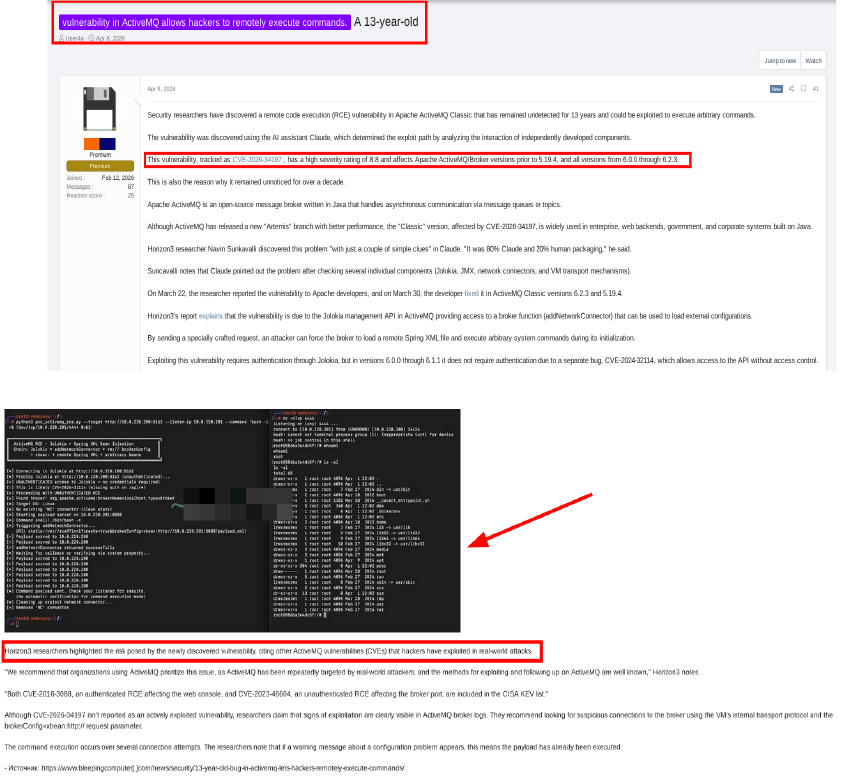
CVE-2026-34197 is a high-severity remote code execution (RCE) vulnerability affecting Apache ActiveMQ Classic, a widely deployed open-source message broker used across enterprise environments for asynchronous communication between distributed applications and backend services.
The vulnerability arises from unsafe exposure of broker management functionality through the Jolokia HTTP/JMX management interface, allowing attackers to interact with privileged broker operations capable of processing externally controlled configuration content. Under insecure deployment conditions, this creates a viable remote exploitation pathway that may enable malicious code execution through broker-side configuration processing.
Controlled laboratory validation confirmed that the disclosed exploit path can be operationalized in an intentionally exposed Apache ActiveMQ Classic environment. Validation successfully demonstrated interaction with exposed management functionality and broker-side acceptance of a crafted malicious request.
While the assessment confirms exploit path feasibility, validation scope was intentionally limited to controlled exploit workflow verification. Full operating system command execution, reverse shell establishment, persistence mechanisms, credential compromise, and lateral movement were not explicitly validated during this analysis.
Given the critical infrastructure role commonly occupied by enterprise message brokers, the existence of publicly observable internet-facing deployments, and the operational risks associated with exposed management interfaces, CVE-2026-34197 represents a significant enterprise security concern requiring immediate remediation.
Apache ActiveMQ Classic is a widely adopted open-source message broker designed to facilitate asynchronous communication between distributed applications, middleware services, backend systems, and enterprise messaging infrastructures. It is commonly deployed in environments requiring reliable message queuing, publish-subscribe communication, service integration, and internal application orchestration.
Due to its role as a trusted middleware component, ActiveMQ frequently operates within highly sensitive infrastructure boundaries where it manages communication between critical business systems. Compromise of such infrastructure can significantly impact application availability, operational continuity, and the integrity of backend communications.
CVE-2026-34197 highlights a critical security weakness in how exposed broker management functionality can be abused when administrative interfaces are improperly accessible. The vulnerability is centered around the Jolokia HTTP/JMX management interface, which provides remote administrative access to Java management functionality used for broker operations.
Under insecure deployment conditions, exposed management functionality may permit attackers to interact with privileged broker methods capable of dynamically processing externally supplied configuration content. This creates unintended interaction between trusted broker management components, in which administrative functionality intended for legitimate management operations can be repurposed as an attack vector.
The vulnerability demonstrates a broader class of infrastructure security risks where exposed management interfaces significantly increase exploitation opportunities by allowing privileged internal functionality to be externally accessed. In enterprise environments, such weaknesses can transform operational management components into high-risk remote attack surfaces.
Critical Infrastructure Exposure Risk
The exploitability of CVE-2026-34197 is heavily influenced by deployment posture. Environments exposing broker management interfaces over accessible network boundaries face materially elevated risk, as attacker interaction with privileged broker functionality becomes significantly easier.
Controlled Exploit Path Validation Confirmed Feasibility
Controlled validation confirmed that the disclosed exploit path can be successfully reproduced under insecure deployment conditions where broker management functionality is externally reachable.
Enterprise Operational Risk is Significant
Because Apache ActiveMQ commonly serves as a trusted infrastructure component, compromise may disrupt internal application communication, service integration workflows, and broader enterprise operations.
Internet Exposure Increases Practical Threat Risk
Externally exposed deployments reduce attacker reconnaissance effort and lower operational barriers to exploitation, increasing practical enterprise risk.
CYFIRMA Research acknowledges the contributions of security researchers, vendors, and the broader cybersecurity community involved in identifying, analyzing, and disclosing vulnerabilities affecting enterprise infrastructure technologies. Their continued research and responsible disclosure efforts play a critical role in enabling organizations to better understand emerging threats and accelerate mitigation efforts for critical security risks such as CVE-2026-34197.
| Attribute | Detail |
| CVE ID | CVE-2026-34197 |
| Published Date | April 7, 2026 |
| Vulnerability Type | Remote Code Execution |
| Attack Vector | Remote (Jolokia HTTP Management Interface) |
| Privileges Required | Access to Exposed Jolokia Management Interface |
| User Interaction | None |
| CVSS V3.0 Score | 8.8 – High |
| CWE | CWE-94 – Improper Control of Generation of Code (‘Code Injection’) |
| Affected Product | Apache ActiveMQ Classic |
| Vulnerable Component | Jolokia Broker Management Functionality |
| Exploit Availability | Public Exploit Information Available |
CVE-2026-34197 originates from unsafe exposure of privileged broker management functionality through the Jolokia HTTP/JMX management interface. Jolokia provides HTTP-based access to Java Management Extensions (JMX), enabling administrative interaction with broker management objects.
Under secure deployment models, access to this functionality should be tightly restricted. However, when exposed without appropriate access controls, attackers may interact with privileged broker operations capable of modifying runtime broker behavior.
Controlled validation confirmed exposure of broker management functionality, including the addNetworkConnector() method, which permits runtime creation of broker connector definitions.
The security concern arises when broker management functionality processes externally supplied configuration references under attacker control. This creates a potential execution pathway in which malicious Spring XML configuration content may be processed by the broker.
The validated exploit workflow demonstrated the following conditions:
These observations confirm exploit path feasibility in an insecure deployment scenario.
This does not, however, constitute confirmation of post-exploitation operating system compromise.
The vulnerability is best understood as an unsafe privileged management exposure issue that may create a remote execution pathway when supporting deployment conditions are present.
Remote Code Execution Potential
Successful exploitation of CVE-2026-34197 may allow attackers to abuse exposed broker management functionality to trigger malicious runtime behavior through externally controlled configuration processing. In insecure deployment scenarios, this creates a pathway toward remote code execution against infrastructure hosting Apache ActiveMQ.
Enterprise Infrastructure Compromise
Apache ActiveMQ commonly operates as a trusted middleware component supporting internal application communication, distributed processing workflows, and enterprise messaging infrastructure. Compromise of such systems may provide attackers with influence over critical operational communication paths and backend service interactions.
Operational Disruption
Attackers abusing privileged broker functionality may disrupt messaging workflows, manipulate broker behavior, interfere with application communication, or impact service availability, potentially leading to operational instability across dependent business systems.
Sensitive Data Exposure Risk
As message brokers often facilitate communication between sensitive enterprise applications, a compromise may increase the risk of unauthorized access to internal messaging workflows, operational data flows, or trusted backend interactions, depending on the deployment architecture.
Lateral Movement Potential
Because enterprise middleware frequently maintains trusted communication pathways with internal systems, compromise of infrastructure messaging components may increase opportunities for broader internal abuse or downstream operational impact.
Reputational and Business Risk
Exploitation of infrastructure middleware vulnerabilities can result in service disruption, incident response costs, operational downtime, reputational damage, regulatory exposure, and broader business continuity concerns.
The vulnerability affects Apache ActiveMQ Classic versions prior to 5.19.4 and versions 6.0.0 through 6.2.2. Organizations are recommended to upgrade to Apache ActiveMQ Classic 5.19.6, 6.2.5, or later supported releases to address both the original vulnerability and subsequent bypass-related security concerns.
Indicators of potential exploitation may include unusual HTTP POST requests targeting exposed Jolokia management endpoints, particularly requests invoking broker management operations from untrusted or unexpected external sources.
Organizations may observe anomalous interaction with broker administrative interfaces, including attempts to enumerate exposed management methods or invoke privileged broker functions outside normal administrative activity.
Additional indicators may include unexpected outbound network requests initiated by the broker toward unknown external systems, particularly where broker processes attempt to retrieve externally hosted XML configuration content or establish unauthorized connector definitions.
Unplanned runtime broker configuration changes, unexpected connector creation activity, or abnormal management interface interactions should be treated as potential indicators of exploitation attempts.
Monitoring these behaviors may assist in identifying suspicious activity associated with the exploitation of exposed ActiveMQ management interfaces.
Technical Overview
Controlled validation was conducted to assess the practical exploitability of CVE-2026-34197 within a deliberately configured laboratory environment replicating insecure deployment conditions.
The vulnerability originates from unsafe exposure of privileged broker management functionality through the Jolokia HTTP/JMX management interface, allowing interaction with internal broker operations intended for legitimate administrative use.
When exposed without appropriate access restrictions, this functionality permits attackers to enumerate privileged broker methods and interact with runtime management capabilities capable of processing externally controlled configuration references.
During validation, broker method enumeration confirmed exposure of administrative functionality, including the addNetworkConnector() method, which permits runtime connector creation through broker management operations.
This capability forms the core exploitation pathway, as attacker-controlled configuration references may be introduced through exposed broker functionality, potentially resulting in malicious broker-side behavior under vulnerable conditions.
The validation objective was to confirm exploit path feasibility only.
This assessment did not attempt to validate:
Step 1 — Environment Setup
A controlled laboratory environment was established to assess the exploitability of CVE-2026-34197 under intentionally insecure deployment conditions.

The environment consisted of a vulnerable Apache ActiveMQ Classic deployment hosted on an Ubuntu target system, with a Kali Linux system used for controlled attacker-side validation.
Step 2 — Vulnerable Deployment Validation
Initial validation confirmed the presence of a vulnerable Apache ActiveMQ Classic deployment.
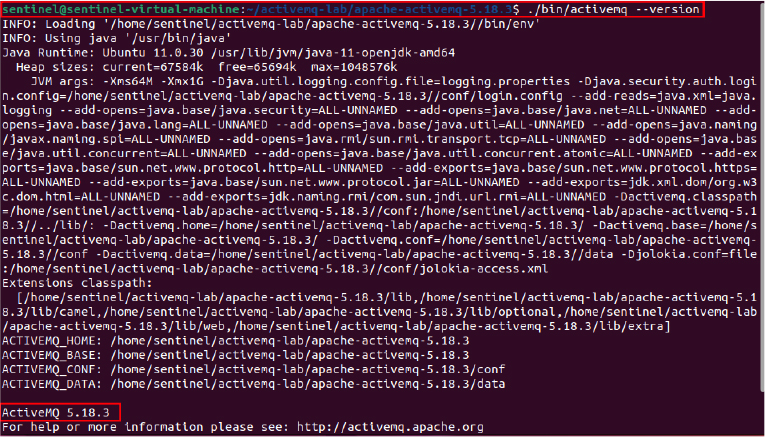
Application version verification confirmed that the target environment was running Apache ActiveMQ Classic 5.18.3, establishing the baseline for exploit path assessment.
Step 3 — Service Exposure Validation
Network service enumeration was performed to confirm the availability of required broker services and externally accessible interfaces relevant to exploit feasibility.
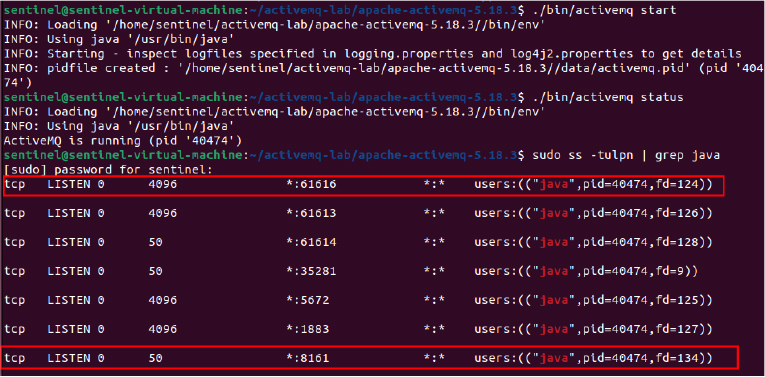
This validation confirmed that the required services were actively listening and reachable within the test environment.
Step 4 — Administrative Interface Accessibility
The ActiveMQ administrative dashboard was successfully accessed, confirming that the application was operational and that administrative functionality was reachable within the test environment.
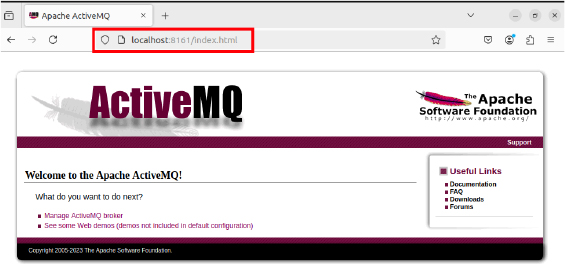
This established the presence of exposed management functionality required for further assessment.
Step 5 — Jolokia Management Interface Validation
The Jolokia HTTP/JMX management interface was successfully accessed to confirm exposure of broker administrative functionality.
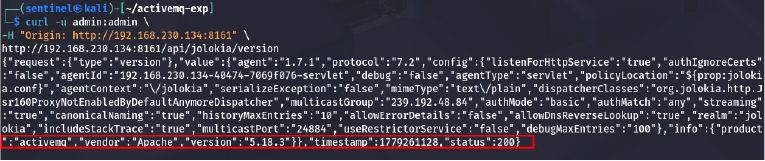
Successful endpoint validation confirmed that remote management interaction was possible under the tested deployment conditions.
Step 6 — Broker Management Enumeration
Further analysis of the exposed management interface confirmed the availability of privileged broker administrative functionality.
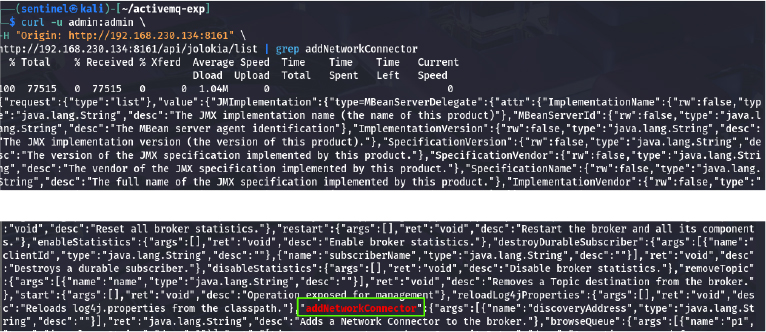
Enumeration identified exposed runtime management operations relevant to exploit feasibility, including the addNetworkConnector() administrative method.
Step 7 — Controlled Exploit Path Validation
To assess exploit feasibility, an attacker-controlled external configuration payload was hosted within the validation environment and referenced through a crafted broker management request delivered to the exposed Jolokia interface.

The broker successfully accepted the crafted request and returned an HTTP 200 response, confirming successful exploit path interaction under the tested conditions.
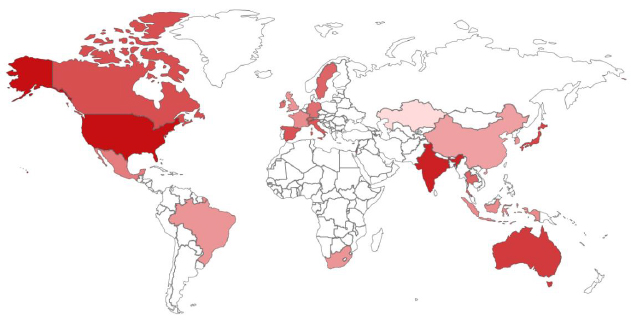
CVE-2026-34197 presents a globally distributed exposure landscape, with hundreds of internet-facing Apache ActiveMQ instances identified through public infrastructure scanning. Significant concentrations of exposed deployments were observed across North America, the Asia-Pacific region, and parts of Europe. Countries including the United States, India, Australia, Japan, and Canada represented notable portions of the observed exposure footprint, reflecting the widespread enterprise adoption of Apache ActiveMQ across cloud-hosted infrastructure, backend messaging environments, and enterprise middleware deployments.
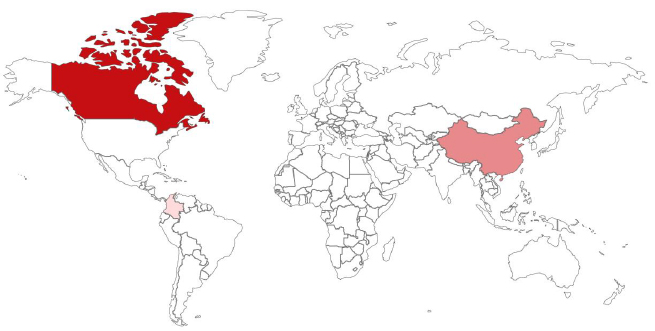
Limited observable Shodan reconnaissance identified approximately 15 externally accessible systems matching selected Apache ActiveMQ exposure search criteria at the time of analysis.
The majority of observable exposed instances were identified in Canada, accounting for 11 systems, China followed with 3 observable instances, while Colombia accounted for 1 identified system. The geographic distribution suggests a globally dispersed exposure pattern rather than concentration within a single region.
Although the number of publicly observable systems appears relatively limited, the findings should not be considered a complete representation of the overall exposure landscape. Additional affected deployments may exist within enterprise environments, private infrastructure, or internally hosted systems where service visibility is restricted from public internet scanning.
Despite the limited number of exposed instances, CVE-2026-34197 remains a significant security concern due to the potential impact associated with compromise of exposed messaging infrastructure.
CVE-2026-34197 impacts a broad range of industries that rely on Apache ActiveMQ Classic for enterprise messaging, backend communication, and distributed application integration.
Key affected sectors include:
Organizations operating internet-facing middleware environments or exposed administrative interfaces are particularly at risk, as the vulnerability directly impacts privileged broker management functionality.
CVE-2026-34197 primarily affects Apache ActiveMQ Classic deployments operating within enterprise middleware and messaging environments.
The vulnerability is particularly relevant to organizations utilizing:
Environments exposing administrative broker management functionality to untrusted network boundaries face elevated operational risk.
Observed discussions primarily focused on exposed Apache ActiveMQ deployments, exploit feasibility, Jolokia management interface abuse, and publicly available technical information associated with the vulnerability.
The existence of underground discussion surrounding exposed enterprise middleware infrastructure increases the likelihood of opportunistic scanning activity and broader attacker interest targeting improperly secured ActiveMQ deployments.
At the time of analysis, no directly validated evidence was identified confirming widespread malicious exploitation campaigns specifically associated with CVE-2026-34197
CVE-2026-34197 poses a significant security risk to Apache ActiveMQ Classic deployments where Jolokia management interfaces are improperly exposed. Controlled laboratory validation confirmed exploit path feasibility through successful interaction with privileged broker management functionality and broker-side acceptance of a crafted request. Given the widespread enterprise use of ActiveMQ and the presence of internet-facing deployments, organizations should prioritize remediation and restrict exposure of administrative broker interfaces to reduce operational risk.
Organizations using Apache ActiveMQ should immediately review whether Jolokia management interfaces or broker administrative services are exposed externally.
The following actions are recommended to reduce immediate risk:
Reducing unnecessary management interface exposure and applying vendor-recommended updates should be treated as a priority to minimize potential security risk associated with CVE-2026-34197.
The exposure conditions associated with CVE-2026-34197 highlight the importance of moving beyond reactive vulnerability response practices and adopting a more proactive security approach for enterprise infrastructure.
Organizations should consider strengthening long-term security practices by:
Adopting a proactive security model focused on exposure reduction, configuration review, and continuous monitoring can help organizations better manage future risks associated with enterprise middleware and administrative interface exposure.
Organizations using Apache ActiveMQ Classic should upgrade affected deployments to version 5.19.6, 6.2.5, or later vendor-supported releases to address both CVE-2026-34197 and subsequent bypass-related security concerns.
Recommended mitigation actions include:
Timely remediation, administrative interface hardening, and reduction of unnecessary management exposure remain critical to minimizing the operational risk associated with CVE-2026-34197.
