
CYFIRMA Research and Advisory Team would like to highlight ransomware trends and insights gathered while monitoring various forums. This includes multiple – industries, geography, and technology – that could be relevant to your organization.
Type: Ransomware
Target Technologies: Windows OS
Targeted countries: Colombia, India, Thailand, France, Portugal, Italy, United States, Germany, Switzerland, Lithuania, Chile
Targeted industries: Retail, E-commerce, Restaurants/Food Services, Food & Beverage, Healthcare/Diagnostics, Jewelry, Manufacturing, Construction, Biotechnology, Technology/Services, Automotive/Transportation
Introduction:
CYFIRMA Research and Advisory Team has found Betelgeuse Ransomware Group while monitoring various underground forums as part of our Threat Discovery Process.
Betelgeuse Ransomware Group
Betelgeuse is a ransomware variant that encrypts files and appends a .betelgeuse extension with a numeric suffix to affected filenames. The attack typically begins when a malicious payload is written to disk, often following phishing or exploitation of an exposed service. After execution, the ransomware performs large numbers of file-write, rename, and encryption operations. Effective prevention therefore requires controlling unauthorized executable-file creation and monitoring abnormal bulk file modifications. Behavioral controls that restrict untrusted processes from writing executable content and detect rapid, high-volume file changes can stop or contain the attack without depending on a specific malware signature. Systems should also be isolated quickly after detection to prevent lateral spread and further encryption.
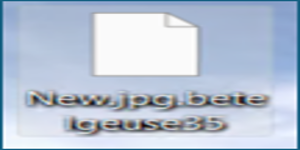
Screenshot: File encrypted by ransomware (Source: Surface Web)
The ransom note claims that sensitive data was stolen before encryption and threatens public disclosure or resale if payment is not made. It provides attacker-controlled communication channels, offers decryption of a few files as proof, and uses a 72-hour deadline to create pressure. These claims should not be treated as evidence that the attackers can actually restore the data or that the stolen data will be deleted after payment. Removing the ransomware stops additional encryption but does not decrypt already affected files. Recovery should therefore rely on verified, clean offline or otherwise isolated backups, while incident responders should preserve evidence, determine the initial access method, assess possible data exfiltration, rotate compromised credentials, and patch exposed systems.
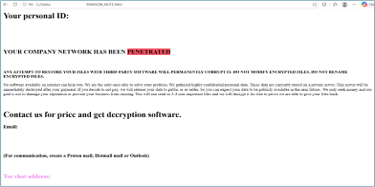
Screenshot: The appearance of Betelgeuse’s ransom note (RANSOM_NOTE.html) (Source: Surface Web)
The following are the TTPs based on the MITRE ATT&CK framework
| Tactic | Technique ID | Technique Name |
| Tactic | Technique ID | Technique Name |
| Execution | T1047 | Windows Management Instrumentation |
| Execution | T1574 | Hijack Execution Flow |
| Privilege Escalation | T1055 | Process Injection |
| Discovery | T1012 | Query Registry |
| Discovery | T1033 | System Owner/User Discovery |
| Discovery | T1057 | Process Discovery |
| Discovery | T1082 | System Information Discovery |
| Discovery | T1083 | File and Directory Discovery |
| Collection | T1074 | Data Staged |
| Collection | T1560 | Archive Collected Data |
| Command and Control | T1071 | Application Layer Protocol |
| Impact | T1486 | Data Encrypted for Impact |
| Stealth | T1027 | Obfuscated Files or Information |
| Stealth | T1055 | Process Injection |
| Stealth | T1070.004 | Indicator Removal: File Deletion |
| Stealth | T1202 | Indirect Command Execution |
| Stealth | T1564.003 | Hide Artifacts: Hidden Window |
| Stealth | T1574 | Hijack Execution Flow |
Relevancy and Insights:
ETLM Assessment:
Betelgeuse and similar ransomware are likely to become more adaptive and automation-driven, with future variants focusing less on a fixed file-encryption routine and more on evading behavioral controls. Attackers may increasingly use legitimate system utilities, stolen credentials, remote administration mechanisms, and previously compromised infrastructure to reach additional systems before encryption begins. The encryption stage itself may become more selective, targeting high-value databases, backups, virtual machines, configuration files, and business-critical data rather than indiscriminately encrypting every accessible file. Detection will therefore need to focus on abnormal process behavior, unusual privilege use, mass file modifications, credential misuse, and unexpected network activity rather than relying only on ransomware signatures or filename extensions. A further development is likely to be greater automation of the complete intrusion process, including initial access, credential discovery, lateral movement, data collection, exfiltration, and deployment of the encryption payload. Ransomware operators may use automated decision-making to identify the most valuable systems and adjust their actions according to the victim’s environment. Extortion may also become more targeted, combining encryption with threats based on the type and sensitivity of stolen information. From a defensive perspective, this means future protection will depend increasingly on rapid behavioral detection, strong identity controls, network segmentation, protected backups, application execution restrictions, and automated isolation of compromised systems.
Sigma rule:
title: Shadow Copies Deletion Using Operating Systems Utilities
tags:
– attack.impact
– attack.stealth
– attack.t1070
logsource:
category: process_creation
product: windows
detection:
selection1_img:
– Image|endswith:
– ‘\powershell.exe’
– ‘\pwsh.exe’
– ‘\wmic.exe’
– ‘\vssadmin.exe’
– ‘\diskshadow.exe’
– OriginalFileName:
– ‘PowerShell.EXE’
– ‘pwsh.dll’
– ‘wmic.exe’
– ‘VSSADMIN.EXE’
– ‘diskshadow.exe’
selection1_cli:
CommandLine|contains|all:
– ‘shadow’ # will match “delete shadows” and “shadowcopy delete” and “shadowstorage”
– ‘delete’
selection2_img:
– Image|endswith: ‘\wbadmin.exe’
– OriginalFileName: ‘WBADMIN.EXE’
selection2_cli:
CommandLine|contains|all:
– ‘delete’
– ‘catalog’
– ‘quiet’ # will match -quiet or /quiet
selection3_img:
– Image|endswith: ‘\vssadmin.exe’
– OriginalFileName: ‘VSSADMIN.EXE’
selection3_cli:
CommandLine|contains|all:
– ‘resize’
– ‘shadowstorage’
CommandLine|contains:
– ‘unbounded’
– ‘/MaxSize=’
condition: (all of selection1*) or (all of selection2*) or (all of selection3*)
falsepositives:
– Legitimate Administrator deletes Shadow Copies using operating systems utilities for legitimate reason
– LANDesk LDClient Ivanti-PSModule (PS EncodedCommand)
level: high
(Source: Surface Web)
Indicators of Compromise
Kindly refer to the IOCs section to exercise control of your security systems (Source: Surface Web)
STRATEGIC RECOMMENDATION
MANAGEMENT RECOMMENDATION
TACTICAL RECOMMENDATION
Type: Info Stealer
Objectives: Credential Theft/ Data Exfiltration
Target Technology: Windows
Target Geography: Global
CYFIRMA collects data from various forums based on which the trend is ascertained. We identified a few popular malwares that were found to be distributed in the wild to launch cyberattacks on organizations or individuals.
Active Malware of the week
This week “Aokigahara Stealer” Malware is in focus.
Overview of Operation Aokigahara Stealer Malware
The sample analyzed exhibits a broad range of behaviors that are consistent with a potentially malicious Windows executable. Its activity extends beyond simply launching a program, with evidence of interaction with system components, creation and removal of files, execution of other processes, and changes involving Windows configuration data. These combined behaviors indicate that the sample can make substantial changes within the affected environment.
The analysis also identified signs of activity intended to operate through commonly available Windows tools and components. The sample interacted with PowerShell, command-line utilities, scripting components, and other native Windows processes. Several security-related areas of the system were also accessed, including Windows Defender-related components, suggesting that the activity deserves particular attention from a defensive perspective.
Network activity provides another important indication of the sample’s behavior. During execution, the sample contacted external infrastructure, performed DNS lookups, accessed a service used to determine the system’s public IP address, and exchanged data with a remote domain through several requests. This demonstrates that the sample is not limited to local system activity and may communicate with remote infrastructure as part of its execution.
Overall, the findings present the sample as a multi-stage threat with activity spanning system interaction, process execution, file operations, configuration changes, and external communication. The presence of multiple security detections and behavioral indicators further strengthens the need to treat the sample as suspicious and investigate its associated indicators. The analysis therefore provides useful evidence for detection and incident-response activities while also highlighting the importance of monitoring unusual processes, file, and network behavior together rather than examining each event in isolation.
Attack Method
The malware employs a multi-stage execution and payload-delivery mechanism that combines native Windows functionality with temporary file operations. During execution, it establishes an application environment within user-writable directories and generates supporting components required for subsequent activity. The observed behavior includes interaction with system services, Windows management interfaces, command interpreters, scripting facilities, and dynamic execution mechanisms. This indicates that malware distributes its functionality across multiple execution stages rather than relying on a single standalone operation.
A notable component of the attack method is the use of PowerShell-based execution with encoded instructions and execution-policy modification. The observed command uses a non-interactive PowerShell session together with an encoded command and an execution-policy bypass, allowing instructions to be executed without relying on normal PowerShell policy restrictions. The malware also performs process-state verification through native system utilities, allowing it to determine whether a required execution component is already active. This behavior suggests controlled execution and an attempt to reduce conflicts between multiple instances of malicious activity.
The sample also follows a staged payload extraction and file-management approach. Executable content and supporting resources are written into temporary and application-specific locations, while compressed application data and additional libraries are extracted during execution. The malware subsequently modifies attributes of selected files and removes temporary directories and extracted components. Such activity creates a lifecycle in which payload components can be introduced, executed, and later removed from the filesystem, making the resulting activity more difficult to reconstruct solely from residual files.
The attack additionally incorporates external network communication and remote infrastructure interaction. The sample retrieves executable content from an external HTTP endpoint, determines the host’s public IP address through an external service, and establishes encrypted communication with remote infrastructure. Multiple POST endpoints associated with handshake, data transfer, and completion stages were observed, indicating an organized communication sequence rather than an isolated outbound connection. DNS and TLS observations further confirm communication with external domains. The combined use of staged payload handling, policy-bypass execution, system-level interaction, temporary artifact removal, and structured remote communication demonstrates a coordinated attack methodology designed to execute malicious functionality while limiting straightforward visibility into its complete activity chain.
Following are the TTPs based on the MITRE Attack Framework for Enterprise
| Execution | T1047 | Windows Management Instrumentation |
| T1059.001 | Command and Scripting Interpreter: PowerShell | |
| T1106 | Native API | |
| T1129 | Shared Modules | |
| T1574 | Hijack Execution Flow | |
| Persistence | T1112 | Modify Registry |
| T1547.009 | Boot or Logon Autostart Execution: Shortcut Modification | |
| Privilege Escalation | T1055 | Process Injection |
| T1134 | Access Token Manipulation | |
| Stealth | T1027.009 | Obfuscated Files or Information: Embedded Payloads |
| T1036 | Masquerading | |
| T1140 | Deobfuscate/Decode Files or Information | |
| T1202 | Indirect Command Execution | |
| T1497.001 | Virtualization/Sandbox Evasion: System Checks | |
| T1564.003 | Hide Artifacts: Hidden Window | |
| Defense Impairment | T1222 | File and Directory Permissions Modification |
| Credential Access | T1539 | Steal Web Session Cookie |
| Discovery | T1010 | Application Window Discovery |
| T1012 | Query Registry | |
| T1033 | System Owner/User Discovery | |
| T1057 | Process Discovery | |
| T1082 | System Information Discovery | |
| T1083 | File and Directory Discovery | |
| T1518 | Software Discovery | |
| Collection | T1074 | Data Staged |
| T1115 | Clipboard Data | |
| Command and Control | T1071 | Application Layer Protocol |
| T1105 | Ingress Tool Transfer | |
| T1573 | Encrypted Channel | |
| Impact | T1485 | Data Destruction |
| T1486 | Data Encrypted for Impact |
INSIGHTS
ETLM ASSESSMENT
IOCs:
Kindly refer to the IOCs Section to exercise controls on your security systems. (Source: Surface Web)
YARA Rule
rule AokigaharaStealer_Malware
{
meta:
description = “Detection rule for the analyzed malware sample”
author = “Threat Research”
strings:
$hash = “73de504b1d7c769d4d6bacd193b06f90aaf2fadb0fb7d2065eb02760d7074fde”
$s1 = “C:\\Users\\<USER>\\AppData\\Local\\Programs\\installer\\Installer.exe –_uac”
$s2 = “C:\\Users\\<USER>\\AppData\\Local\\Temp\\Updates\\cache\\msqrqcwmdaa6\\payload.exe”
$s3 = “C:\\Windows\\system32\\wbem\\wmiprvse.exe -secured -Embedding”
$s4 = “C:\\Windows\\explorer.exe /factory,{75dff2b7-6936-4c06-a8bb-676a7b00b24b} -Embedding”
$s5 = “C:\\Users\\<USER>\\AppData\\Local\\Programs\\installer\\Installer.exe”
$s6 = “C:\\Windows\\system32\\cmd.exe /d /s /c \”ps -p 4116 -o comm=,ppid=”
$s7 = “C:\\Windows\\system32\\cmd.exe /d /s /c \”net session”
$s8 = “UwB0AGEAcgB0AC0AUAByAG8AYwBlAHMAcwAgAC0ARgBpAGwAZQBQAGEAdABoACAA”
$s9 = “powershell -exec bypass”
$s10 = “net session”
$s11 = “C:\\Windows\\system32\\net1 session”
$s12 = “C:\\Users\\user\\AppData\\Local\\Programs\\installer\\Installer.exe”
$s13 = “PcaSvc”
$s14 = “wscsvc”
$s15 = “WSearch”
$s16 = “BITS”
$s17 = “GoogleChromeElevationService”
$s18 = “prefetch:3”
$s19 = “factory,{75dff2b7-6936-4c06-a8bb-676a7b00b24b} -Embedding”
$s20 = “payload.exe”
$s21 = “v2.4.1.exe”
$s22 = “C:\\Users\\<USER>\\Desktop\\v2.4.1.exe”
$s23 = “Installer.exe”
$s24 = “prefetch:2”
$s25 = “installer.exe”
$s26 = “%LOCALAPPDATA%\\programs\\installer\\installer.exe”
$s27 = “%TEMP%\\updates\\cache\\mt53a8nma615\\payload.exe”
$s28 = “cqpvrxt.exe”
$s29 = “C:\\zyphvvqn\\cqpvrxt.exe”
$s30 = “niqx.exe”
$s31 = “C:\\jwllu\\niqx.exe”
$s32 = “C:\\Users\\user\\Desktop\\v2.4.1.exe”
$s33 = “http://192.162.199.149/uploads/69c7b08d53c448c283d2f9d244d190cc.exe”
$s34 = “192.162.199.149/uploads/69c7b08d53c448c283d2f9d244d190cc.exe”
$s35 = “69c7b08d53c448c283d2f9d244d190cc.exe”
$s36 = “http://nsis.sf.net/NSIS_ErrorError”
$s37 = “nsis.sf.net/NSIS_ErrorError”
$s38 = “https://api.ipify.org/”
$s39 = “api.ipify.org/”
$s40 = “AokigaharaStealer”
condition:
$hash or
3 of ($s*)
}
STRATEGIC RECOMMENDATION
MANAGEMENT RECOMMENDATION
TACTICAL RECOMMENDATION
Key Intelligence Signals:
DoNot Team (APT-C-35): Evolving Cyber-Espionage Tradecraft and Targeted Operations
About the Threat Actor
Details on Exploited Vulnerabilities:
| CVE ID | Affected Products | CVSS Score | Exploit Links |
| CVE-2021-4034 | polkit’s pkexec utility | 7.8 | Link1, Link2 |
| CVE-2023-34362 | MOVEit Transfer web application | 9.8 | Link1, Link2 |
| CVE-2021-3156 | Sudo before version 1.9.5p2 | 7.8 | Link1, Link2, Link3, Link4, Link5 |
| CVE-2023-44487 | HTTP/2 protocol | 7.5 | – |
| CVE-2019-16759 | vBulletin 5.x through 5.5.4 | 9.8 | Link1, Link2, Link3, Link4, Link5, Link6 |
TTPs based on MITRE ATT&CK Framework
| Tactic | ID | Technique |
| Reconnaissance | T1598.003 | Phishing for Information: Spearphishing Link |
| Resource Development | T1587.002 | Develop Capabilities: Code Signing Certificates |
| Resource Development | T1588.002 | Obtain Capabilities: Tool |
| Initial Access | T1566.001 | Phishing: Spearphishing Attachment |
| Initial Access | T1189 | Drive-by Compromise |
| Initial Access | T1566.002 | Phishing: Spearphishing Link |
| Execution | T1197 | BITS Jobs |
| Execution | T1203 | Exploitation for Client Execution |
| Execution | T1204.001 | User Execution: Malicious Link |
| Execution | T1059.005 | Command and Scripting Interpreter: Visual Basic |
| Execution | T1204.002 | User Execution: Malicious File |
| Execution | T1059.001 | Command and Scripting Interpreter: PowerShell |
| Execution | T1059.003 | Command and Scripting Interpreter: Windows Command Shell |
| Execution | T1574.001 | Hijack Execution Flow: DLL |
| Execution | T1559.002 | Inter-Process Communication: Dynamic Data Exchange |
| Execution | T1053.005 | Scheduled Task/Job: Scheduled Task |
| Persistence | T1053.005 | Scheduled Task/Job: Scheduled Task |
| Persistence | T1197 | BITS Jobs |
| Persistence | T1547.001 | Boot or Logon Autostart Execution: Registry Run Keys / Startup Folder |
| Persistence | T1112 | Modify Registry |
| Privilege Escalation | T1053.005 | Scheduled Task/Job: Scheduled Task |
| Privilege Escalation | T1547.001 | Boot or Logon Autostart Execution: Registry Run Keys / Startup Folder |
| Privilege Escalation | T1548.002 | Abuse Elevation Control Mechanism: Bypass User Account Control |
| Privilege Escalation | T1055.012 | Process Injection: Process Hollowing |
| Stealth | T1036.005 | Masquerading: Match Legitimate Name or Location |
| Stealth | T1197 | BITS Jobs |
| Stealth | T1055.012 | Process Injection: Process Hollowing |
| Stealth | T1547.001 | Boot or Logon Autostart Execution: Registry Run Keys / Startup Folder |
| Stealth | T1027.001 | Obfuscated Files or Information: Binary Padding |
| Stealth | T1027.010 | Obfuscated Files or Information: Command Obfuscation |
| Stealth | T1070.004 | Indicator Removal: File Deletion |
| Stealth | T1027.002 | Obfuscated Files or Information: Software Packing |
| Stealth | T1027.005 | Obfuscated Files or Information: Indicator Removal from Tools |
| Defense Impairment | T1112 | Modify Registry |
| Defense Impairment | T1553.002 | Subvert Trust Controls: Code Signing |
| Credential Access | T1555.003 | Credentials from Password Stores: Credentials from Web Browsers |
| Discovery | T1083 | File and Directory Discovery |
| Discovery | T1680 | Local Storage Discovery |
| Discovery | T1518.001 | Software Discovery: Security Software Discovery |
| Discovery | T1082 | System Information Discovery |
| Discovery | T1033 | System Owner/User Discovery |
| Lateral Movement | T1021.001 | Remote Services: Remote Desktop Protocol |
| Collection | T1560 | Archive Collected Data |
| Collection | T1119 | Automated Collection |
| Collection | T1005 | Data from Local System |
| Collection | T1074.001 | Data Staged: Local Data Staging |
| Command and Control | T1132.001 | Data Encoding: Standard Encoding |
| Command and Control | T1105 | Ingress Tool Transfer |
| Command and Control | T1102.001 | Web Service: Dead Drop Resolver |
Latest Developments Observed
ETLM Insights
DoNot Team (APT-C-35), a suspected India-linked cyber-espionage actor, continues to demonstrate an intelligence-driven and highly targeted operational model focused on government, military, defence, and strategic organizations across South Asia. The group’s recent activity against Bangladesh military personnel reflects an evolution toward more selective and resilient intrusion operations, combining tailored social engineering with multi-stage delivery, victim filtering, and modular malware capabilities.
The threat actor’s operations reflect:
Highly targeted social engineering using military-specific themes and personalized spear-phishing lures to improve the likelihood of compromising high-value personnel.
Adaptive delivery and defense evasion through remote template injection, server-side victim filtering, layered obfuscation, anti-hooking techniques, and masquerading to reduce exposure to automated analysis and security controls.
Persistent and modular access through scheduled-task persistence, DLL-based implants, encrypted C2 communications, and conditional retrieval of additional modules based on victim profiling.
Continuous capability refinement demonstrated by the evolution of its Windows framework, expansion into mobile-focused surveillance activity, and continued refinement of phishing and malware delivery techniques.
Looking ahead, DoNot Team is expected to further mature its espionage capabilities by strengthening victim-specific payload delivery, adaptive filtering, modular malware deployment, and cross-platform surveillance. The group is likely to continue refining its ability to profile victims before deploying additional tooling, enabling more selective use of resources against strategically valuable targets. Its continued evolution toward layered delivery mechanisms and evasion-oriented infrastructure may also improve resilience against automated detection and analysis, supporting longer-term intelligence collection while maintaining a low operational footprint.
IOCs:
Kindly refer to the IOCs section to exercise control of your security systems. (Source: Surface Web)
YARA Rules
rule DoNot_APT_C35_Bangladesh_Campaign
{
meta:
description = “Detects artifacts associated with the DoNot (APT-C-35) Bangladesh military cyber-espionage campaign”
author = “CYFIRMA”
date = “2026-08-24”
reference = “BGD e-GOV CIRT – DoNot (APT-C-35) Cyber-Espionage Campaign”
threat_actor = “DoNot / APT-C-35”
severity = “Critical”
strings:
// Campaign infrastructure
$domain1 = “greezupdto.info” ascii wide nocase
$domain2 = “reggyupdated.info” ascii wide nocase
$domain3 = “exessupdate.info” ascii wide nocase
$domain4 = “makerolleds.info” ascii wide nocase
$domain5 = “programgreedz.info” ascii wide nocase
$domain6 = “hillisolutions.info” ascii wide nocase
// C2 parameters
$c2_param1 = “mopd=” ascii wide nocase
$c2_param2 = “malp=” ascii wide nocase
$campaign_id = “MFG” ascii wide
// Persistence / execution artifacts
$task = “OneDrive Reporting Task-S-1-5-21-” ascii wide nocase
$dll_exec = “dn110mploc.dll,a4Strau” ascii wide nocase
$export = “a4Strau” ascii wide
$rundll32 = “rundll32.exe” ascii wide nocase
// Staging artifacts
$stage_dir = “%TEMP%\\BinSat\\” ascii wide nocase
$module1 = “TermdyunkSyubtyqdz.dll” ascii wide nocase
$module2 = “NuGetPackgingdunk.dll” ascii wide nocase
// Payload masquerading
$ico = “.ico” ascii
$mp3 = “.mp3” ascii
$doc = “.doc” ascii
condition:
2 of ($domain*) or
2 of ($c2_param*) or
$campaign_id and (
$task or
$dll_exec or
$export
) or
($stage_dir and $rundll32) or
2 of ($module*) or
3 of ($ico, $mp3, $doc) and $rundll32
}
Recommendations
Strategic Recommendations
Management Recommendations
Tactical Recommendations
Iran suspected to have disabled a British power plant in a cyber attack
ETLM Assessment:
Iranian hackers indicted among targeting of Siemens PLCs
ETLM Assessment:
These operational technology attacks primarily target critical national infrastructure, including the energy, water and wastewater, chemical, commercial facilities, advanced manufacturing, and agriculture sectors. Authorities strongly urge operators to disconnect PLCs from the public internet, apply pending security updates, and implement rigorous network monitoring.
The targeting of Siemens Programmable Logic Controllers (PLCs) represents a full-circle evolution in offensive industrial cyber operations between Western allies and Iran. Iran’s interest in PLCs – particularly through IRGC-linked groups like CyberAv3ngers – has historically manifested in aggressive operational technology (OT) campaigns aimed at disabling critical national infrastructure (CNI) across North America, Europe, and Israel. While early Iranian attacks relied on basic scanning and default credential exploitation to hijack exposed PLCs in water and energy facilities, recent campaigns have evolved to use automated scanning, custom malware payloads, and AI-generated script development to directly manipulate controller logic and take physical equipment offline.
This tactic mirrors the historical archetype of OT warfare: the Stuxnet operation. Uncovered in 2010, Stuxnet was a joint US-Israeli cyber weapon explicitly designed to target Siemens Step7 software driving Siemens S7-300 PLCs at Iran’s Natanz uranium enrichment facility. The worm covertly intercepted PLC logic to wildly alter the rotational speeds of gas centrifuges – causing over 1,000 of them to physically degrade and tear themselves apart – while spoofing normal telemetry data to operators to mask the ongoing destruction. Ironically, the very controller architecture originally exploited by Western intelligence to sabotage Iran’s nuclear ambitions has now become a primary battlefield weapon deployed back against Western infrastructure by Iranian state-sponsored actors.
Coinbase Cartel Ransomware Impacts a High-Technology Manufacturing Company from Japan
Summary:
CYFIRMA observed on a ransomware data leak site (DLS) on the dark web that a company from Japan was compromised by Coinbase Cartel Ransomware. The compromised company is a Japanese technology company headquartered in Tokyo, Japan. It operates in the high-technology and precision equipment industry, specializing in semiconductor manufacturing equipment, analytical and medical instruments, and industrial systems. The company serves sectors including healthcare, electronics, and scientific research, supplying solutions globally across manufacturing and laboratory environments. The compromised data includes confidential and sensitive information belonging to the organization.
The following screenshot was observed published on the dark web:
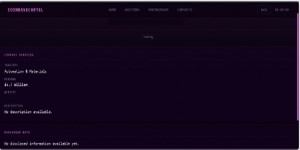
Source: Dark Web
Relevancy & Insights:
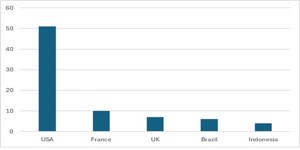
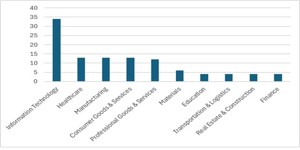
ETLM Assessment:
The Gentlemen Ransomware Impacts a Construction and Engineering Company from Japan
Summary:
CYFIRMA observed on a ransomware data leak site (DLS) in the dark web that a company from Japan was compromised by The Gentlemen Ransomware. The compromised company is a prominent Japanese general contractor specialising in marine civil engineering, land reclamation, and port infrastructure development. The company focuses on delivering high-quality, economically viable construction projects while prioritizing environmental sustainability and technological innovation. The data, which has been breached, has not yet appeared on the leak site, indicating that negotiations between the affected party and the ransomware group may be underway. The compromised data includes confidential and sensitive information belonging to the organization.
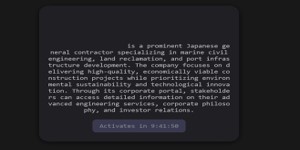
Source: Dark Web
Relevancy & Insights:
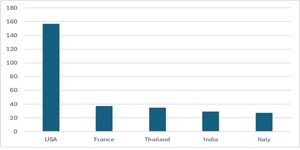
ETLM Assessment:
Vulnerability in Jira Software Data Center
Relevancy & Insights:
Impact :
Affected Products: https[:]//jira[.]atlassian[.]com/browse/JSWSERVER-26938
Recommendations:
Monitoring and Detection: Implement monitoring and detection mechanisms to identify unusual system behavior that might indicate an attempted exploitation of this vulnerability.
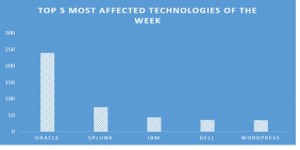
TOP 5 AFFECTED PRODUCTS OF THE WEEK
This week, CYFIRMA researchers have observed significant impacts on various technologies due to a range of vulnerabilities. The following are the top 5 most affected technologies.
ETLM Assessment:
The vulnerability in Jira Software Data Center presents a significant security risk to organizations using the application, particularly because successful exploitation can allow an unauthenticated attacker to perform actions as another user. The vulnerability is caused by improper authentication and session management, allowing an unauthenticated attacker to perform unauthorized actions with the privileges of another user. Successful exploitation could allow threat actors to gain unauthorized access, perform actions as another user, access information available to the impersonated account, and potentially compromise the integrity of Jira projects and data. As exploitation does not require authentication, organizations should prioritize protecting Jira interfaces and limiting access to trusted users and networks. Organizations using affected versions of Jira Software Data Center should upgrade to the latest available security update and ensure that authentication and session-management controls are properly configured. In addition, organizations should monitor authentication activity and user actions for anomalous behaviour, particularly unauthorized activity performed under legitimate user accounts. Prompt remediation and continuous monitoring are recommended to reduce the risk of unauthorized access and activity resulting from exploitation of this vulnerability.
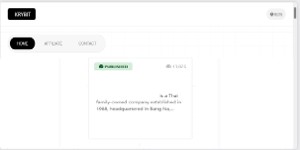
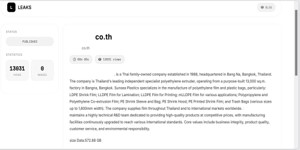
Krybit Ransomware attacked and published the data of a Manufacturing company from Thailand
Summary:
Source: Dark Web
Relevancy & Insights:
ETLM Assessment:
Unauthorised Entertainment Database Advertised on a Leak Site
Summary:
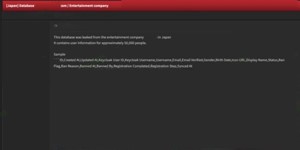
The CYFIRMA research team identified a post on a cybercrime forum advertising the leak of a database allegedly originating from an entertainment organization in Japan. According to the advertisement, the database reportedly contains user information for approximately 50,000 individuals.
The forum post includes sample database records as evidence of possession. Based on the information visible in the advertised sample, the allegedly exposed dataset may contain:
The authenticity and full scope of the alleged dataset remain unverified at the time of reporting. This assessment is based solely on the information visible in the cybercrime-forum advertisement and the provided sample and has not been independently confirmed.
Source: Underground Forums
Unauthorized Automotive Marketplace Database Advertised on a Leak Site
Summary:
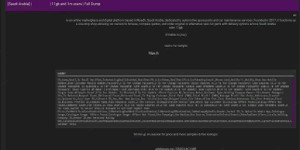
The CYFIRMA research team identified a post on a cybercrime forum advertising the sale of a large database allegedly originating from an online automotive marketplace in Saudi Arabia. According to the advertisement visible in the provided image, the seller claims to possess approximately 11 GB of data covering around 1 million users, distributed across 83 database tables.
The post provides a users.csv sample and displays database field names as evidence of possession. Based on the information visible in the sample, the allegedly exposed dataset may include:
The authenticity and full scope of the alleged dataset remain unverified at the time of reporting. This assessment is based solely on information visible in the provided cybercrime-forum advertisement and the accompanying sample data and has not been independently confirmed.
Source: Underground Forums
Relevancy & Insights:
ETLM Assessment:
Recommendations:
Enhance the cybersecurity posture by
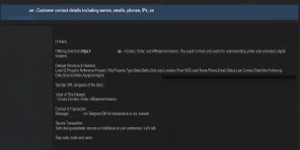
The CYFIRMA research team identified a post on a cybercrime forum advertising the sale of data allegedly originating from a digital real estate marketplace operating in the United Arab Emirates. According to the advertisement, the dataset reportedly contains customer contact, order, and affiliate commission information and is described as a fresh export.
The forum post provides a sample of the allegedly compromised dataset and lists multiple database fields. Based on the information visible in the advertisement, the allegedly exposed data may include:
The advertised dataset could provide a detailed view of customer leads, property interests, contact information and sales-related activities. The combination of customer contact information with property details and lead-management records may increase the risk of targeted social-engineering and real-estate-related fraud.
Potential Impact
If verified, exposure of this information could significantly affect customers, property agents and business operations. Cybercriminals may exploit the allegedly leaked information to conduct:
Exposure of property locations, prices, lead information, customer contact details and assigned-agent information could allow malicious actors to create highly convincing fraudulent communications targeting prospective buyers, sellers and property professionals.
The authenticity and full scope of the alleged dataset remain unverified at the time of reporting. This assessment is based solely on information visible in the cybercrime-forum advertisement and its accompanying sample and has not been independently confirmed.
Source: Underground forums
STRATEGIC RECOMMENDATION
MANAGEMENT RECOMMENDATION
TACTICAL RECOMMENDATION
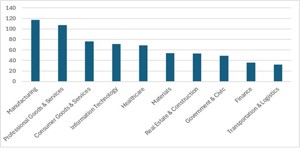
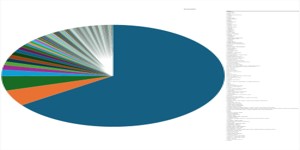
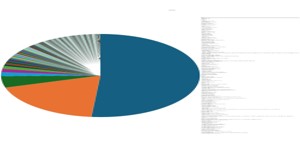
Please find the Geography-Wise and Industry-Wise breakup of cyber news for the last 5 days as part of the situational awareness pillar.
Geography-Wise Graph
Industry-Wise Graph
For situational awareness intelligence and specific insights mapped to your organisation’s geography, industry, technology, please access DeCYFIR.
