
CYFIRMA Research and Advisory Team would like to highlight ransomware trends and insights gathered while monitoring various forums. This includes multiple industries, geographies, and technologies that could be relevant to your organization.
Type: Ransomware
Target Technologies: Windows OS
Introduction:
CYFIRMA Research and Advisory Team has found Altair Ransomware while monitoring various underground forums as part of our Threat Discovery Process.
Altair Ransomware
Altair is a file-encrypting ransomware that compromises systems and encrypts accessible user data, making affected files unavailable to the victim. After encryption, it modifies the filenames by adding a variant-specific .altair extension, such as .altair19, and generates an HTML ransom note named RANSOM_NOTE.html. The malware follows a double-extortion model: besides denying access to files, the attackers claim to have copied confidential information from the compromised environment. They use the alleged data theft as additional leverage, threatening to disclose or sell the information if the victim does not meet their financial demands.

Screenshot: File encrypted by the ransomware (Source: Surface Web)
The ransom note informs the victim that the network has been compromised and provides instructions for communicating with the attackers through specified email accounts or a Tor-based channel. It offers limited test decryption of a few non-sensitive files to demonstrate that the attackers possess a working recovery mechanism. The message also warns victims against renaming or altering encrypted files and attempts to discourage them from using external recovery services. A 72-hour deadline is given for initiating communication, with the attackers threatening to increase the ransom afterward. Overall, the note combines file-recovery pressure with the threat of data exposure to increase the likelihood of ransom payment.
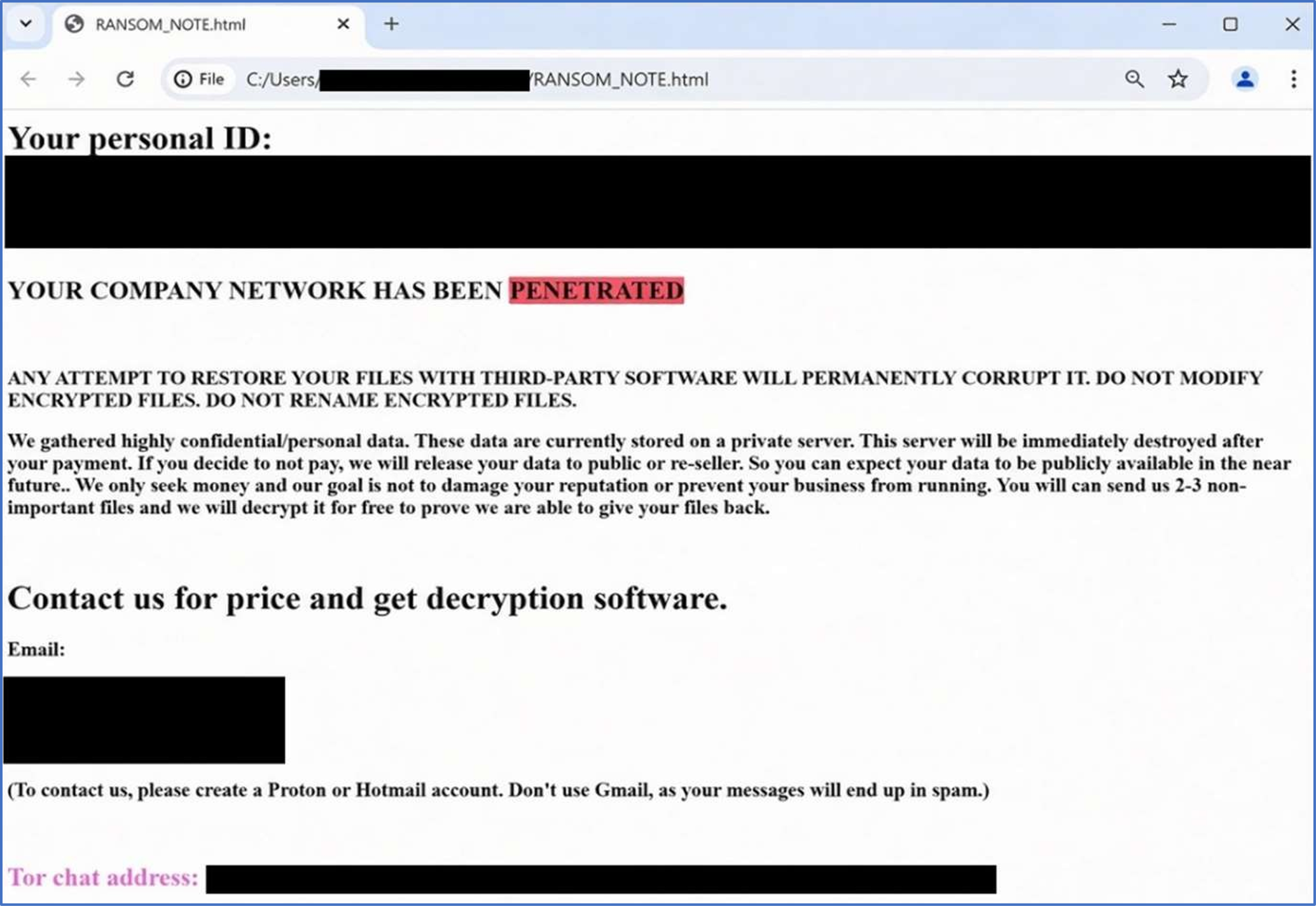
Screenshot: The appearance of Altair’s ransom note (RANSOM_NOTE.html) (Source: Surface Web)
The following are the TTPs based on the MITRE ATT&CK framework
| Tactic | Technique ID | Technique Name |
| Execution | T1047 | Windows Management Instrumentation |
| Execution | T1059 | Command and Scripting Interpreter |
| Execution | T1129 | Shared Modules |
| Execution | T1574 | Hijack Execution Flow |
| Privilege Escalation |
T1055 |
Process Injection |
| Privilege Escalation |
T1134 |
Access Token Manipulation |
| Discovery | T1012 | Query Registry |
| Discovery | T1033 | System Owner/User Discovery |
| Discovery | T1057 | Process Discovery |
| Discovery | T1082 | System Information Discovery |
| Discovery | T1083 | File and Directory Discovery |
| Discovery | T1135 | Network Share Discovery |
| Collection | T1074 | Data Staged |
| Collection | T1560 | Archive Collected Data |
| Command and Control |
T1071 |
Application Layer Protocol |
| Impact | T1486 | Data Encrypted for Impact |
| Stealth | T1027 | Obfuscated Files or Information |
| Stealth | T1055 | Process Injection |
| Stealth | T1134 | Access Token Manipulation |
| Stealth | T1202 | Indirect Command Execution |
| Stealth | T1564.003 | Hide Artifacts: Hidden Window |
| Stealth | T1574 | Hijack Execution Flow |
Relevancy and Insights:
ETLM Assessment:
Altair ransomware may evolve by improving its ability to identify valuable systems and data before initiating encryption. Future variants could incorporate stronger defense-evasion mechanisms, more extensive discovery of network resources, and improved privilege-abuse techniques to reach additional endpoints and shared storage. The malware may also become more selective in its encryption behavior, prioritizing business-critical documents, databases, backups, and virtual-machine resources to maximize operational disruption while avoiding files that are unnecessary for extortion. Changes to file extensions, ransom-note formats, communication infrastructure, and encryption implementation could further complicate automated detection and recovery efforts.
Future versions may also place greater emphasis on data theft and multi-stage extortion rather than relying solely on file encryption. Attackers could combine stolen information with threats of public disclosure, targeted pressure against affected organizations, and increasingly automated negotiation processes. Ransomware operators may additionally adapt their techniques to exploit cloud environments, remote-access infrastructure, and interconnected enterprise networks. As defensive technologies improve, the malware is likely to evolve through more sophisticated evasion and deployment techniques, making behavioral monitoring, network segmentation, offline backups, least-privilege controls, and rapid incident response increasingly important for limiting its impact.
Sigma rules:
title: Shadow Copies Deletion Using Operating Systems Utilities tags:
category: process_creation product: windows
detection: selection1_img:
CommandLine|contains|all:
selection2_img:
CommandLine|contains|all:
CommandLine|contains|all:
condition: (all of selection1*) or (all of selection2*) or (all of selection3*) falsepositives:
IOCs:
Kindly refer to the IOCs section to exercise control of your security systems. (Source: Surface Web)
STRATEGIC RECOMMENDATIONS
MANAGEMENT RECOMMENDATIONS
TACTICAL RECOMMENDATIONS
Type: Downloader / Dropper | Objectives: Payload Delivery and System Compromise | Target Technology: Windows | Target Geography: Global
CYFIRMA collects data from various forums based on which the trend is ascertained. We identified a few popular malwares that were found to be distributed in the wild to launch cyberattacks on organizations or individuals.
Active Malware of the Week
This week, WailsLoader Malware is in focus.
Overview of Operation WailsLoader Malware
The sample analyzed, identified as WailsLoader, was observed to function primarily as a malware delivery component rather than as a conventional application. Its main purpose is to establish an initial foothold and facilitate the introduction of additional malicious software into a compromised environment. Although its direct activity may appear limited, its role in enabling subsequent stages makes its presence significant.The sample acts as an intermediary between the initial compromise and the activity that follows. Rather than focusing heavily on collecting information from the affected system itself, it communicates with external infrastructure to obtain additional content. Consequently, the potential impact of an infection extends beyond the activity directly attributed to the initial component and depends largely on what is delivered and executed afterward.
During the analyzed session, there was limited evidence of mechanisms designed to maintain a long-term presence on the system. The observed activity appeared relatively short-lived, although this does not indicate that the threat is harmless or necessarily temporary. Its execution may form part of a broader attack sequence in which further activity is initiated through subsequent delivery or user interaction. Overall, the presence of this component should be considered a security concern because it provides a pathway for additional malicious activity and maintains communication with external infrastructure. Its significance therefore lies not only in its immediate behavior, but also in the access and follow-on activity that it can enable within an affected environment.
Attack Method
On execution on a Windows host, the sample begins with an initial system-orientation phase to determine the environment in which it is operating. It collects basic host and operating-system information that can help establish whether the execution environment is suitable for subsequent activity. This stage appears focused on environmental awareness rather than extensive host reconnaissance or broad data collection, allowing the component to proceed with its primary delivery function. The observed execution sequence did not show a dedicated mechanism for maintaining long-term persistence or a clearly defined defense-evasion routine during the analysis period. Its activity remained relatively limited after the initial execution and environmental checks. However, the absence of these behaviors within the captured session does not necessarily indicate that the broader attack lacks persistence or evasion capabilities, as these functions may be provided by another component or initiated during a subsequent stage of the infection chain.
The primary functional behavior observed was the retrieval of an additional payload from external infrastructure. After establishing its execution environment, the sample communicates externally to obtain follow-on content and prepares that payload for subsequent execution. This positions the component as an initial delivery mechanism within a larger infection chain rather than as the final malicious payload. Its limited local activity is therefore consistent with a design intended to transfer execution to a more capable component.
The overall execution flow demonstrates a staged approach in which the initial component performs only the activity required to establish execution, assess the host, and facilitate delivery of the next-stage payload. This separation of responsibilities can reduce the visible footprint of the initial component while allowing more extensive malicious activity to occur through subsequently delivered software. The observed behavior therefore indicates that the principal purpose of the sample is to enable the next phase of the compromise rather than independently perform extensive collection or system manipulation.
The Following are the TTPs based on the MITRE ATT&CK Framework for Enterprises
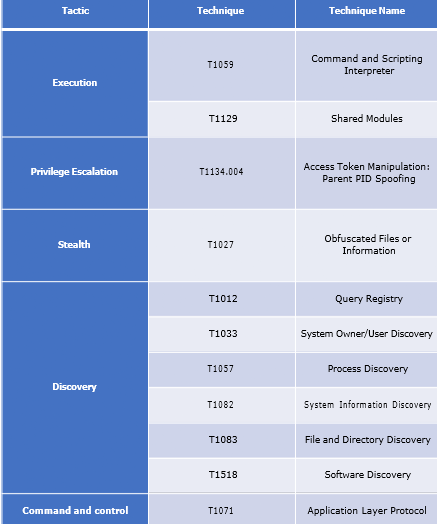
INSIGHTS
The activity indicates that the initial compromise should be viewed in the context of a broader operation rather than as an isolated malware event. The limited role of the observed component suggests that its significance comes from how it fits into a larger sequence of activity. This distinction is important when assessing the incident, as the visible behavior of the first-stage component may not represent the full scope of the underlying operation.
Another notable aspect is the separation between the initial access stage and the activity that follows. By keeping the first stage relatively focused, the operation can maintain a smaller visible footprint while allowing subsequent components to perform different functions. This separation also makes the individual stages less representative of the overall activity when examined independently, highlighting the importance of considering the complete sequence rather than judging the threat from a single component.
The observed characteristics also suggest that the activity is not necessarily tied to a narrowly defined victim profile. Its usefulness appears to come from its ability to operate as part of a broader delivery process, allowing the subsequent stages to determine what activity takes place on an affected system. This makes the campaign’s significance more closely associated with the opportunities presented by compromised environments than with a specific type of organization or user.
ETLM ASSESSMENT
From an ETLM perspective, this type of activity could increasingly affect organizations by turning seemingly limited compromises into broader operational concerns. In the future, employees may encounter greater disruption to routine activities as compromised systems become connected to wider security incidents, potentially affecting access to business resources, productivity, and the handling of organizational information. Organizations could also face increasing difficulty in determining the full scope of an incident when initial activity appears limited but later develops into more extensive compromise. Over time, repeated incidents of this nature may place greater pressure on business operations, incident-response efforts, recovery processes, and overall organizational resilience, making the consequences extend beyond the initially affected systems.
IOCs:
Kindly refer to the IOCs below to exercise controls on your security systems. (Source: Open Surface)
YARA Rules
rule WailsLoader_Malware
{
meta:
description = “Detection rule for the analyzed Wails Loader malware sample” author = “CYFIRMA Research”
date = “2026-09-22”
strings:
$hash1 = “f1711b816466428b20ece9ebaa81ca377fd758771a33c959f46be582b1f4404d” ascii
$s1 = “\\Device\\KsecDD” ascii wide
$s2 = “KsecDD” ascii wide
$s3 = “WailsLoader” ascii wide
condition:
any of ($hash*) or 2 of ($s*)
}
Strategic Recommendations
Management Recommendations
Tactical Recommendations
Key Intelligence Signals:
Transparent Tribe (APT36): Evolving Cyber-Espionage Capabilities and Operational Tradecraft
About the Threat Actor
Transparent Tribe, also known as APT36, is a suspected Pakistan-linked, state-sponsored threat actor believed to have been active since 2016. The group primarily targets military organizations, embassies, and government entities, conducting cyber-espionage operations to collect sensitive information that aligns with Pakistan’s military and diplomatic interests. Its targeting extends to neighboring and foreign countries. Transparent Tribe (APT36) primarily relies on spear-phishing and watering-hole attacks to gain initial access, using phishing emails containing malicious macros or vulnerability-based RTF files to compromise targeted victims.
Details on Exploited Vulnerabilities
|
CVE ID |
Affected Products |
CVSS Score |
Exploit Links |
|
CVE-2026-21509 |
Microsoft Office |
7.8 |
– |
|
CVE-2018-14041 |
Bootstrap before 4.1.2 |
6.1 |
Link1, Link2 |
|
CVE-2025-64496 |
Open WebUI |
8.0 |
– |
|
CVE-2022-41034 |
Visual Studio Code |
7.8 |
– |
|
CVE-2025-10035 |
Fortra’s GoAnywhere MFT |
9.8 |
– |
|
CVE-2017-8759 |
Microsoft .NET Framework |
7.8 |
link |
|
CVE-2023-39234 |
TKWave 3.3.115 |
7.8 |
– |
|
CVE-2021-40539 |
Zoho ManageEngine |
9.8 |
link |
TTPs based on the MITRE ATT&CK Framework
| Tactic | ID | Technique |
| Resource Development | T1583.001 | Acquire Infrastructure: Domains |
| Resource Development | T1584.001 | Compromise Infrastructure: Domains |
| Resource Development | T1608.001 | Stage Capabilities: Upload Malware |
| Resource Development | T1587.003 | Develop Capabilities: Digital Certificates |
| Resource Development | T1608.004 | Stage Capabilities: Drive-by Target |
| Initial Access | T1566.001 | Phishing: Spear phishing Attachment |
| Initial Access | T1189 | Drive-by Compromise |
| Initial Access | T1566.002 | Phishing: Spear-phishing Link |
| Execution | T1203 | Exploitation for Client Execution |
| Execution | T1204.001 | User Execution: Malicious Link |
| Execution | T1059.005 | Command and Scripting Interpreter: Visual Basic |
| Execution | T1204.002 | User Execution: Malicious File |
| Stealth | T1036.005 | Masquerading: Match Legitimate Name or Location |
| Stealth | T1027.013 | Obfuscated Files or Information: Encrypted/Encoded File |
| Stealth | T1564.001 | Hide Artifacts: Hidden Files and Directories |
| Command and Control | T1568 | Dynamic Resolution |
Latest Developments Observed
Transparent Tribe (APT36) is suspected of conducting Operation RapidRust, targeting government and defense organizations in India and Afghanistan. The campaign introduced new malware and post-compromise tools, including the Rust-based RUSTYSHADE backdoor, RUSTYMOVE USB propagation tool, and PSNATCH and BASHNATCH file stealers targeting Windows and Linux environments. APT36 leveraged typosquatted domains impersonating Indian news outlets and private GitHub repositories for payload staging, command-and-control, and data exfiltration. The activity appears aimed at stealing sensitive information, maintaining persistent access, and facilitating malware propagation to air-gapped networks.
ETLM Insights
Transparent Tribe (APT36), a Pakistan-nexus threat actor, continues to demonstrate an adaptive cyber-espionage model focused on government and defense organizations in India and Afghanistan. The threat group’s campaigns highlight the group’s evolving malware capabilities, cross-platform file theft, and use of legitimate cloud services to support persistent access and sensitive information collection.
Looking ahead, Transparent Tribe is likely to continue evolving its malware ecosystem to enhance operational flexibility and evade conventional security controls. Trusted platforms and impersonation infrastructure, including typosquatted domains, legitimate code-hosting services, and compromised infrastructure, are likely to remain important enablers for payload delivery and C2 operations. Future activity may increasingly focus on credential theft, persistent access, and targeted intelligence collection against government, defense, and other high-value targets.
IOCs:
Kindly refer to the IOCs section to exercise control of your security systems. (Source: Surface Web)
YARA Rules
rule Threat_Activity_IOC_Detection
{
meta:
description = “Detects files containing supplied threat activity IOCs” author = “CYFIRMA”
date = “2026-09-22”
category = “Threat Intelligence IOC Detection”
strings:
// Domains
$domain1 = “defence.cdga.site” ascii wide nocase
$domain2 = “appstoore.duckdns.org” ascii wide nocase
$domain3 = “nic-support.site” ascii wide nocase
$domain4 = “www.nicservice.org” ascii wide nocase
// IP addresses
$ip1 = “2.56.10.86” ascii wide
$ip2 = “46.30.188.13” ascii wide
$ip3 = “172.217.16.227” ascii wide
$ip4 = “64.227.133.141” ascii wide
$ip5 = “173.194.45.95” ascii wide
// File names
$file1 = “uvj3lwj.exe” ascii wide nocase
$file2 = “jitsimeet-setup.exe” ascii wide nocase
// File path indicators
$path1 = “C:\\Windows\\uvj3lwj.exe” ascii wide nocase
$path2 = “C:\\Users\\user\\AppData\\Local\\Temp\\susmnw.xdj\\jitsimeet-setup.exe” ascii wide nocase
condition:
1 of ($domain*) or 1 of ($ip*) or
1 of ($file*) or 1 of ($path*)
}
Recommendations
Strategic Recommendations
Management Recommendations
Tactical Recommendations
Hackers Targeting Global Shipping
Ships are increasingly becoming targets of cyberattacks, and the incidents are no longer isolated. In late August, the US Coast Guard and FBI boarded two foreign-flagged oil tankers in the Gulf of Mexico after both vessels showed signs of network compromise while transiting the Strait of Gibraltar. One, the VL Prosperity – a South Korean-managed tanker carrying two million barrels of Gulf crude – lost communications for more than thirty hours. US officials are investigating potential Iranian involvement, though no formal attribution has been made. Iranian state media amplified the story, sharing unconfirmed details about the breach’s extent – opportunistic reporting that itself falls short of evidence.
The incidents are part of a broader pattern. A third vessel, the LNG carrier Vivit Africa, suffered a suspected cyberattack in early September while sailing toward Italy, leaving its crew unable to access internal control systems. The ship turned away from its destination and is currently near Tunisia with its cargo undelivered. US agencies are now monitoring nearly twenty vessels worldwide for similar threats, and the Coast Guard has requested advance notice from any of those ships before they enter American ports.
What makes ships particularly exposed is their growing connectivity. Every major system — navigation, engines, cargo monitoring — is now linked via satellite to shore-based control centres, creating what one maritime cybersecurity executive described as “a floating attack surface.” Attacks infiltrating vessels through satellite-linking edge devices jumped from 3% of all incidents in 2024 to 22% in 2025. Shipowners have also increasingly adopted Starlink to improve crew connectivity, adding another entry point. Once inside the satellite connection, an attacker can potentially cross over into onboard operational systems — controlling speed, temperature, propulsion.
ETLM Assessment:
The underlying vulnerability is structural. Much of the equipment running ships’ operational systems is decades old, built long before cyberattacks were a realistic threat and difficult to update without taking vessels out of service. The boundary between operational technology and standard IT is blurring as ships become more automated — and ransomware is no longer the only concern. Shipping executives now rank cyber threats as the second-highest operational risk to the industry, yet cybersecurity ranks only fifth in terms of the industry’s readiness to handle it. That gap is becoming dangerous.
As an upcoming CYFIRMA report on chokepoints and attacks on shipping concludes, shipping and logistics operators should treat periods of chokepoint pressure – in which we currently find ourselves – as periods of heightened cyber exposure rather than as purely physical supply-chain events, with particular emphasis on identity security and third-party access, internet-facing infrastructure, the resilience of manual fallback processes, and the segmentation that keeps an IT compromise from becoming an operational one. This assessment is based on the intelligence available at the time of writing and is subject to change as the situation develops.
Port of LA Targeted By 120 Million Cyberattacks Last Month Alone
Amid evolving tariff policies, the Port of Los Angeles—the nation’s busiest container port—faced a relentless digital onslaught in August, successfully blocking over 120 million cyberattack attempts.
During an interview with Bloomberg Television, Executive Director Gene Seroka revealed that the port detected a broad spectrum of threats, including network exploitation, intrusion attempts, credential harvesting, and malware. He credited their resilience to a multi-layered defense strategy featuring a seven-tier digital shield forged through a public-private coalition between the port’s cybersecurity team and private businesses.
Seroka’s disclosures follow recent warnings from U.S. officials tracking active cyber threats targeting approximately 20 vessels globally. These incidents highlight a broader, escalating trend of digital vulnerability across the maritime sector as modern shipping operations grow increasingly dependent on automated navigation and communication networks.
ETLM Assessment:
CYFIRMA assesses that the defining vulnerability of the next phase of the global economy will not be any single chokepoint’s physical closure, but the convergence of cyber, kinetic, and political pressure applied to several chokepoints like maritime straits and ports at once. The pattern is already visible: digital reconnaissance and pre-positioning inside energy and port infrastructure regularly precede or accompany physical strikes and diplomatic coercion rather than substituting for them, blurring the line between espionage, sabotage and statecraft.
ArcusMedia Ransomware Impacts an Agricultural Organisation in Thailand
Summary:
CYFIRMA observed on a ransomware data leak site (DLS) on the dark web that an organisation from Thailand was compromised by ArcusMedia ransomware. The compromised organisation serves as a central hub for agricultural research management, focusing on strengthening and sustaining the agricultural sector. It promotes, supports, and develops professional agricultural researchers while providing a comprehensive research information system. The agency aims to enhance the agricultural industry in Thailand to compete globally by facilitating the application of research outcomes in various agricultural fields. Its intended clients include agricultural professionals, researchers, and businesses seeking to utilize research for commercial development. The data, which has been breached, has not yet appeared on the leak site, indicating that negotiations between the affected party and the ransomware group may be underway. The compromised data includes confidential and sensitive information belonging to the organization.
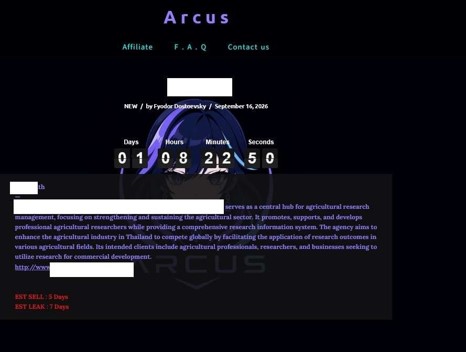 Source: Dark Web
Relevancy & Insights:
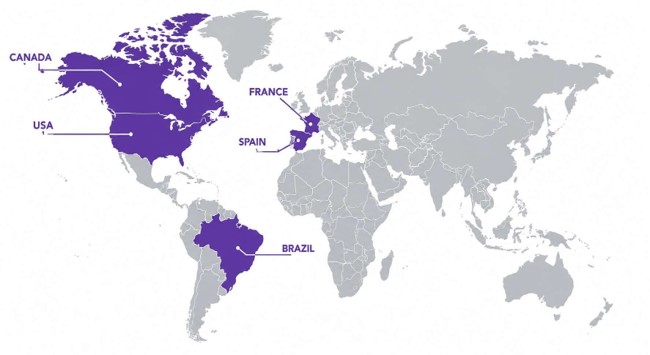
ETLM Assessment:
Based on recent assessments by CYFIRMA, ArcusMedia ransomware represents a significant threat in the cybersecurity landscape, characterized by its sophisticated tactics and aggressive approach to extortion. Organizations are advised to enhance their cybersecurity defenses, including employee training on phishing awareness, regular updates to systems, and comprehensive incident response plans to mitigate risks associated with this evolving threat actor. Continuous monitoring of ArcusMedia’s activities will be essential for understanding its impact on global cybersecurity efforts.
The Gentlemen Ransomware Impacts a Manufacturing Company from Japan
Summary:
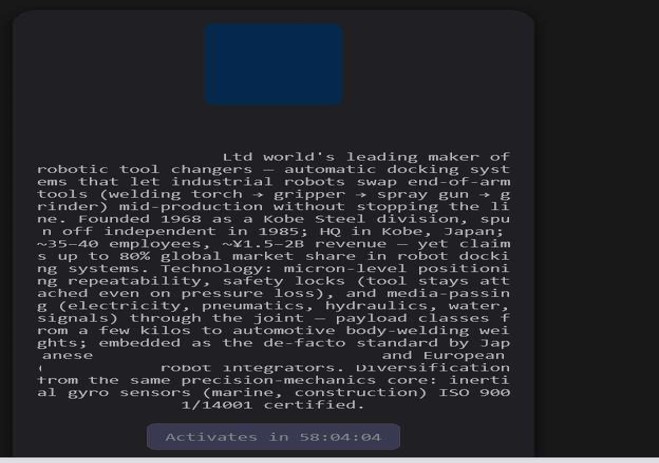
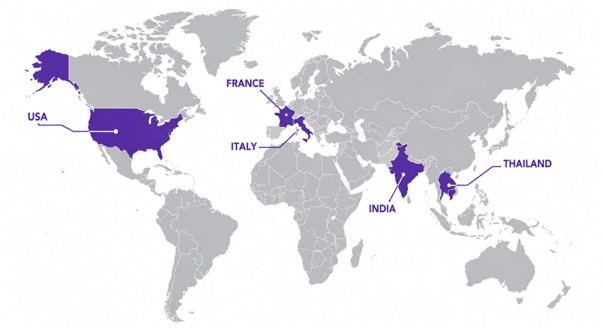
CYFIRMA observed on a ransomware data leak site (DLS) on the dark web that a company from Japan was compromised by The Gentlemen Ransomware. The compromised company is a Japanese manufacturer and global supplier specializing in apparel accessories, RFID solutions, and sustainable materials. Founded in October 1972 and headquartered in Tokyo, the company operates across 29 locations worldwide with production facilities in Japan, China, Thailand, and Vietnam. The data, which has been breached, has not yet appeared on the leak site, indicating that negotiations between the affected party and the ransomware group may be underway. The compromised data includes confidential and sensitive information belonging to the organization.
Source: Dark Web
Relevancy & Insights:
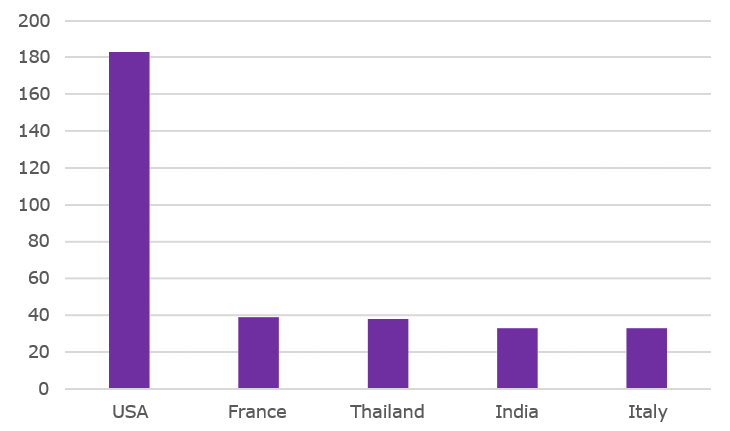
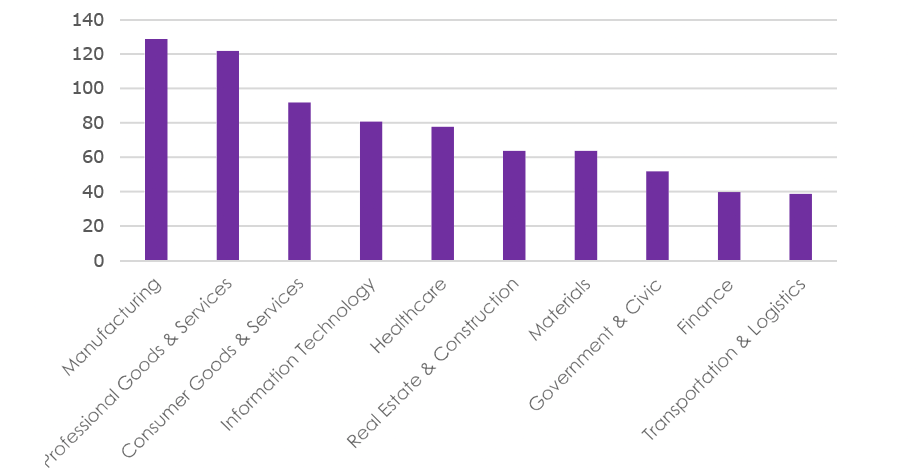
ETLM Assessment:
According to CYFIRMA’s assessment, the Gentlemen Ransomware is a highly adaptive and globally active threat that leverages dual-extortion tactics, combining data theft with file encryption. The group employs advanced evasion and persistence techniques, supports cross-platform and scalable ransomware deployment, and conducts targeted attacks across multiple industries and geographic regions. This combination of capabilities makes it a significant risk to enterprise cybersecurity defenses, particularly for organizations with limited detection and incident-response maturity.
Vulnerability in Altium Enterprise Server
Relevancy & Insights:
The vulnerability exists in the UnifiedLogin service of Altium Enterprise Server. An unauthenticated network attacker can abuse server-side request forgery to make the server issue outbound HTTP requests to attacker-controlled destinations, including internal services that are otherwise reachable only from the server itself.
Impact:
Successful exploitation can allow an unauthenticated attacker to retrieve server configuration and stored credential material from an internal service, use the credentials to obtain an administrative session, and potentially achieve full compromise of the server and its services.
Affected Products:
https[:]//www[.]altium[.]com/platform/security-compliance/security-advisories
Recommendations:
Monitoring and Detection: Implement monitoring and detection mechanisms to identify unusual system behavior that might indicate an attempted exploitation of this vulnerability.
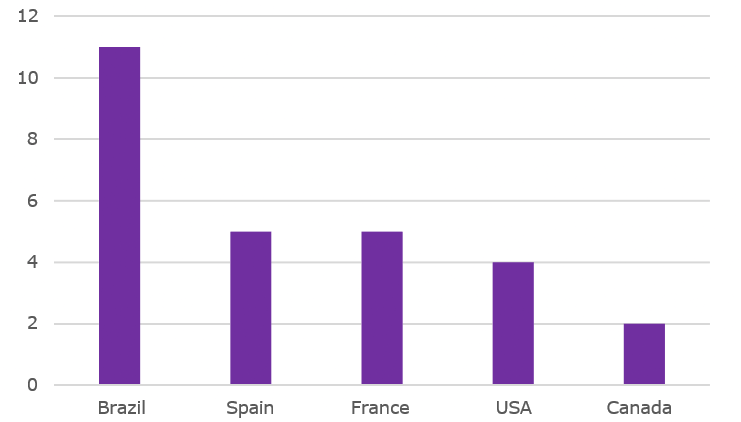
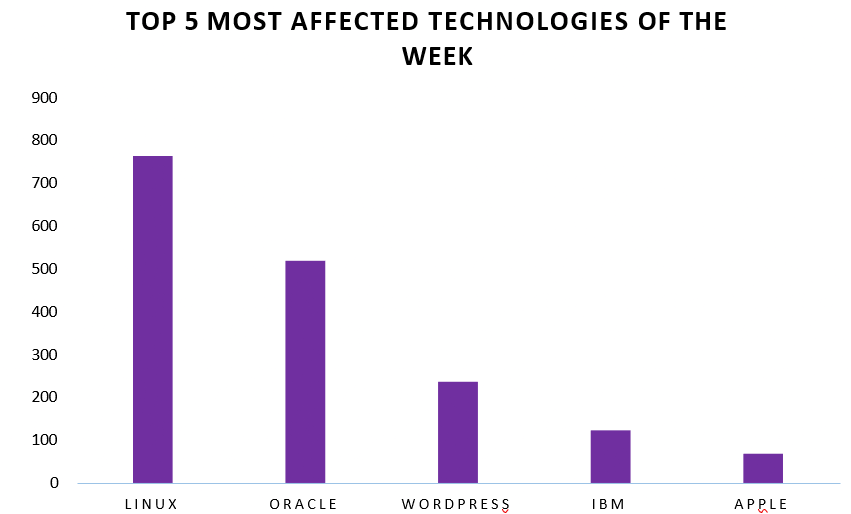
This week, CYFIRMA researchers have observed significant impacts on various technologies due to a range of vulnerabilities. The following are the top 5 most affected technologies.
ETLM Assessment:
The vulnerability in Altium Enterprise Server presents a critical security risk to organizations using affected versions of the enterprise server. The issue is caused by a server-side request forgery vulnerability in the UnifiedLogin service combined with missing authentication for an internal critical function. An unauthenticated network attacker can cause the server to make requests to internal services, potentially exposing configuration and credential material. Successful exploitation could allow the attacker to obtain an administrative session and result in full compromise of the affected server and its services. The vulnerability carries a CVSS v4.0 score of 10.0 (Critical). Organizations using affected Altium Enterprise Server versions should prioritize upgrading to version 8.1.1 or later. Security teams should also monitor outbound requests from the UnifiedLogin service, review access controls, and investigate unexpected authentication or administrative activity. Prompt remediation and continuous monitoring are recommended to reduce the risk of unauthorized access and system compromise.
SafePay Ransomware attacked and published the data of an Information Technology company from Japan
Summary:
Recently, we observed that SafePay Ransomware attacked and published the data of an Information Technology company from Japan on its dark web website. The compromised company is a Japanese information technology company headquartered in Kiryu, Gunma Prefecture. Established in January 1970 as a regional computer-services center, the company has developed into a publicly listed systems integrator providing software development, information-processing services, system equipment, cloud services, data-center operations and other IT solutions. Its customer base spans manufacturing, mobility, printing, retail, healthcare, education, energy, water utilities and local government. It provides consulting, system development and implementation, outsourcing, network and security services, cloud platforms, operational support and data-center services. The company operates development centers and support offices across Japan and also has overseas group operations in Vietnam and the Philippines. The compromised data appears to include database backups and database files, user-related information, application data, public-facing web/application files, disk-check or system-related data, and log files. The exposed directory listing specifically shows BAK_DB, SQL_DB, Users, data, public, and a 48 MB backup/log file, indicating that the stolen data may include database records, user information, application files, system or operational data, and backup/log information.
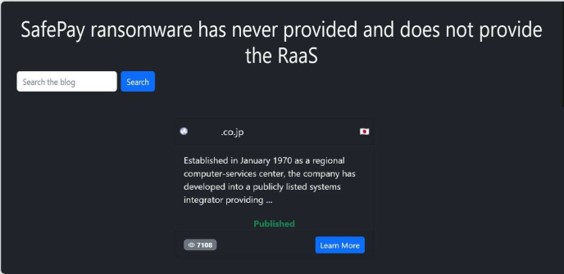

Source: Dark Web
Relevancy & Insights:
ETLM Assessment:
According to CYFIRMA’s assessment, SafePay represents a sophisticated, fast-moving ransomware threat capitalizing on VPN weaknesses and credential theft, employing effective double extortion tactics to maximize ransom payments. Organizations, especially in highly targeted sectors and regions, must prioritize layered defenses and active hunting for early detection.
Unauthorized National Health Insurance Database Advertised on a Leak Site
Summary
The CYFIRMA research team identified a post on a cybercrime forum advertising the sale of a large database allegedly associated with South Korea’s national health insurance system. According to the forum advertisement, the dataset reportedly contains approximately 51 million unique records and includes extensive personal, demographic, insurance, employment, and health-screening information. The seller has also provided sample data as an indication of possession, while the complete database is reportedly being offered for sale for approximately US$900.
Allegedly Exposed Information
Based on the information visible in the advertisement, the dataset may contain:
The authenticity and provenance of the advertised dataset remain unverified. This assessment is based on information displayed in the cybercrime-forum advertisement and should not be interpreted as independent confirmation that the database was legitimately obtained or that all advertised records are authentic. The accompanying screenshot shows the database advertisement, its claimed record volume, pricing information, and sample database fields.
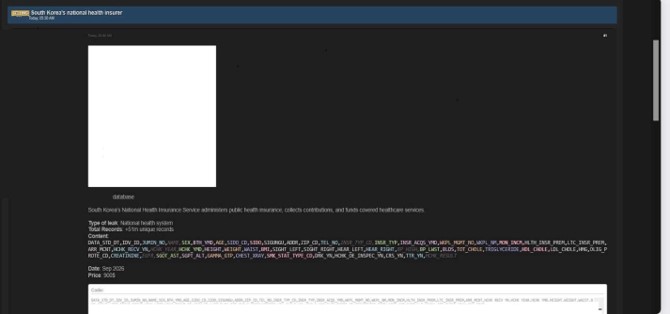
Source: Underground Forums
Saudi Government Employee Database Advertised on a Leak Site
Summary:
The CYFIRMA research team identified a post on a cybercrime forum advertising the sale of a database allegedly originating from a Saudi Arabian government entity. According to the advertisement, the dataset reportedly contains government employee profiles encompassing personal identifiers, contact information, employment details, and residential or workplace-related information.
The advertisement identifies the alleged source as a Saudi government domain and provides database field names as evidence of the information reportedly contained in the dataset.
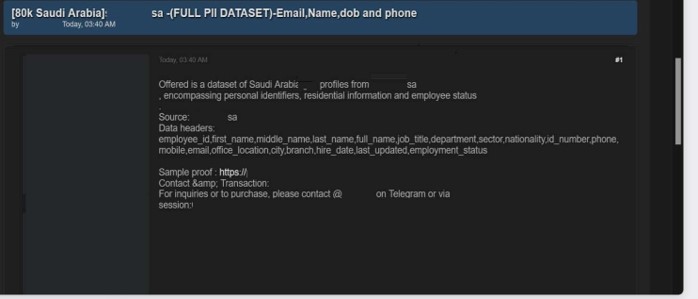
Source: Underground Forums
Relevancy & Insights:
Financially motivated cybercriminals are continuously looking for exposed and vulnerable systems and applications to exploit. A significant number of these malicious actors congregate within underground forums, where they discuss cybercrime and trade stolen digital assets. Operating discreetly, these opportunistic attackers target unpatched systems or vulnerabilities in applications to gain access and steal valuable data. Subsequently, the stolen data is advertised for sale within underground markets, where it can be acquired, repurposed, and utilized by other malicious actors in further illicit activities.
ETLM Assessment:
The threat actor is assessed as an active and capable cybercriminal entity primarily involved in data-leak and information-extortion activities, with multiple indications of unauthorized access to systems and the subsequent dissemination or sale of compromised data through underground forums. Their activities demonstrate the evolving sophistication of organized cybercriminal networks and highlight the increasing risk of sensitive information being exploited for financial gain, fraud, and follow-on attacks. Organizations should strengthen their cybersecurity posture through continuous monitoring, proactive threat intelligence, robust access controls, enhanced data protection, and timely defensive measures to safeguard sensitive information and critical infrastructure.
Recommendations:
Enhance the cybersecurity posture by:
The CYFIRMA research team identified a post on a cybercrime forum claiming unauthorized access to and availability of private project files belonging to an Indian organization operating across the real-estate and healthcare sectors. The forum post states that the organization began operations in the real-estate sector and subsequently expanded into healthcare.
According to the advertisement, the allegedly obtained material consists of private project files and associated business documents. A download link was also included in the post, indicating that the files were being made available for unauthorized access or distribution.
Allegedly Exposed Information
Based on the information visible in the forum post, the exposed material may include:
The exact contents, volume, and sensitivity of the files could not be independently established from the screenshot alone.
Potential Impact
If the advertised files are genuine, unauthorized disclosure could potentially enable:
The authenticity and provenance of the advertised files remain unverified. This assessment is based solely on the information displayed in the cybercrime-forum advertisement and has not been independently confirmed.
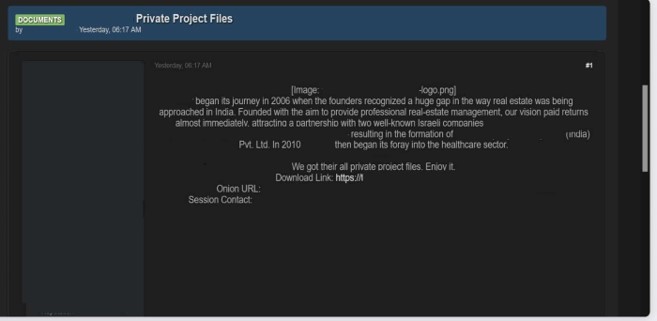
Source: Underground Forums
STRATEGIC RECOMMENDATIONS
MANAGEMENT RECOMMENDATIONS
TACTICAL RECOMMENDATIONS
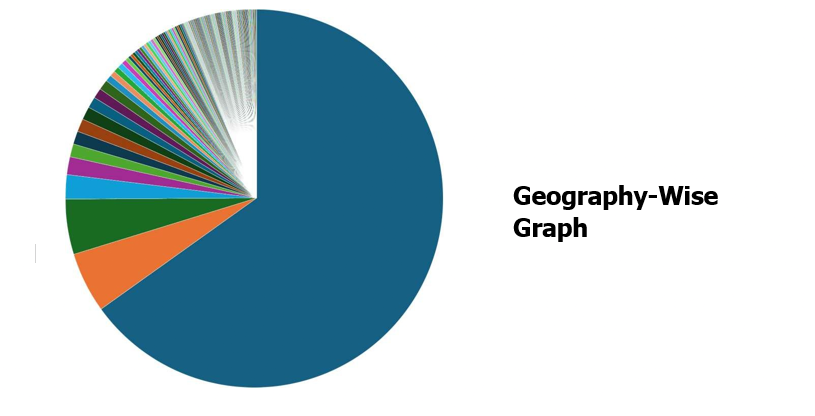
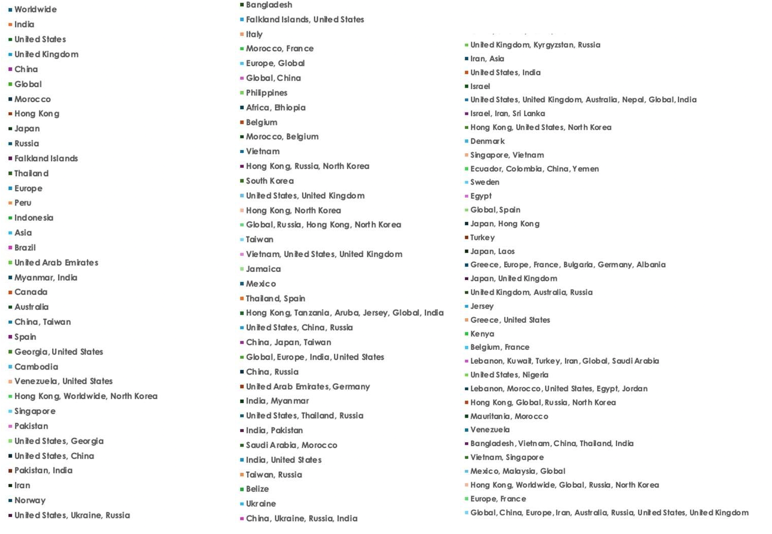
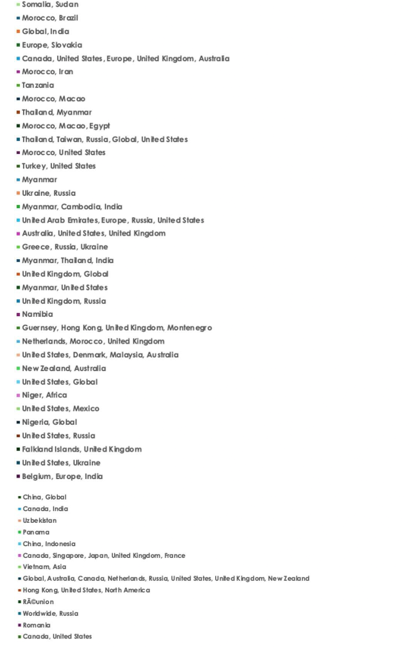
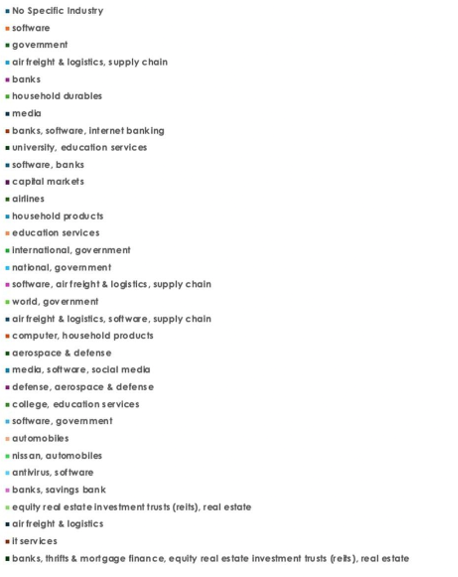
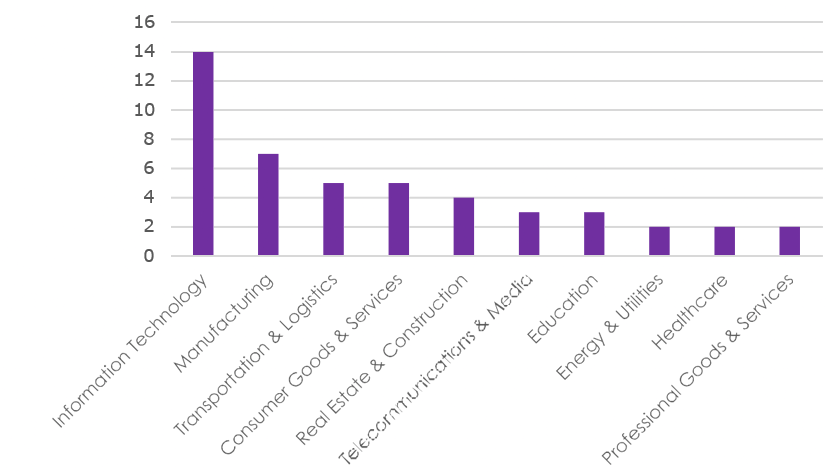
Please find the Geography-Wise and Industry-Wise breakup of cyber news for the last 5 days as part of the situational awareness pillar.