
CYFIRMA Research and Advisory Team would like to highlight ransomware trends and insights gathered while monitoring various forums. This covers a variety of topics that can be pertinent to your company, including technology, geography, and industries.
Type: Ransomware
Target Technologies: Windows
Targeted Countries: United States, India, Turkey, Peru, Mexico
Targeted Industries: Manufacturing, Technology, Financial Services, Public Sector, Business Services
Introduction
CYFIRMA Research and Advisory Team has found Black Shrantac Ransomware while monitoring various underground forums as part of our Threat Discovery Process.
Black Shrantac Ransomware
Researchers have identified Black Shrantac as a ransomware strain that encrypts files, alters their names, and leaves victims unable to access their data. In testing, it was observed that the malware replaces original filenames with random character strings and appends the “.shrt” extension, ex., converting “1.jpg” into something like “0WeRZQJSTkOAnYP4.shrt.” After completing encryption, Black Shrantac changes the desktop wallpaper and generates a ransom message titled “shrt.readme.txt,” signaling that the victim’s data has been both encrypted and extracted from the system.
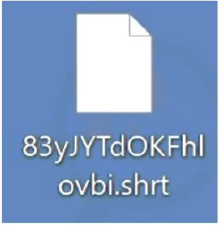
Screenshot of files encrypted by ransomware (Source: Surface Web)
The ransom note states that the attackers seek payment in Bitcoin and presents the extortion as a “business transaction.” Victims are told they may submit a few small, non-critical files to verify the attackers’ ability to decrypt. The message includes Tor- based communication portals, Tox contact information, and explicit warnings not to rename files or reboot systems, claiming such actions could cause irreversible damage. It also threatens to leak or sell stolen data if no contact is made, while emphasizing that access to negotiation credentials is required to proceed.
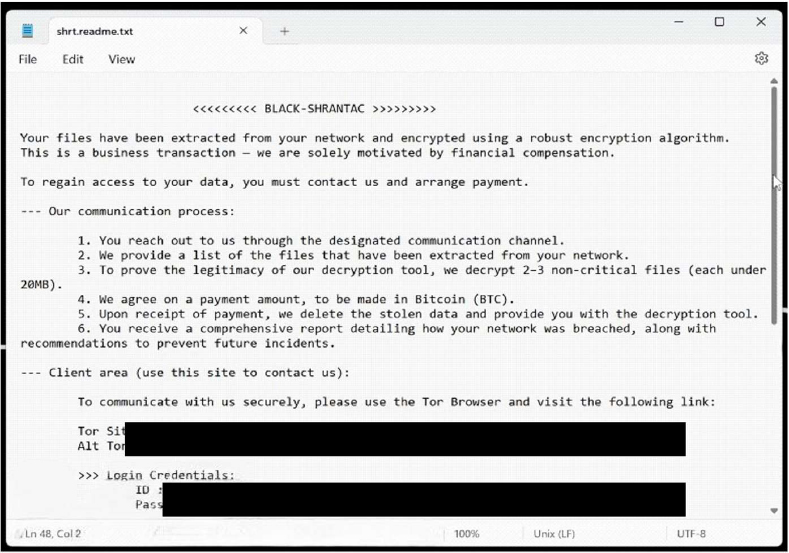
The appearance of Black Shrantac ‘s ransom note (shrt.readme.txt) (Source: Surface Web)
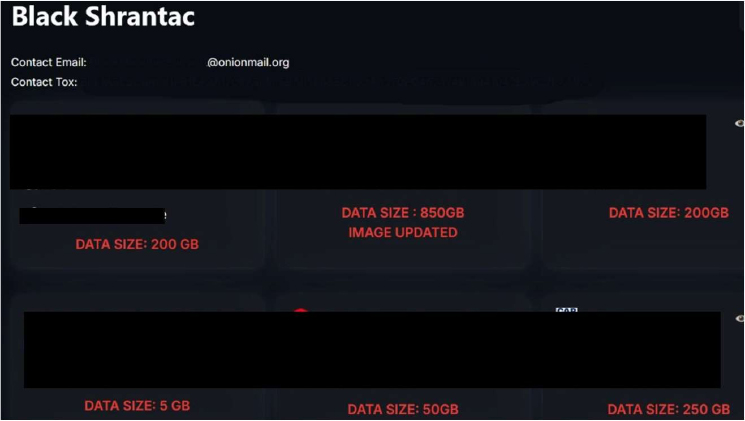
The appearance of Black Shrantac’s data leak site (Source: Surface Web)
The following are the TTPs based on the MITRE Attack Framework
| Tactic | Technique ID | Technique Name |
| Execution | T1053 | Scheduled Task/Job |
| Execution | T1059 | Command and Scripting Interpreter |
| Execution | T1129 | Shared Modules |
| Persistence | T1053 | Scheduled Task/Job |
| Persistence | T1112 | Modify Registry |
| Privilege Escalation | T1053 | Scheduled Task/Job |
| Privilege Escalation | T1134 | Access Token Manipulation |
| Defense Evasion | T1027 | Obfuscated Files or Information |
| Defense Evasion | T1036 | Masquerading |
| Defense Evasion | T1070 | Indicator Removal |
| Defense Evasion | T1112 | Modify Registry |
| Defense Evasion | T1134 | Access Token Manipulation |
| Defense Evasion | T1202 | Indirect Command Execution |
| Credential Access | T1003 | OS Credential Dumping |
| Credential Access | T1552.001 | Unsecured Credentials: Credentials In Files |
| Discovery | T1057 | Process Discovery |
| Discovery | T1082 | System Information Discovery |
| Discovery | T1083 | File and Directory Discovery |
| Discovery | T1614 | System Location Discovery |
| Collection | T1005 | Data from Local System |
| Collection | T1114 | Email Collection |
| Command and Control | T1071 | Application Layer Protocol |
| Command and Control | T1090 | Proxy |
| Impact | T1486 | Data Encrypted for Impact |
Relevancy and Insights:
ETLM Assessment:
CYFIRMA’s assessment indicates that Black Shrantac is currently a capable and structured ransomware strain, featuring strong file-encryption behavior, randomized filename rewriting, data theft, scheduled-task persistence, and multi-channel communication through TOR and Tox. Its ransom delivery methods, wallpaper replacement, and extortion approach closely align with modern double-extortion families, showing that it already operates with a mature set of features designed for disruption and financial gain. Given this foundation, its evolution is likely to focus on strengthening its resilience, expanding its reach, and improving its ability to evade security controls.
As it evolves, Black Shrantac could adopt more effective anti-analysis strategies, incorporate automated lateral-movement techniques, and enhance its data- exfiltration processes to increase the pressure placed on victims. Future variants may introduce cloud-targeting capabilities, broader system-recovery destruction, and more robust encryption or obfuscation layers to hinder forensic investigation. By integrating modular components or adapting its infrastructure, the ransomware could become more scalable, harder to detect, and increasingly difficult for defenders to contain across enterprise environments.
Sigma rule:
title: Suspicious Schtasks Schedule Types tags:
– attack.privilege-escalation
– attack.persistence
– attack.execution
– attack.t1053.005 logsource:
product: windows category: process_creation
detection: selection_img:
– Image|endswith: ‘\schtasks.exe’
– OriginalFileName: ‘schtasks.exe’ selection_time:
CommandLine|contains:
– ‘ ONLOGON ‘
– ‘ ONSTART ‘
– ‘ ONCE ‘
– ‘ ONIDLE ‘
filter_privs: CommandLine|contains:
– ‘NT AUT’ # This covers the usual NT AUTHORITY\SYSTEM
– ‘ SYSTEM’ # SYSTEM is a valid value for schtasks hence it gets it’s own value with
space
– ‘HIGHEST’
condition: all of selection_* and not 1 of filter_* falsepositives:
– Legitimate processes that run at logon. Filter according to your environment level: high
(Source: Surface Web)
IOCs:
Kindly refer to the IOCs section to exercise control of your security systems.
STRATEGIC RECOMMENDATIONS
MANAGEMENT RECOMMENDATIONS
TACTICAL RECOMMENDATIONS
Type: Remote Access Trojan (RAT) | Objectives: Espionage & Credential Theft | Target Technology: Windows OS | Target Geography: Global
CYFIRMA collects data from various forums, based on which the trend is ascertained. We identified a few popular malwares that were found to be distributed in the wild to launch cyberattacks on organizations or individuals.
Active Malware of the week
This week, “CastleRAT” is trending.
Overview of CastleRAT Malware
CastleRAT is a newly observed remote access trojan that surfaced in early 2025 and has quickly gained attention for its flexible design and wide applicability across different attack campaigns. Distributed in both lightweight Python builds and more robust C- compiled versions, the malware is built to give attackers a discreet entry into Windows systems while avoiding common security controls. Its creators have designed CastleRAT to blend into normal system behavior, enabling it to operate quietly while establishing communication with remote servers controlled by the attacker.
Once active on a device, CastleRAT collects essential system details and maintains constant communication with its operator, allowing remote actions to be executed without the user’s awareness. It can capture on-screen information, monitor typed input, and access clipboard contents, activities that can reveal credentials, financial details, or other sensitive data. The malware also supports the delivery of additional tools from the attacker’s server and can open a hidden command interface, enabling further manipulation of the compromised system. Its ability to disguise itself as legitimate software components further strengthens its persistence.
The progression of CastleRAT demonstrates how contemporary adversaries are shifting toward highly flexible and low-visibility tooling to broaden their operational reach. Its preference for masked system activity, quietly re-launched browsers, and subtle data exchange methods reveal a clear focus on avoiding conventional security controls. For enterprise environments, this underscores the growing need to scrutinize irregular workstation behavior, enhance endpoint observability, and maintain well-rehearsed incident response procedures. In an era where intrusion techniques are becoming more seamless and unobtrusive, CastleRAT represents the kind of streamlined yet impactful threat that reinforces the critical role of early anomaly detection and behavior-driven defensive measures.
Attack Method
While the initial access method remains unclear, upon activation, CastleRAT performs an initial reconnaissance routine, collecting key host identifiers such as system metadata, user information, machine-specific GUIDs, and public IP details retrieved from an external lookup service. This data is transmitted to the command-and-control infrastructure as part of its periodic beaconing cycle. Subsequently, the malware launches multiple internal threads, each responsible for executing a distinct malicious function. Notably, early-stage tasks include the continuous monitoring of clipboard activity, enabling the silent acquisition of copied credentials, cryptocurrency information, and other sensitive artefacts that naturally pass through clipboard use.
As the intrusion progresses, CastleRAT shifts from passive surveillance to covert interactive manipulation. It intercepts clipboard operations and synthesizes paste actions to route harvested data through trusted user-facing applications, thereby embedding exfiltration within normal device behavior. In parallel, it employs RC4-based encryption to secure its communication with the C2 server, downloading DLL-based modular components and executing them through legitimate Windows utilities, granting the operator a concealed remote shell environment. This shell is constructed through redirected inter-process communication pipes, allowing commands to be issued and responses retrieved without displaying any visible terminal window or generating conspicuous user-side activity.
CastleRAT further strengthens its presence by enabling a range of persistent surveillance and privilege-access features. It configures system-level hooks to capture keystrokes, stores intercepted input within temporary files prior to encryption and exfiltration, and periodically captures screenshots of the active desktop. Malware also manipulates browser behavior by terminating active sessions and silently spawning Chromium-based instances with audio-restrictive parameters, facilitating visual or auditory monitoring while minimizing user alerts. To ensure continued operation across system restarts, it registers a scheduled task that reinstates the malware at startup, thereby establishing durable persistence.
In its later operational phase, the malware expands its communication flexibility by leveraging legitimate web platforms as dead-drop locations for secondary configuration and tasking. Additionally, it employs an advanced privilege-escalation technique that abuses service-level behavior to identify privileged process handles, duplicate them, and integrate them into newly spawned malware instances. This handle-stealing approach enables elevated access and in-memory manipulation with limited on-disk evidence, complicating detection and forensic reconstruction. Collectively, these behaviors reflect a methodical attack methodology designed to maintain long-term, covert control through a combination of surveillance, stealthy system manipulation, and resilient communication mechanisms.
The following are the TTPs based on the MITRE Attack Framework for Enterprise
| Tactic (ID) | Technique ID | Technique Name |
| Execution | T1559 | Inter-Process Communication |
| Persistence | T1053.005 | Scheduled Task/Job: Scheduled Task |
| Privilege Escalation | T1548.002 | Abuse Elevation Control Mechanism: Bypass User Account Control |
| Defense Evasion | T1036 | Masquerading |
| Defense Evasion | T1218.011 | System Binary Proxy Execution: Rundll32 |
| Credential Access | T1056.001 | Input Capture: Keylogging |
| Discovery | T1082 | System Information Discovery |
| Collection | T1115 | Clipboard Data |
| Collection | T1185 | Browser Session Hijacking |
| Collection | T1125 | Video Capture |
| Collection | T1113 | Screen Capture |
| Command and control | T1105 | Ingress Tool Transfer |
| Command and control | T1102.001 | Web Service: Dead Drop Resolver |
Evolving Tradecraft in Covert Intrusions
CastleRAT highlights how modern threat groups increasingly prioritize quiet, embedded operations over loud or disruptive attacks. Instead of relying on flashy techniques, the malware’s workflow is designed to mimic the natural rhythm of a host system, allowing malicious activity to blend with routine behavior. This shift shows how attackers are refining their methods to maintain uninterrupted access by shaping their tools around subtlety, patience, and operational camouflage.
Blending Surveillance with Everyday User Interactions
One notable aspect of CastleRAT’s behavior is the way it aligns its data-gathering and system-interaction capabilities with actions that users commonly perform. By structuring its monitoring functions to mirror ordinary digital tasks, it reduces the likelihood of drawing attention or triggering suspicion. This integration demonstrates a growing trend toward threats that study and replicate the flow of user activity, turning familiar interactions into windows for silent observation.
Leveraging Legitimate System Pathways for Credibility
CastleRAT’s reliance on native components and standard system mechanisms reflects a broader pattern in threat operations: the use of trusted pathways to maintain legitimacy. Rather than introducing unfamiliar tools, the malware anchors itself to processes and utilities that already exist on the device, making its presence appear routine. This strategic piggybacking on built-in system behavior underscores how contemporary attackers increasingly depend on the credibility of the host environment itself to maintain persistence and avoid scrutiny.
ETLM ASSESSMENT
From an ETLM perspective, CYFIRMA assesses that the emergence of Castle RAT indicates a future in which traditional desktop environments will require markedly stronger scrutiny. As organizational workflows become more dependent on continuous workstation usage for communication, remote access, and integrated business applications, adversaries are likely to advance techniques that blend malicious activity into routine user behavior. This evolution will make it increasingly difficult for enterprises to determine whether system actions originate from legitimate employees or from an attacker operating unobtrusively within the same environment. Consequently, organizations may be compelled to adopt more rigorous validation mechanisms for ordinary workstation interactions and re-evaluate long-standing assumptions regarding endpoint trust. As professional ecosystems grow more interconnected, campaigns resembling Castle RAT may gradually reshape confidence in day-to-day desktop activity, prompting both users and security teams to approach familiar system behavior with heightened caution.
IOCs:
Kindly refer to the IOCs Section to exercise controls on your security systems.
YARA Rules
rule CastleRAT_IOC_Only
{
meta:
author = “CYFIRMA” date = “2025-12-08”
description = “IOC-only YARA rule for detecting CastleRAT samples”
sha256_1 = “963c012d56c62093d105ab5044517fdcce4ab826f7782b3e377932da1df6896d”
sha256_2 = “f2ff4cbcd6d015af20e4e858b0f216c077ec6d146d3b2e0cbe68b56b3db7a0be”
sha256_3 = “4ef63fa536134ad296e83e37f9d323beb45087f7d306debdc3e096fed8357395”
sha256_4 = “282fa3476294e2b57aa9a8ab4bc1cc00f334197298e4afb2aae812b77e755207”
strings:
// Dummy byte patterns to keep rule valid – modify as needed
$a = { 00 }
condition: any of them
}
STRATEGIC RECOMMENDATIONS
MANAGEMENT RECOMMENDATIONS
TACTICAL RECOMMENDATIONS
Key Intelligence Signals:
Iranian Threat Actor MuddyWater – Expanding Attack Surface
About the Threat Actor
MuddyWater is an APT group that primarily targets victims in the Middle East, employing in-memory attack techniques via PowerShell. Their operations fall under the “Living off the Land” category, as they avoid creating new binaries on the victim’s system, which helps maintain a low detection profile and minimal forensic footprint. The threat actor continues to expand its attack surface by diversifying its tooling, initial access vectors, and regional targeting.
Details on Exploited Vulnerabilities
| CVE ID | Affected Products | CVSS Score | Exploit Links |
| CVE-2017- 0199 | Microsoft Office | 7.8 | link1, link2, link3 |
| CVE-2017- 8759 | Microsoft .NET Framework | 7.8 | link |
| CVE-2017-11882 | Microsoft Office | 7.8 | link |
| CVE-2017-17215 | Huawei HG532 | 8.8 | – |
| CVE-2020- 0688 | Microsoft Exchange software | 8.8 | link1, link2 |
TTPs based on MITRE ATT&CK Framework
| Tactic | ID | Technique |
| Resource Development | T1588.002 | Obtain Capabilities: Tool |
| Resource Development | T1583.006 | Acquire Infrastructure: Web Services |
| Initial Access | T1566.001 | Phishing: Spear phishing Attachment |
| Initial Access | T1190 | Exploit Public-Facing Application |
| Initial Access | T1566.002 | Phishing: Spear phishing Link |
| Execution | T1059.001 | Command and Scripting Interpreter: PowerShell |
| Execution | T1059.003 | Command and Scripting Interpreter: Windows Command Shell |
| Execution | T1059.005 | Command and Scripting Interpreter: Visual Basic |
| Execution | T1059.006 | Command and Scripting Interpreter: Python |
| Execution | T1059.007 | Command and Scripting Interpreter: JavaScript |
| Execution | T1047 | Windows Management Instrumentation |
| Execution | T1204.001 | User Execution: Malicious Link |
| Execution | T1204.002 | User Execution: Malicious File |
| Execution | T1203 | Exploitation for Client Execution |
| Execution | T1053.005 | Scheduled Task/Job: Scheduled Task |
| Execution | T1559.001 | Inter-Process Communication: Component Object Model |
| Execution | T1559.002 | Inter-Process Communication: Dynamic Data Exchange |
| Persistence | T1547.001 | Boot or Logon Autostart Execution: Registry Run Keys / Startup Folder |
| Persistence | T1574.001 | Hijack Execution Flow: DLL |
| Persistence | T1137.001 | Office Application Startup: Office Template Macros |
| Persistence | T1053.005 | Scheduled Task/Job: Scheduled Task |
| Privilege Escalation | T1548.002 | Abuse Elevation Control Mechanism: Bypass User Account Control |
| Privilege Escalation | T1547.001 | Boot or Logon Autostart Execution: Registry Run Keys / Startup Folder |
| Privilege Escalation | T1574.001 | Hijack Execution Flow: DLL |
| Privilege Escalation | T1053.005 | Scheduled Task/Job: Scheduled Task |
| Defense Evasion | T1218.003 | System Binary Proxy Execution: CMSTP |
| Defense Evasion | T1218.005 | System Binary Proxy Execution: Mshta |
| Defense Evasion | T1548.002 | Abuse Elevation Control Mechanism: Bypass User Account Control |
| Defense Evasion | T1140 | Deobfuscate/Decode Files or Information |
| Defense Evasion | T1574.001 | Hijack Execution Flow: DLL |
| Defense Evasion | T1562.001 | Impair Defenses: Disable or Modify Tools |
| Defense Evasion | T1036.005 | Masquerading: Match Legitimate Resource Name or Location |
| Defense Evasion | T1027.010 | Obfuscated Files or Information: Command Obfuscation |
| Defense Evasion | T1027.003 | Obfuscated Files or Information: Steganography |
| Defense Evasion | T1027.004 | Obfuscated Files or Information: Compile After Delivery |
| Defense Evasion | T1218.011 | System Binary Proxy Execution: Rundll32 |
| Credential Access | T1555 | Credentials from Password Stores |
| Credential Access | T1555.003 | Credentials from Password Stores: Credentials from Web Browsers |
| Credential Access | T1003.001 | OS Credential Dumping: LSASS Memory |
| Credential Access | T1003.004 | OS Credential Dumping: LSA Secrets |
| Credential Access | T1003.005 | OS Credential Dumping: Cached Domain Credentials |
| Credential Access | T1552.001 | Unsecured Credentials: Credentials In Files |
| Discovery | T1083 | File and Directory Discovery |
| Discovery | T1057 | Process Discovery |
| Discovery | T1033 | System Owner/User Discovery |
| Discovery | T1049 | System Network Connections Discovery |
| Discovery | T1016 | System Network Configuration Discovery |
| Discovery | T1087.002 | Account Discovery: Domain Account |
| Discovery | T1082 | System Information Discovery |
| Discovery | T1518 | Software Discovery |
| Discovery | T1518.001 | Software Discovery: Security Software Discovery |
| Lateral Movement | T1210 | Exploitation of Remote Services |
| Collection | T1113 | Screen Capture |
| Collection | T1560.001 | Archive Collected Data: Archive via Utility |
| Collection | T1074.001 | Data Staged: Local Data Staging |
| Command and Control | T1071.001 | Application Layer Protocol: Web Protocols |
| Command and Control | T1132.001 | Data Encoding: Standard Encoding |
| Command and Control | T1573.001 | Encrypted Channel: Symmetric Cryptography |
| Command and Control | T1105 | Ingress Tool Transfer |
| Command and Control | T1104 | Multi-Stage Channels |
| Command and Control | T1090.002 | Proxy: External Proxy |
| Command and Control | T1219 | Remote Access Tools |
| Command and Control | T1102.002 | Web Service: Bidirectional Communication |
| Exfiltration | T1041 | Exfiltration Over C2 Channel |
Latest Developments Observed
The threat actor is suspected of targeting organizations in Israel and Egypt, leveraging a custom Fooder loader designed to deploy the MuddyViper backdoor. The campaign appears to focus on enhancing defense evasion and maintaining long-term persistence within compromised environments. Once deployed, the MuddyViper backdoor enables extensive post-compromise activity, including system information collection, execution of files and shell commands, file transfer operations, and the exfiltration of Windows login credentials and browser-stored data.
ETLM Insights
MuddyWater, a well-established Iranian threat actor, continues to demonstrate increasing operational maturity, with recent insights showing expanded regional targeting, greater use of custom loaders, and a growing reliance on compromised credentials and exposed services for initial access. Their campaigns frequently combine living-off-the-land techniques with modular backdoors to maintain persistence, evade detection, and enable long-term espionage activities. Overall, the threat actor represents a persistent, adaptive, and geopolitically motivated cyber-espionage threat.
The actor’s primary objectives center on information theft and strategic intelligence collection, including:
IOCs:
Kindly refer to the IOCs section to exercise control of your security systems.
YARA Rules
rule APT_MuddyWater_Generic
{
meta:
description = “Generic detection for MuddyWater malware families (PowGoop, MuddyViper, loaders)”
author = “CYFIRMA”
threat_actor = “MuddyWater (Iran)” date = “2025-01-01”
strings:
// Common MuddyWater PowerShell patterns
$ps1 = “IEX (New-Object Net.WebClient).DownloadString” nocase
$ps2 = “FromBase64String” nocase
$ps3 = “Invoke-Expression” nocase
$ps4 = “System.Net.WebRequest” nocase
// MuddyViper / Fooder loader artifacts (publicly documented)
$mv1 = “MuddyViper” wide ascii
$mv2 = “FooderLoader” wide ascii
$mv3 = “viper_execute” ascii
// Known C2-related patterns (genericized)
$c2_1 = “/gate.php” ascii
$c2_2 = “/index.php?id=” ascii
// MuddyWater obfuscation markers
$obf1 = “PowerShell -ExecutionPolicy Bypass” nocase
$obf2 = “Add-Type -TypeDefinition” nocase
// DLL loader characteristics
$dll1 = “ExportedFunction” ascii
$dll2 = “LoadLibraryA” ascii condition:
(uint16(0) == 0x5A4D) and 3 of ($ps*) and
1 of ($mv* or $dll* or $obf* or $c2_*)
}
Recommendations Strategic
Management
Tactical
US and Canadian intelligence agencies outline a Chinese hacking campaign
The U.S. Cybersecurity and Infrastructure Security Agency (CISA), the National Security Agency (NSA), and the Canadian Centre for Cyber Security have jointly released a report on a Chinese state-sponsored malware campaign dubbed BRICKSTORM. BRICKSTORM is a sophisticated backdoor that targets both VMware vSphere environments (primarily vCenter servers and ESXi hosts) and Windows systems. Once attackers gain access to a compromised vCenter management console, they can steal cloned virtual machine snapshots to extract credentials offline and deploy hidden, rogue virtual machines for persistent access and further operations.
ETLM Assessment:
No specific APT designation (e.g., Volt Typhoon) has been publicly tied to the campaign yet, but it aligns with broader Chinese campaigns against critical infrastructure and especially accessing government entities and their classified data. The campaign highlights ongoing Chinese efforts to compromise virtualization infrastructure for espionage and long-term network persistence.
INC Ransomware Impacts YAZAKI Corp
Summary:
CYFIRMA observed in an underground forum that a company from Japan, YAZAKI Corp (https[:]//www[.]yazaki-group[.]com/), was compromised by INC Ransomware. The Yazaki Group is a global company best known for being a leading supplier of automotive wire harnesses, but it also produces other products like environmental systems and instrumentation equipment. The compromised dataset includes a wide range of sensitive information, such as confidential documents, client data, non-disclosure agreements (NDAs), financial and operational records, corporate and HR data (including employee medical records), business agreements, development materials, technical drawings, technological production requirements, and complete documentation related to the manufacturing of parts for various clients. The total volume of exposed data is estimated to be approximately 350 GB.
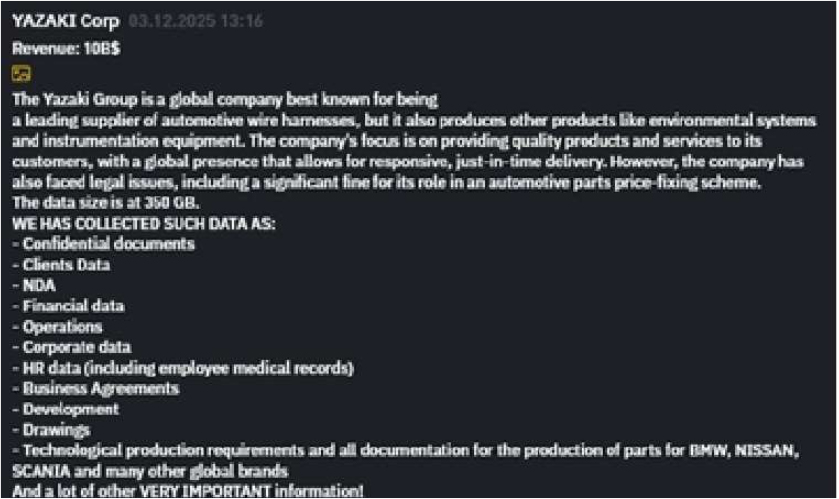
Source: Dark Web
Relevancy & Insights:
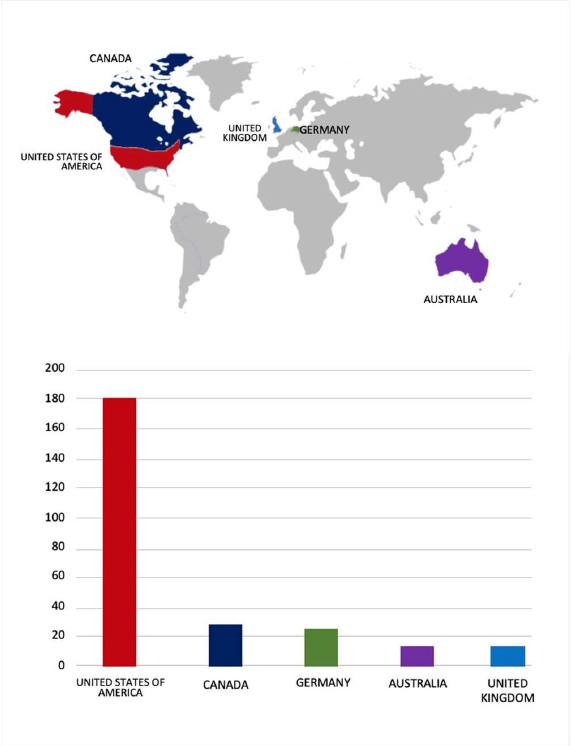
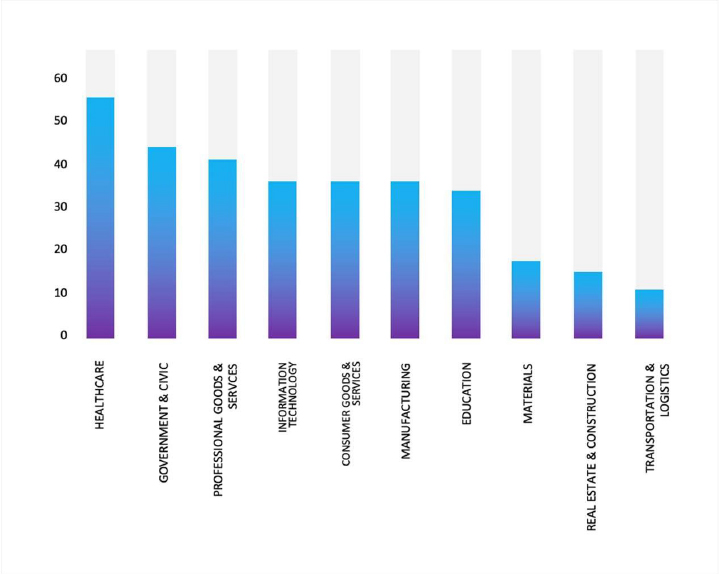
ETLM Assessment:
Based on recent assessments by CYFIRMA, INC Ransomware represents a significant threat within the evolving landscape of ransomware attacks. Its use of strong encryption methods and double extortion tactics highlights the increasing sophistication of cybercriminal operations. Organizations are advised to enhance their cybersecurity measures by implementing robust defenses against phishing attacks, maintaining updated security protocols, and monitoring for unusual network activity to mitigate risks associated with this and other ransomware variants.
Continuous vigilance is essential to protect against the threats posed by emerging ransomware groups like INC Ransomware.
Lynx Ransomware Impacts TOC Co., Ltd
Summary:
CYFIRMA observed in an underground forum that a company from Japan, TOC Co., Ltd (www[.]toc[.]co[.]jp), was compromised by Lynx Ransomware. The TOC Building is a commercial facility that provides a comprehensive floor guide, event information, and tenant details for visitors. The building hosts a variety of shops and services, including clothing stores, kitchenware, and cafes. It aims to attract a diverse clientele, including families and individuals looking for shopping and entertainment options. The compromised data contains confidential and sensitive information belonging to the organization.
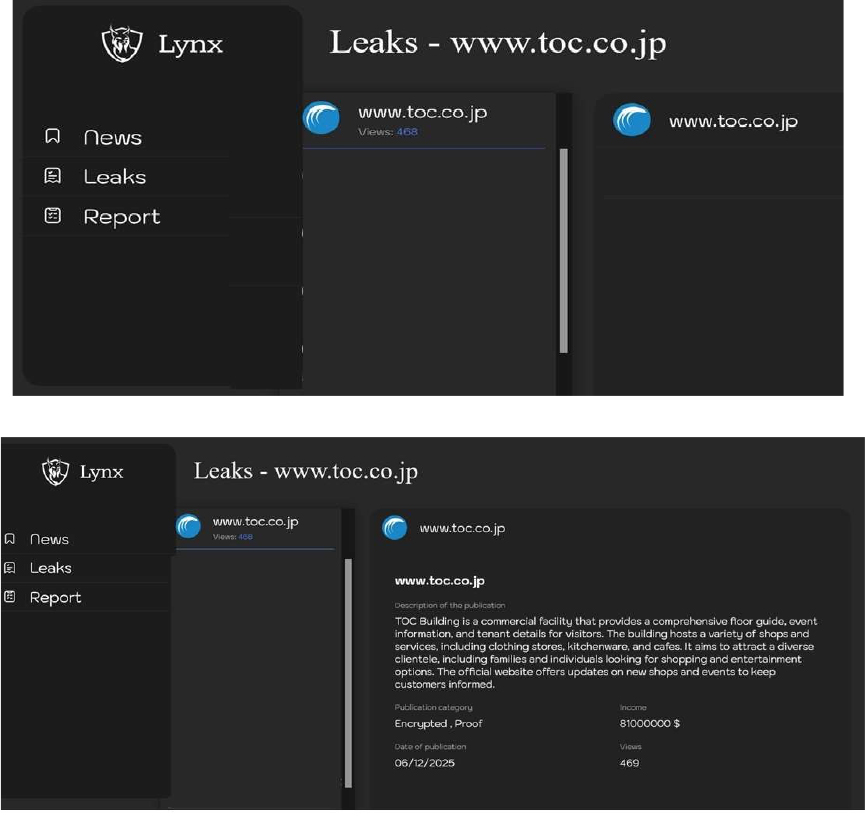
Source: Dark Web
Relevancy & Insights:
ETLM Assessment:
According to CYFIRMA’s assessment, Lynx ransomware has emerged as a significant threat in the cybersecurity landscape, leveraging advanced encryption and double extortion tactics to target small and medium-sized businesses. Its structured affiliate program and versatile ransomware toolkit make it a formidable force in the RaaS ecosystem.
Vulnerability in PgBouncer
Relevancy & Insights:
The vulnerability exists due to the usage of an untrusted search path passed via the search_path parameter in the StartupMessage.
Impact:
A remote non-authenticated attacker can send a specially crafted request during authentication and execute arbitrary SQL commands in the database.
Affected Products:
https[:]//www[.]pgbouncer[.]org/changelog.html#pgbouncer- 125x
Recommendations:
Monitoring and Detection: Implement monitoring and detection mechanisms to identify unusual system behavior that might indicate an attempted exploitation of this vulnerability.
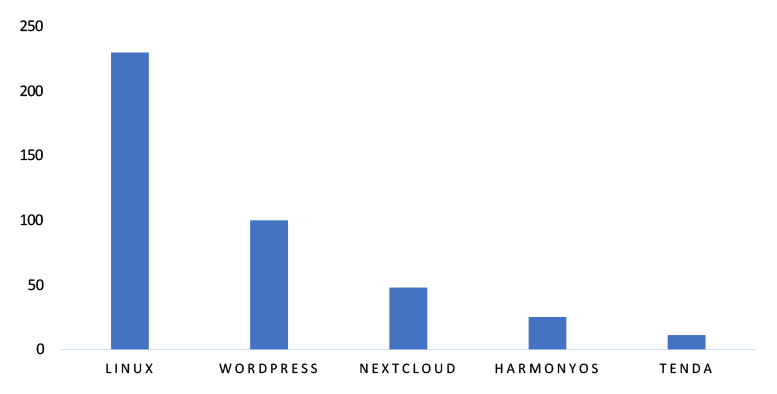
TOP 5 AFFECTED TECHNOLOGIES OF THE WEEK
This week, CYFIRMA researchers have observed significant impacts on various technologies due to a range of vulnerabilities. The following are the top 5 most affected technologies.
ETLM Assessment
Vulnerability in PgBouncer can pose significant threats to user privacy and database security. This can impact various industries globally, including technology, finance, healthcare, and enterprise IT. Ensuring the security of PgBouncer is crucial for maintaining the integrity and protection of PostgreSQL database connections worldwide. Therefore, addressing these vulnerabilities is essential to safeguarding connection pooling, authentication mechanisms, and database performance management across different geographic regions and sectors.
NightSpire Ransomware attacked and published the data of Pioneer Ocean Freight Co., Ltd.
Summary:
Recently, we observed that NightSpire Ransomware attacked and published the data of Pioneer Ocean Freight Co., Ltd (https[:]//pioneergroup[.]in[.]th/) on its dark web website. Pioneer Group is a freight-forwarding and logistics company based in Thailand, providing sea-air freight forwarding, customs brokerage, inland & heavy- cargo transport, warehousing, packaging, and project-cargo services. The data leak resulting from the ransomware attack includes billing information (both incoming and outgoing), employee data, financial records, and other sensitive and confidential information. The total size of the compromised data is approximately 5 GB.

Source: Dark Web
Relevancy & Insights:
ETLM Assessment:
According to CYFIRMA’s assessment, NightSpire is a new ransomware group that emerged in early 2025, marking itself as a formidable player in the rapidly evolving ransomware landscape. Despite its recent appearance, NightSpire has already gained attention for its aggressive tactics and well-structured operations.
Bank Mandiri Data Advertised on a Leak Site
Summary: The CYFIRMA research team has identified claims from a threat actor operating under the name “BreachLaboratory,” who alleges responsibility for compromising Bank Mandiri.
Bank Mandiri is Indonesia’s largest bank by assets, providing a broad range of banking and financial services to both corporate clients and individual customers across the country.
According to the threat actor’s claims, more than 18,000 financial records were leaked. The exposed data reportedly includes:
These allegations suggest a significant exposure of sensitive financial and customer- related information.Top of FormBottom of Form
The authenticity of this breach remains unverified at the time of reporting, as the claim originates solely from the threat actor.
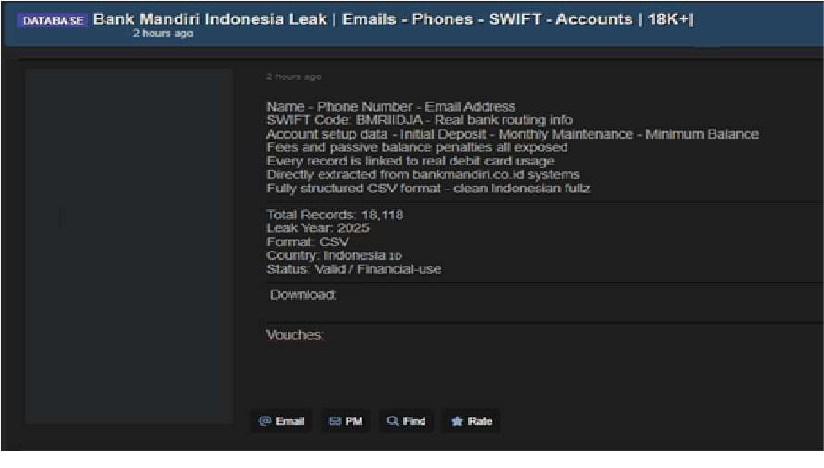
Source: Underground Forums
ThankQCamping Data Advertised on a Leak Site
Summary:
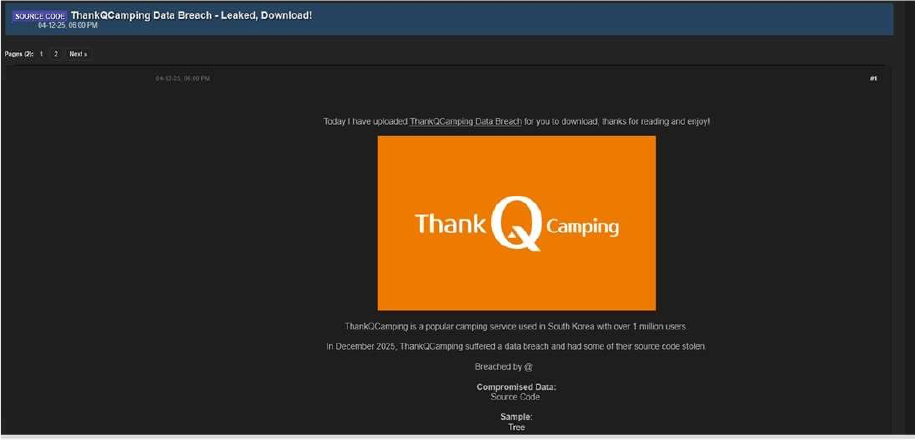
The CYFIRMA Research team has observed claims made by a threat actor identified as “888,” who alleges responsibility for a cybersecurity breach involving ThankQCamping. ThankQCamping is a well-known camping service platform in South Korea, reportedly serving over one million users nationwide. According to the threat actor, the incident took place in December 2025.
The actor claims that unauthorized access to ThankQCamping’s systems resulted in the theft of proprietary information, specifically the company’s source code. At the time of this report, there is no independent confirmation of the incident. The details shared are based solely on the threat actor’s statements, and the authenticity of the breach has not yet been verified.
Source: Underground Forums
Relevancy & Insights:
Financially motivated cybercriminals are continuously looking for exposed and vulnerable systems and applications to exploit. A significant number of these malicious actors congregate within underground forums, where they discuss cybercrime and trade stolen digital assets. Operating discreetly, these opportunistic attackers target unpatched systems or vulnerabilities in applications to gain access and steal valuable data. Subsequently, the stolen data is advertised for sale within underground markets, where it can be acquired, repurposed, and utilized by other malicious actors in further illicit activities.
ETLM Assessment:
The threat actor known as “888” is a highly active and sophisticated group specializing in data-leak operations. Multiple credible reports link the group to a series of security breaches involving unauthorized system access and the sale of stolen data across dark web marketplaces. Their activities reflect the persistent and rapidly evolving cyber threats emerging from underground communities. These incidents reinforce the need for organizations to strengthen their cybersecurity posture through continuous monitoring, advanced threat-intelligence capabilities, and proactive defense measures to safeguard sensitive data and critical infrastructure.
Recommendations: Enhance the cybersecurity posture by:
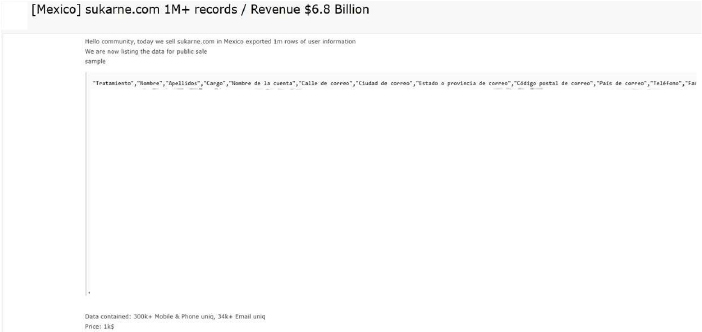
The CYFIRMA Research team observed that SuKarne, a Mexican multinational corporation and a major player in the global meat processing industry with reported revenues of $6.8 billion, has allegedly been compromised. A threat actor attempting to sell data on a dark web forum claims to have exported a database containing over 1 million rows of user and business information. The dataset is currently listed for sale for $1,000.
According to the actor, the compromised data includes 300,000+ unique mobile numbers and 34,000+ unique email addresses. Based on the sample logs provided, the exposed fields appear to cover:
The authenticity of this breach remains unverified at the time of reporting, as the claim originates solely from the threat actor.
Source: Underground Forums
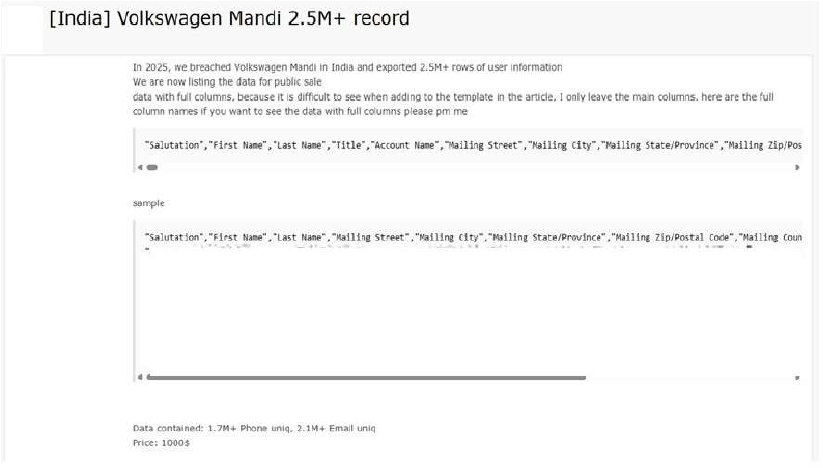
The CYFIRMA Research team has identified claims from a threat actor alleging a data breach involving Volkswagen Mandi, which the actor describes as the target of a cyber incident in December 2025. The claim was posted on a cybercrime forum, where the threat actor asserts that a large database was exfiltrated from the affected entity. Although the actor explicitly references “Volkswagen Mandi”— potentially pointing to a dealership located in Mandi, Himachal Pradesh, or an internally labeled database—the breadth of the sample data raises concerns of a much wider impact. Data samples reportedly contain addresses from multiple Indian states, including Maharashtra, Tamil Nadu, Madhya Pradesh, and Kerala, indicating that the breach may involve a centralized CRM or lead management system connected to Volkswagen operations across India.
According to the threat actor, the allegedly compromised dataset consists of more than 2.5 million records, encompassing approximately 1.7 million unique phone numbers and 2.1 million unique email addresses. The structure and identifiers present in the data suggest it may originate from a Customer Relationship Management (CRM) platform, with references to systems such as Salesforce and Zoho. If accurate, the exposure could have significant implications due to the volume and sensitivity of the information involved.
The data allegedly exposed in the breach includes the following categories:
Identity Information:
Salutations, first and last names, titles, and other personal identifiers.
Contact Details:
Mobile numbers, landline phone numbers, fax numbers, and both business and personal email addresses.
Physical Address Information:
Complete mailing, billing, and shipping addresses, including street details, cities, states/provinces, postal/ZIP codes, and countries.
Vehicle-Related Information:
Vehicle Identification Numbers (VINs), vehicle details, registration numbers, and test drive history.
Account and Dealer Data:
Account IDs, account owners, dealer codes, dealer city information, and system identifiers such as Zoho IDs and Data.com keys.
Internal and Operational Records:
Lead source information, purchase agreements, warranty details, service manager names, customer feedback, and service-related logs.
At the time of reporting, these claims remain unverified and are based solely on assertions made by the threat actor. Further validation is required to confirm the authenticity, scope, and impact of the alleged breach.
Source: Underground Forums
STRATEGIC RECOMMENDATIONS
MANAGEMENT RECOMMENDATIONS
TACTICAL RECOMMENDATIONS
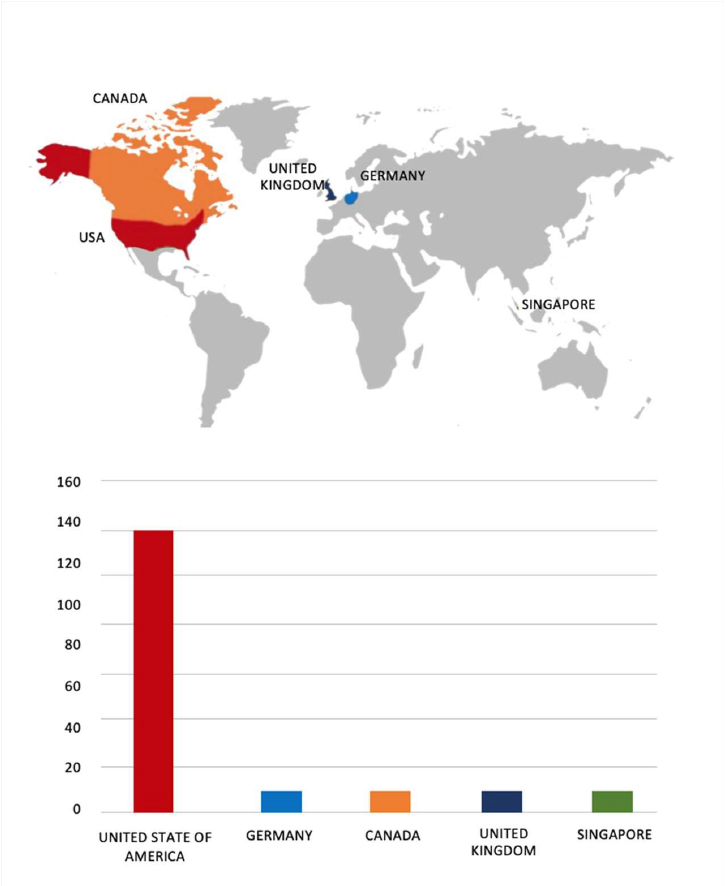
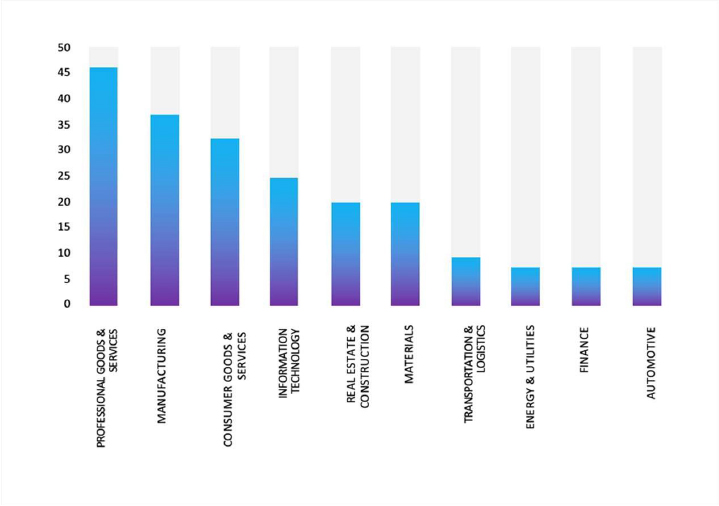
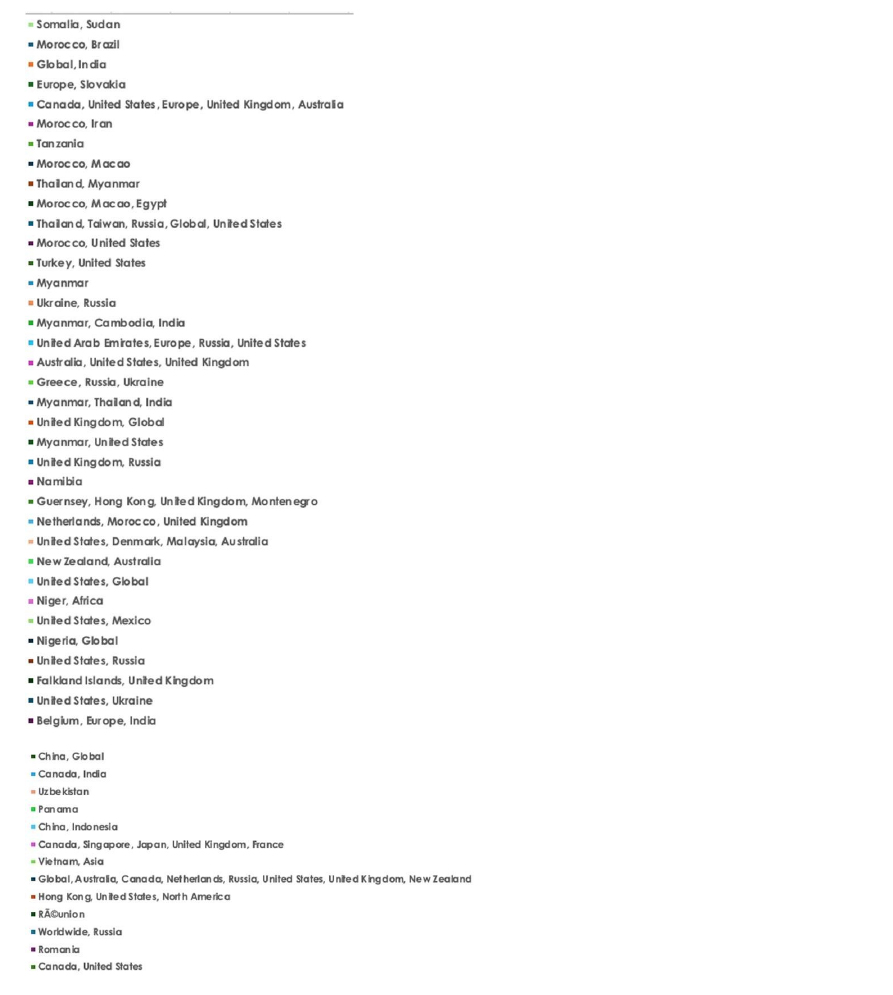
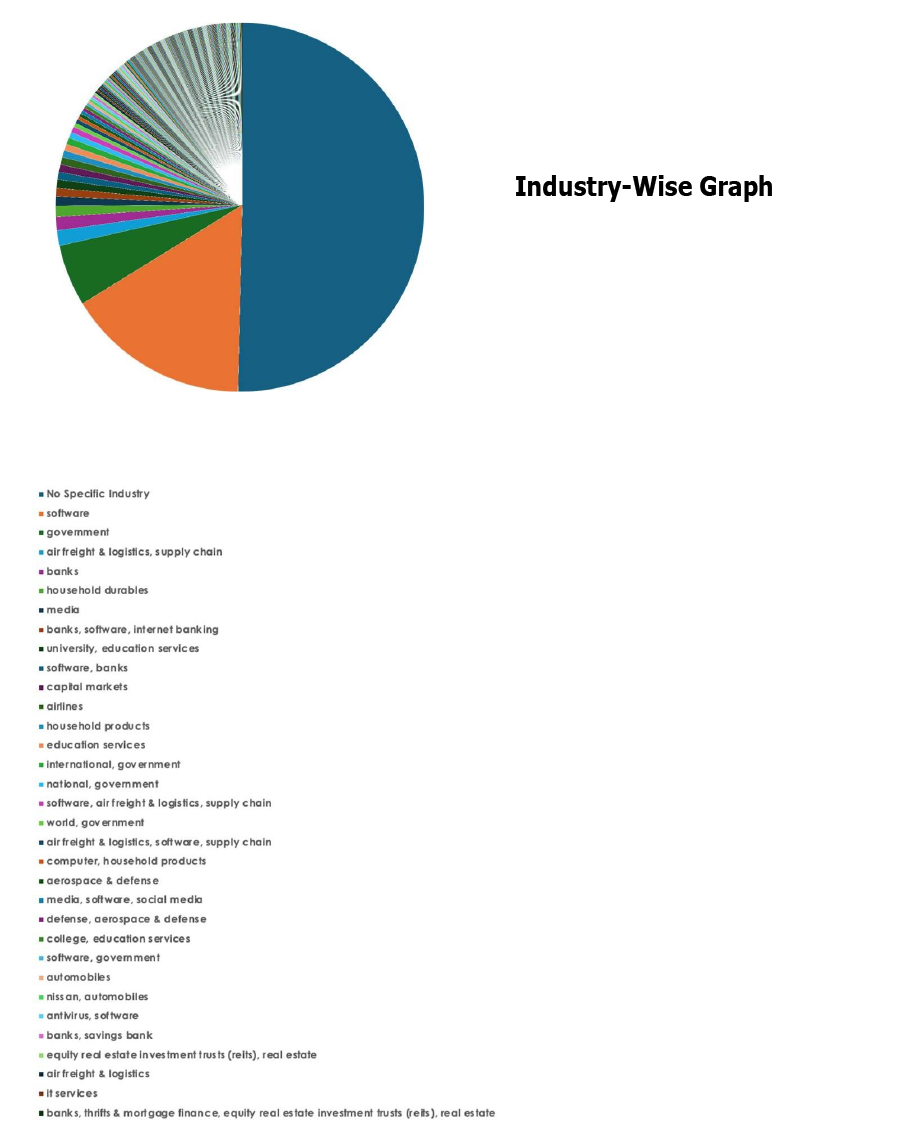
Please find the Geography-Wise and Industry-Wise breakup of cyber news for the last 5 days as part of the situational awareness pillar.

For situational awareness intelligence and specific insights mapped to your organisation’s geography, industry, and technology, please access DeCYFIR.
