
CYFIRMA Research and Advisory Team would like to highlight ransomware trends and insights gathered while monitoring various forums. This includes multiple industries, geographies, and technologies that could be relevant to your organisation.
Type: Ransomware
Target Technologies: Windows OS
Introduction:
CYFIRMA Research and Advisory Team has found CRPxO Ransomware while monitoring various underground forums as part of our Threat Discovery Process.
CRPxO Ransomware
CRPxO is a file-encrypting ransomware that employs a double-extortion approach to compromise systems and pressure affected organizations into making ransom payments. Once executed, the ransomware encrypts accessible files, preventing victims from accessing documents, databases, backups, images, and other critical information. The encrypted files are appended with the .crpx0 extension while retaining their original filenames. For example, a file named 1.jpg is renamed to 1.jpg.crpx0. Following encryption, the ransomware generates ransom notes named HOW TO RECOVER.txt and HOW TO RECOVER.html and modifies the desktop wallpaper to display an encryption notification. In addition to disrupting file availability, the attackers claim to have exfiltrated sensitive information before initiating encryption, threatening to disclose or sell the stolen data if the ransom demands are not fulfilled. This combination of encryption and alleged data theft allows the attackers to exert pressure through operational disruption, financial consequences, and potential reputational damage.
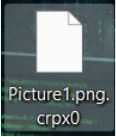
Screenshot: File encrypted by the CRPxO ransomware (Source: Surface Web)
The ransom note, HOW TO RECOVER.txt, informs victims that their files have been encrypted using what the attackers describe as AES-256 and RSA-2048 encryption algorithms. It further claims that sensitive organizational information has been transferred to attacker-controlled servers before encryption. The attackers establish a strict negotiation timeline, offering a 50% ransom discount to victims who initiate contact within the first 24 hours, demanding the full payment amount between 24 and 48 hours, and threatening to publish or sell the allegedly stolen information after 48 hours. Victims are instructed to communicate through a Tor-based negotiation portal, qTox, or Session messenger and provide their assigned recovery identifier. The ransom payment is requested in Bitcoin or Monero, while the attackers offer to decrypt three to five small files, totaling less than 4 MB, free of charge as proof of their claimed decryption capability.
The accompanying HTML ransom note repeats the payment instructions and introduces a countdown timer indicating the remaining time before the alleged data disclosure. Both ransom messages discourage victims from modifying encrypted files, attempting independent recovery, or contacting law enforcement and recovery specialists. The attackers also threaten to notify affected customers, patients, clients, and business partners if payment is not received. These demands are designed to increase psychological pressure and accelerate ransom negotiations. However, the attackers’ claims regarding data exfiltration, encryption algorithms, recovery capabilities, and permanent deletion of stolen information should not be treated as independently verified guarantees.
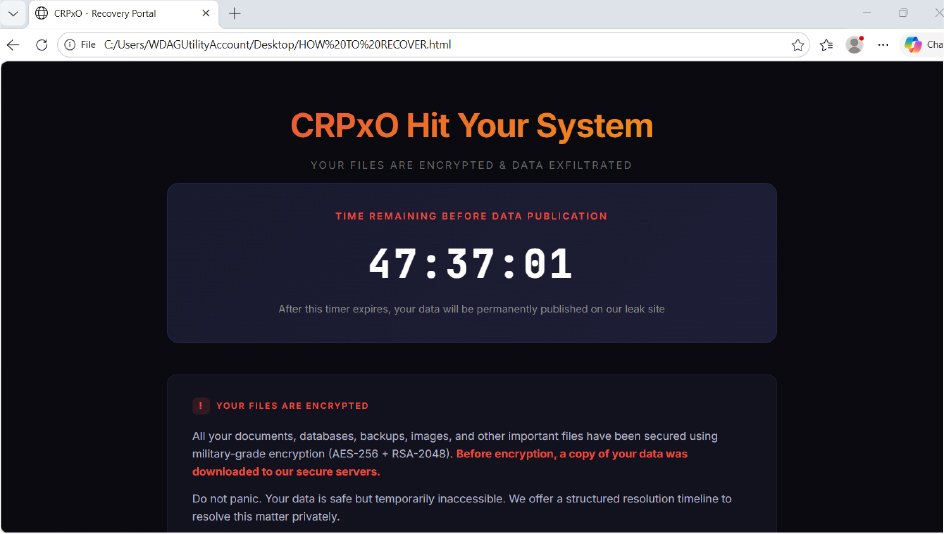
Screenshot: The appearance of CRPxO Ransomware’s ransom note (HOW TO RECOVER.txt)
The following are the TTPs based on the MITRE ATT&CK Framework
| Tactic | Technique ID | Technique Name |
|---|---|---|
| Execution | T1059 | Command and Scripting Interpreter |
| Execution | T1129 | Shared Modules |
| Privilege Escalation | T1055 | Process Injection |
| Privilege Escalation | T1134.004 | Access Token Manipulation: Parent PID Spoofing |
| Discovery | T1012 | Query Registry |
| Discovery | T1033 | System Owner/User Discovery |
| Discovery | T1057 | Process Discovery |
| Discovery | T1082 | System Information Discovery |
| Discovery | T1083 | File and Directory Discovery |
| Discovery | T1518 | Software Discovery |
| Stealth | T1027.002 | Obfuscated Files or Information: Software Packing |
| Stealth | T1027.009 | Obfuscated Files or Information: Embedded Payloads |
| Stealth | T1055 | Process Injection |
| Stealth | T1070 | Indicator Removal |
| Stealth | T1134.004 | Access Token Manipulation: Parent PID Spoofing |
| Stealth | T1564.003 | Hide Artifacts: Hidden Window |
Relevancy and Insights:
ETLM Assessment:
CRPxO ransomware may evolve toward a more modular and automated attack architecture, allowing its operators and affiliates to conduct increasingly coordinated intrusions against enterprise environments. Although current variants already demonstrate Python-based execution, scheduled-task persistence, security-control interference, and network propagation capabilities, future developments could focus on improving the reliability, stealth, and adaptability of these mechanisms. The malware may incorporate more sophisticated environment-aware execution, dynamically selecting payload components based on the compromised host’s operating system, available privileges, security configuration, and network connectivity. Future versions could also introduce improved payload obfuscation, memory-resident execution, and automated security-product identification to reduce the effectiveness of conventional endpoint detection mechanisms. Additionally, the operators may refine their existing partial-encryption strategies through adaptive file prioritization and more efficient parallel processing, potentially increasing the speed and operational impact of ransomware deployment across large enterprise networks.
Another possible development is the expansion of CRPxO’s existing double-extortion operations into more targeted and automated extortion campaigns. Future variants could integrate enhanced data classification capabilities to identify high-value organizational information, including financial records, customer databases, intellectual property, and authentication-related material, before selecting files for exfiltration or encryption. The operators may also develop more sophisticated victim-specific negotiation systems, automated leak-site publication mechanisms, and targeted communication strategies designed to pressure affected organizations through customers, business partners, and regulatory exposure. As ransomware affiliate operations become increasingly competitive, CRPxO may further expand its distribution methods through compromised legitimate services, malicious software packages, and increasingly convincing social-engineering campaigns. Future development could also include improved cross-platform execution, allowing a single intrusion to disrupt a wider range of enterprise endpoints and shared infrastructure. These potential developments represent forward-looking assessments based on the ransomware’s existing architecture and broader attack trends rather than confirmed features of future CRPxO variants.
Sigma rule:
title: Potential Vcruntime140 DLL Sideloading
tags:
– attack.persistence
– attack.privilege-escalation
– attack.execution
– attack.stealth
– attack.t1574.001
logsource:
category: image_load
product: windows
detection:
selection:
ImageLoaded|endswith: ‘\vcruntime140.dll’
filter_main_legitimate_path:
ImageLoaded|startswith:
– ‘C:\Windows\System32\’
– ‘C:\Windows\SysWOW64\’
– ‘C:\Program Files\’
– ‘C:\Program Files (x86)\’
filter_main_legitimate_signer:
Signed: true
SignatureStatus: ‘Valid’
Description|endswith: ‘C Runtime Library’
filter_optional_onedrive:
Image|startswith: ‘C:\Users\’
Image|contains: ‘\AppData\Local\Microsoft\OneDrive\’
condition: selection and not 1 of filter_main_* and not 1 of filter_optional_*
falsepositives:
– Unknown
level: high
(Source: Surface Web)
IOCs:
Kindly refer to the IOCs section to exercise control of your security systems.
(Source: Surface Web)
STRATEGIC RECOMMENDATIONS
MANAGEMENT RECOMMENDATIONS
TACTICAL RECOMMENDATIONS
Type: Backdoor / RAT | Objectives: Remote Control, Persistence and Data Exfiltration | Target Technology: Windows | Target Geography: Global
CYFIRMA collects data from various forums based on which the trend is ascertained. We identified a few popular malwares that were found to be distributed in the wild to launch cyberattacks on organizations or individuals.
Active Malware of the Week
This week, KeefStealer Malware is in focus.
Overview of Operation KeefStealer Malware
The analyzed sample, referred to as “KeefStealer,” exhibits behavior consistent with a backdoor designed to provide a remote operator with persistent access to a compromised system. Its capabilities extend beyond conventional information theft, enabling interactive remote access, real-time desktop monitoring, keystroke and clipboard surveillance, and the collection of stored credentials and other sensitive information. It also maintains communication with externally controlled infrastructure, allowing the operator to retain access to the compromised environment and potentially interact with the system remotely. Collectively, these capabilities indicate that the malware is primarily designed to establish and maintain remote control, with information theft serving as an additional objective.
Analysis of the sample identified capabilities for real-time desktop monitoring, keystroke and clipboard capture, remote execution of operator-directed actions, and the collection of potentially valuable credentials. Its communication with external infrastructure further supports the maintenance of an active connection between the compromised system and the remote operator. From an organizational perspective, this represents a persistent security threat rather than a one-time credential theft incident, as the attacker may retain the ability to monitor activity, access sensitive information, and perform additional operations on the affected system.
The sample also incorporates persistence mechanisms to ensure its execution following system restarts and subsequent user logons. These mechanisms include the creation of scheduled tasks to trigger execution at predefined intervals and the use of automatic startup configurations that allow the malware to launch when a user signs in. In addition, the sample employs techniques intended to conceal its underlying activities and reduce the likelihood of detection. These capabilities increase the difficulty of identifying and removing the malware, as it can automatically resume execution without requiring further user interaction.
Overall, the analyzed capabilities indicate that KeefStealer is designed to establish persistent access to compromised systems while enabling continuous surveillance, remote interaction, and the collection of sensitive information. Its ability to maintain communication with externally controlled infrastructure provides the remote operator with an ongoing channel to the affected environment. For organizations, this presents a significant security concern, as successful deployment could expose sensitive business information, compromise user credentials, and provide an attacker with continued access to affected systems.
Attack Method
Upon execution on a Windows host, the sample initially creates the mutexes Lester_ec8fe2591727ab01 and cversions.3.m to enforce single-instance execution and prevent multiple copies of the malware from running simultaneously. It performs preliminary environment checks and collects basic system information to assess the execution environment before proceeding with its subsequent routines. The sample also exhibits environment-aware behavior, allowing it to modify its execution flow or terminate under certain conditions, potentially reducing the likelihood of exposing its full functionality during automated analysis. Additionally, its use of reflective, memory-based execution techniques complicates static inspection by limiting reliance on conventional disk-based execution artifacts. Memory- and thread-level operations consistent with process injection further indicate its ability to execute code within the context of legitimate processes, potentially bypassing application control mechanisms and reducing its visibility to endpoint security solutions. Collectively, these capabilities establish the initial execution environment and prepare the malware for subsequent persistence, surveillance, and remote-control operations.
The sample implements multiple persistence mechanisms to maintain execution across system restarts and user logons. These include scheduled task creation, enabling the payload to execute at predefined intervals or during specified system events, and modifications to the Windows Run registry key to trigger automatic execution whenever the affected user signs in. It also leverages the per-user Windows Startup folder, allowing the operating system to launch the associated payload during subsequent logon sessions. The use of multiple persistence mechanisms provides alternative execution paths, increasing the likelihood that the malware will remain active even if one persistence mechanism is disrupted. Furthermore, its reflective and memory-based execution capabilities help conceal portions of its operational activity, making detection and removal more challenging for conventional security controls.
A defining characteristic of the sample is its extensive remote-access and surveillance functionality, which extends beyond conventional credential theft. It supports real-time desktop capture, enabling a remote operator to monitor user activity and observe information displayed on the compromised system. Its keylogging functionality records user input, potentially capturing authentication credentials and other sensitive information, while clipboard monitoring enables the collection of copied text, including passwords and confidential data. The sample also accesses stored credential material and supports the execution of additional commands or code under remote operator direction. These capabilities indicate that information collection is integrated into a broader remote-access framework, allowing the operator to maintain visibility into user activity while retaining the ability to perform additional operations on the compromised host.
For external communication, the sample maintains connectivity with the domain keef.cc, which serves as its remote communication endpoint. This communication channel supports the exchange of operator instructions and potentially collected information between the compromised host and the external infrastructure. When considered alongside its remote desktop monitoring, keystroke and clipboard capture, credential collection, and command execution capabilities, this functionality indicates a backdoor-oriented operational model rather than a malware component limited to one-time information theft. The combination of multiple persistence mechanisms, process-level execution techniques, surveillance capabilities, and external communication enables the operator to maintain an ongoing presence within the compromised environment, potentially resulting in prolonged unauthorized access and exposure of sensitive organizational information.
The Following are the TTPs based on the MITRE ATT&CK Framework for Enterprises
| Tactic | Technique | Technique Name |
|---|---|---|
| Execution | T1053 | Scheduled Task/Job |
| T1059 | Command and Scripting Interpreter | |
| Persistence | T1112 | Modify Registry |
| T1547.001 | Boot or Logon Autostart Execution: Registry Run Keys / Startup Folder | |
| Privilege Escalation | T1055 | Process Injection |
| Stealth | T1202 | Indirect Command Execution |
| T1497 | Virtualization/Sandbox Evasion | |
| T1564.003 | Hide Artifacts: Hidden Window | |
| Credential Access | T1003 | OS Credential Dumping |
| T1056 | Input Capture | |
| T1539 | Steal Web Session Cookie | |
| T1552.001 | Unsecured Credentials: Credentials In Files | |
| T1555.003 | Credentials from Password Stores: Credentials from Web Browsers | |
| Discovery | T1012 | Query Registry |
| T1016 | System Network Configuration Discovery | |
| T1033 | System Owner/User Discovery | |
| T1069 | Permission Groups Discovery | |
| T1082 | System Information Discovery | |
| T1083 | File and Directory Discovery | |
| T1124 | System Time Discovery | |
| T1518.001 | Software Discovery: Security Software Discovery | |
| Collection | T1005 | Data from Local System |
| T1113 | Screen Capture | |
| T1115 | Clipboard Data | |
| T1119 | Automated Collection | |
| Command and control | T1071 | Application Layer Protocol |
| Impact | T1485 | Data Destruction |
INSIGHTS
ETLM ASSESSMENT
From an ETLM perspective, the continued evolution of threats such as KeefStealer could increase the long-term exposure of organizations to unauthorized access, business information theft, and identity-based attacks. As attackers increasingly prioritize access to employee accounts and organizational identities, future incidents may extend beyond individual workstations to affect business communications, internal workflows, and interconnected corporate resources. Employees are likely to face greater exposure to impersonation, account misuse, and privacy violations, particularly when personal and professional digital activities overlap. Organizations may also experience increased operational disruption, financial losses, regulatory scrutiny, and reputational damage as the consequences of compromised identities extend across business environments. Over time, the distinction between an isolated endpoint compromise and a broader organizational security incident may become increasingly difficult to establish, making identity exposure and unauthorized account access significant components of the evolving threat landscape.
IOCs:
Kindly refer to the IOCs below to exercise controls on your security systems.
(Source: Open Surface)
YARA Rules
rule KeefStealer_Malware
{
meta:
description = “Detection rule for the analyzed malware sample”
author = “Threat Research”
strings:
$hash1 = “a023f69f7522d547c6b1430fb79595f1b9cf0b9c7de8a54623b02f0ec0f4217e”
$hash2 = “a06d9df103098d088c25d86138e26b71799adb3c”
$hash3 = “d0e0afa502fea2beea301ab04bd7d78c”
$s1 = “cmd.exe /c schtasks /create /tn \”Lester\” /tr \”\\\”C:\\Users\\<USER>\\AppData\\Roaming\\Microsoft\\Lester\\Lester.exe\\\”\” /sc onlogon /f”
$s2 = “cmd.exe /c netsh wlan show profiles”
$s3 = “schtasks /create /tn \”Lester\” /tr \”\\\”C:\\Users\\<USER>\\AppData\\Roaming\\Microsoft\\Lester\\Lester.exe\\\”\” /sc onlogon /f”
$s4 = “taskhostw.exe -RegisterDevice -SettingChange -Full”
$s5 = “C:\\Windows\\system32\\sc.exe start wuauserv”
$s6 = “netsh wlan show profiles”
$s7 = “C:\\Windows\\System32\\svchost.exe -k LocalService -p -s LicenseManager”
$s8 = “C:\\Windows\\System32\\svchost.exe -k netsvcs -p”
$s9 = “C:\\Program Files (x86)\\Microsoft\\EdgeUpdate\\MicrosoftEdgeUpdate.exe\” /svc”
$s10 = “C:\\Windows\\System32\\svchost.exe -k NetworkService -p”
$s11 = “C:\\Windows\\system32\\svchost.exe -k UnistackSvcGroup”
$s12 = “C:\\Windows\\system32\\sppsvc.exe”
$s13 = “C:\\Windows\\system32\\svchost.exe -k LocalService -s W32Time”
$s14 = “C:\\Windows\\System32\\svchost.exe -k LocalSystemNetworkRestricted -p -s WdiSystemHost”
$s15 = “C:\\Windows\\system32\\lsass.exe”
$s16 = “C:\\Windows\\system32\\svchost.exe -k LocalSystemNetworkRestricted -p”
$s17 = “Lester_ec8fe2591727ab01”
$s18 = “cversions.3.m”
$s19 = “C9E8AF12-FA27-4748-EC04-38CA71239739_RegisterDevice”
$s20 = “OneSettingQueryMutex+compat+encapsulation”
$s21 = “DBWinMutex”
$s22 = “Lester_d1bc2361627ad660”
$s23 = “RasPbFile”
$s24 = “KeefStealer”
condition:
any of ($hash*) or
2 of ($s*)
}
Strategic Recommendations
Management Recommendations
Tactical Recommendations
Key Intelligence Signals:
Please refer to the trending malware advisory for details on the following:
Behavior – Most of these malwares use phishing and social engineering techniques as their initial attack vectors. Apart from these techniques, exploitation of vulnerabilities, defense evasion, and persistence tactics are being observed.
COLD RELIC: Weaponising Trusted Relationships for Persistent Espionage
About the Threat Actor
COLD RELIC (SEABORGIUM) is a highly persistent threat actor known for repeatedly targeting the same organisations over extended periods. The group gradually infiltrates victims’ social networks through impersonation, rapport building, and persistent phishing campaigns to expand its access. COLD RELIC has consistently compromised organisations and individuals of interest over several years, demonstrating a sustained operational approach with little change in its established tactics and methodologies.
Details on Exploited Vulnerabilities
| CVE ID | Affected Products | CVSS Score | Exploit Links |
|---|---|---|---|
| CVE-2014-0224 | OpenSSL versions before 0.9.8za, 1.0.0m, and 1.0.1h | 7.4 | – |
| CVE-2024-4947 | Google Chrome prior to 125.0.6422.60 | 9.6 | – |
| CVE-2023-38831 | RARLAB WinRAR | 7.8 | Link1 |
| CVE-2023-36884 | Windows | 7.5 | – |
| CVE-2022-30190 | Microsoft Support Diagnostic Tool (MSDT) | 7.8 | Link1 |
| CVE-2023-36884 | Windows | 7.5 | – |
TTPs based on the MITRE ATT&CK Framework
| Tactic | ID | Technique |
|---|---|---|
| Reconnaissance | T1589 | Gather Victim Identity Information |
| Reconnaissance | T1598.002 | Phishing for Information: Spear phishing Attachment |
| Reconnaissance | T1598.003 | Phishing for Information: Spear phishing Link |
| Reconnaissance | T1593 | Search Open Websites/Domains |
| Resource Development | T1583 | Acquire Infrastructure |
| Resource Development | T1583.001 | Acquire Infrastructure: Domains |
| Resource Development | T1586.002 | Compromise Accounts: Email Accounts |
| Resource Development | T1585.001 | Establish Accounts: Social Media Accounts |
| Resource Development | T1585.002 | Establish Accounts: Email Accounts |
| Resource Development | T1588.002 | Obtain Capabilities: Tool |
| Resource Development | T1608.001 | Stage Capabilities: Upload Malware |
| Initial Access | T1566.001 | Phishing: Spear phishing Attachment |
| Initial Access | T1078 | Valid Accounts |
| Execution | T1059.007 | Command and Scripting Interpreter: JavaScript |
| Execution | T1204.002 | User Execution: Malicious File |
| Persistence | T1078 | Valid Accounts |
| Privilege Escalation | T1078 | Valid Accounts |
| Stealth | T1078 | Valid Accounts |
| Stealth | T1684.001 | Social Engineering: Impersonation |
| Credential Access | T1539 | Steal Web Session Cookie |
| Lateral Movement | T1550.004 | Use Alternate Authentication Material: Web Session Cookie |
| Collection | T1114.002 | Email Collection: Remote Email Collection |
| Collection | T1114.003 | Email Collection: Email Forwarding Rule |
Latest Developments Observed
COLD RELIC is suspected of leveraging information and identities stolen during earlier compromises to target additional organizations through impersonation and tailored phishing. The group used compromised employee accounts and professional relationships to distribute credential-harvesting links, while abusing cloud identities and authentication mechanisms to gain access and collect organizational data. This activity highlights COLD RELIC’s continued focus on exploiting trusted relationships and compromised identities to support sustained cyberespionage and intelligence collection.
ETLM Insights
COLD RELIC is assessed as a Russian state-sponsored threat actor primarily focused on long-term cyberespionage and strategic intelligence collection. The group follows a persistent, identity-driven operational approach, using impersonation, social engineering, and compromised accounts to infiltrate organizations and exploit trusted professional relationships. Its ability to leverage information and identities obtained from previous compromises enables continued access to sensitive organizational data and creates opportunities for further targeted intrusions.
Looking ahead, COLD RELIC is likely to continue refining its identity-based intrusion methods, using compromised accounts, professional networks, and stolen organizational information to facilitate follow-on targeting. Its demonstrated ability to abuse cloud authentication mechanisms and maintain access to enterprise environments indicates a sustained focus on covert intelligence gathering and expanding espionage opportunities across connected organizations.
YARA Rules
rule Suspicious_Network_IOCs_and_File_Artifacts
{
meta:
description = “Detects files containing supplied suspicious IPs, domains, and file artifact indicators”
author = “CYFIRMA”
reference_cves = “CVE-2014-0224, CVE-2024-4947, CVE-2023-38831, CVE-2023-36884, CVE-2022-30190”
note = “CVE identifiers are reference metadata, not detection signatures”
strings:
// IP addresses
$ip1 = “103.160.59.97” ascii
$ip2 = “45.84.59.66” ascii
$ip3 = “103.245.231.79” ascii
$ip4 = “89.125.209.168” ascii
$ip5 = “2.57.241.246” ascii
// Domains
$domain1 = “ruten.observer” ascii nocase
$domain2 = “qumel.link” ascii nocase
$domain3 = “groy.cc” ascii nocase
$domain4 = “cyrna.top” ascii nocase
$domain5 = “secure-dns-hub.com” ascii nocase
// File artifacts
$artifact1 = “rar” ascii nocase
$artifact2 = “zip” ascii nocase
$artifact3 = “documents.vhdx” ascii nocase
condition:
1 of ($ip*) and
1 of ($domain*) and
1 of ($artifact*)
}
Strategic Recommendations
Management Recommendations
Tactical Recommendations
European Commission takes systems offline in wake of cyberattacks
French authorities have officially blamed Iran for a recent wave of disruptive cyberattacks targeting industrial refrigeration systems across Europe. The digital sabotage struck over 700 French supermarkets, intentionally raising storage temperatures and ruining tens of millions of dollars’ worth of perishable food. In a dangerous escalation, the perpetrators also unsuccessfully targeted a French blood bank in an attempt to destroy critical medical supplies. Similar intrusions were reported at grocery chains in several neighboring European nations last week.
Paris has linked the campaign to Shahid Kaveh, an offensive cyber unit operating under the Electronic and Cyber Warfare Command of Iran’s Islamic Revolutionary Guard Corps (IRGC). In response, the Paris prosecutor’s office is actively pursuing international arrest warrants for the unit’s leadership.
Speaking at a G-7 summit, French Foreign Minister Jean-Noël Barrot warned that Tehran will face consequences for the operations. Calling the incident a major threat to national interests and public safety, Barrot noted that it represents the first large-scale cyberattack aimed specifically at physical sabotage on French soil. While U.S. officials have joined the investigation and noted that the breaches carry the technical signatures of previous Iranian operations, Washington has stopped short of issuing a formal attribution.
ETLM Assessment
Attackers used ARTEX, an AI-driven asset-discovery and vulnerability-scanning tool created by a Chinese developer (Autumn-27) that automatically maps domains, subdomains, and weak endpoints. Because hundreds of copies of ARTEX have leaked online, both Chinese state-linked groups and independent actors use it to sweep networks at scale. Public-facing platforms like EU Academy are rarely the end goal. Threat actors compromise lower-security peripheral portals first to map internal network architecture, harvest employee/user credentials, and test how far they can move laterally into core administrative systems. More importantly, even a basic leak of names and email addresses gives attackers a verified list of EU officials, contractors, and policy trainees for targeted spear-phishing campaigns. An operation like this aligns with established Chinese cyber-intelligence priorities toward Brussels, such as monitoring EU trade and regulatory policy, mapping institutional weak points, and probing EU–US and transatlantic coordination.
Europe’s largest natural gas supplier probed by cyberattack
Norwegian energy giant Equinor, Europe’s largest natural gas supplier, has contained a four-day cyberattack on its corporate IT systems after discovering an intrusion that temporarily disrupted internal email services. The company confirmed that oil and gas production continued without interruption and found no evidence that data was stolen or altered. Norway’s National Security Authority (NSM) later revealed that the breach stemmed from an opportunistic exploitation of a security flaw in Microsoft Azure API Management designed to harvest access tokens and passwords—a vulnerability that also hit Norwegian power producer Skagerak Energi before Equinor’s security team flagged the flaw for international authorities.
ETLM Assessment
While authorities have not formally attributed the intrusion, the technical profile points away from a bespoke state sabotage operation and toward opportunistic cybercriminal syndicates or state-affiliated access brokers. Because the attackers were indiscriminately scanning the internet for exposed Microsoft Azure API Management endpoints rather than targeting Equinor’s industrial control systems, the culprit is most likely a financially motivated hacking group—such as a ransomware affiliate or Initial Access Broker (IAB)—harvesting valid corporate tokens and passwords to sell on dark-web markets or deploy ransomware later. That said, Russian and Chinese state-linked intelligence units routinely conduct identical wide-net vulnerability sweeps against Western cloud infrastructure, meaning a state-backed espionage group could also have stumbled into Norway’s energy sector while collecting credentials at scale.
While Norwegian authorities have not linked the recent Azure breach to Moscow and stressed it appeared opportunistic rather than a targeted energy strike, Russia has clear strategic reasons to target a company like Equinor. Since the collapse of Russian pipeline exports after 2022, Norway—led by majority state-owned Equinor—became Europe’s single largest natural gas supplier, covering over 20% of the continent’s gas market. Disrupting Equinor directly threatens European winter energy security and drives up prices, which strengthens Moscow’s position in relation to Europe in their confrontation over Russia’s war on Ukraine and the future of European security.
Just days before the Equinor incident, Norway’s Police Security Service (PST) warned that Russian intelligence has actively been mapping Norwegian critical infrastructure in preparation for potential sabotage. Corporate IT access tokens and credentials provide a foothold to study network architecture and pivot toward operational systems later.
Qilin Ransomware Impacts a Manufacturing Company from Japan
Summary:
CYFIRMA observed on a ransomware data leak site (DLS) on the dark web that a company from Japan was compromised by Qilin Ransomware. The compromised company is a Japanese electrical equipment manufacturer specialising in electricity meters, smart metering systems, energy management solutions, power distribution equipment and communication devices. The company develops, manufactures, sells and installs electrical and energy-related equipment for utility providers, industrial customers and commercial organisations. The compromised data appears to include confidential technical and engineering documentation related to electrical equipment and smart meter technologies, including product specifications, system architecture diagrams, circuit and electrical wiring schematics, hardware design documents, PCB (Printed Circuit Board) layouts, component assembly illustrations, equipment configuration details, manufacturing and production-related documentation, technical flowcharts, system integration diagrams, and internal product development materials. The exposed files also appear to contain detailed engineering drawings, electronic component information, product manuals, technical specifications, and confidential project documentation. Such information could expose proprietary product designs, manufacturing processes, engineering methodologies, and intellectual property, potentially creating risks of industrial espionage, intellectual property theft, and supply-chain security compromise.
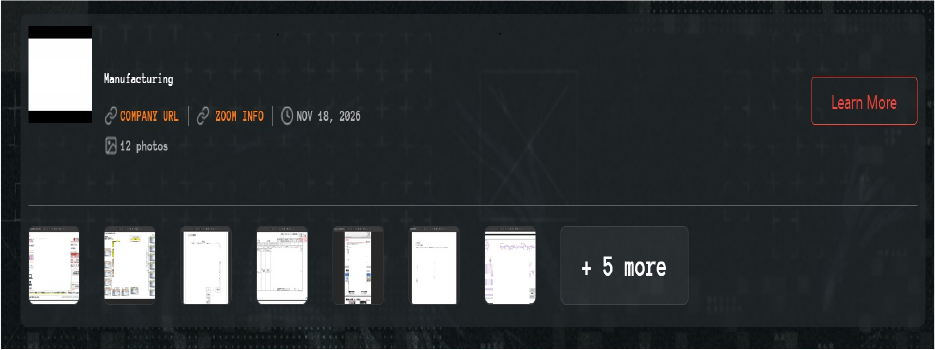
Source : Dark Web
Relevancy & Insights:
ETLM Assessment:
According to CYFIRMA’s assessment, Qilin ransomware poses a significant threat to organizations of all sizes. Its evolving tactics, including double extortion (data encryption and leak threats), cross-platform capabilities (Windows and Linux, including VMware ESXi), and a focus on speed and evasion, make it a particularly dangerous actor.
Metaencryptor Ransomware Impacts a Construction Company from Japan
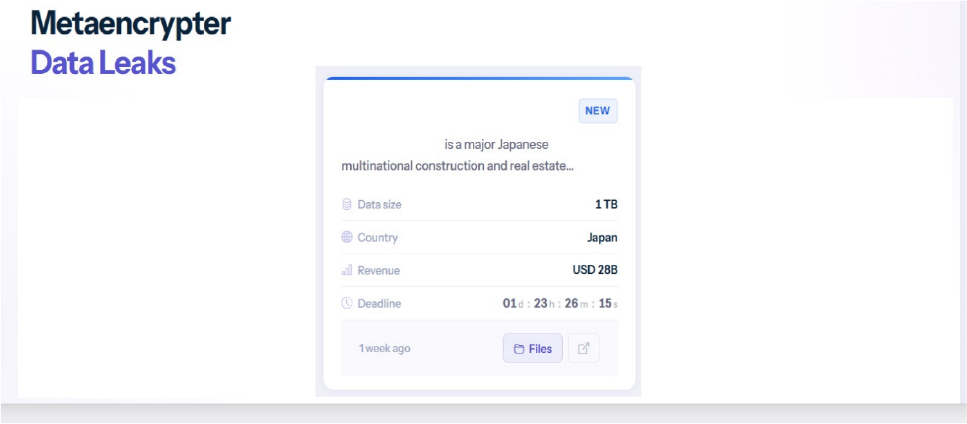
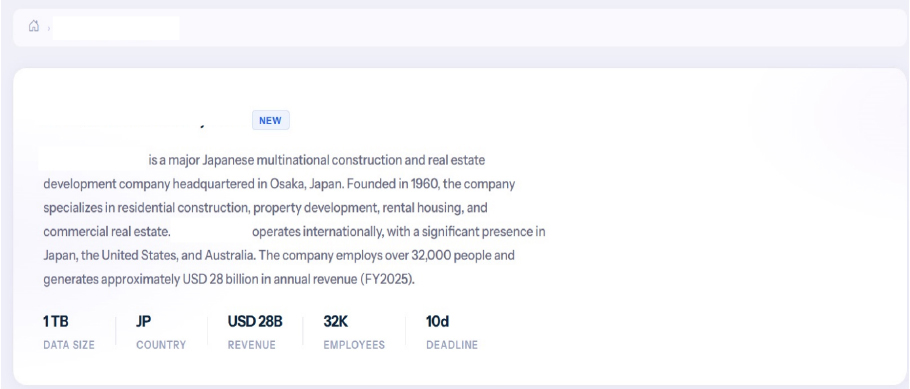
Summary: CYFIRMA observed on a ransomware data leak site (DLS) on the dark web that a company from Japan was compromised by Metaencryptor Ransomware. The compromised company is a major Japanese multinational construction and real estate development company headquartered in Osaka, Japan. Founded in 1960, the company specialises in residential construction, property development, rental housing, and commercial real estate. It operates internationally, with a significant presence in Japan, the United States, and Australia. The data, which has been breached, has not yet appeared on the leak site, indicating that negotiations between the affected party and the ransomware group may be underway. The compromised data includes confidential and sensitive information belonging to the organization. The total size of compromised data is approximately 1TB.
Source: Dark Web
Relevancy & Insights:
ETLM Assessment:
According to CYFIRMA’s assessment, Metaencryptor ransomware represents a financially motivated cybercriminal operation that employs double-extortion tactics to maximise ransom pressure and financial gains. First observed in 2023, the group targets medium-to-large organisations across multiple industries. Its attack methodology involves encrypting victims’ files and allegedly exfiltrating sensitive information before threatening to publish stolen data through its public-facing data leak platform. Its continued victim disclosures demonstrate an ongoing extortion threat to organisations across multiple geographical regions. Organisations are advised to enforce Multi-Factor Authentication (MFA), strengthen endpoint and network security, implement network segmentation, maintain offline and immutable backups, monitor suspicious data exfiltration activities, and conduct regular vulnerability assessments to mitigate the risks posed by Metaencryptor ransomware.
Vulnerability in N-able MailAssure
Relevancy & Insights: The flaw occurs because MailAssure does not restrict the destination of the LDAP synchronisation connection check when a relay is configured. An authenticated API user with elevated privileges could determine which internal hosts and ports are reachable and send crafted data to internal services. Builds before 20261121.1943 are affected.
Impact: An authenticated API user with elevated privileges could use server-side requests to probe internal service reachability and send crafted data to reachable internal hosts and ports.
Affected Products:
Recommendations:
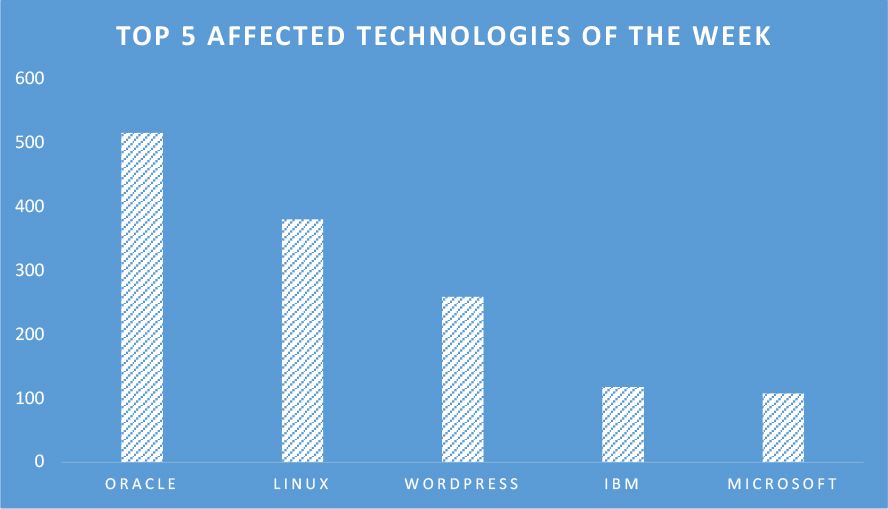
TOP 5 AFFECTED TECHNOLOGIES OF THE WEEK
This week, CYFIRMA researchers have observed significant impacts on various technologies due to a range of vulnerabilities. The following are the top 5 most affected technologies.
ETLM Assessment:
Vulnerability in N-able MailAssure can pose risks to enterprise email security operations and the internal network services accessible from the mail security platform. Organizations across industries rely on email filtering solutions to manage mail flow and protect business communications. The server-side request forgery flaw could allow an authenticated API user with elevated privileges to redirect an LDAP connection check toward internal hosts, identify reachable services, and send crafted data. Maintaining destination validation in administrative workflows is important for reducing unintended internal service interactions. Therefore, applying the relevant N-able security update is essential to reducing exposure and maintaining secure email security operations.
INC Ransomware attacked and published the data of an Information Technology (IT) Services company from Japan
Summary:
Recently, we observed that INC Ransomware attacked and published the data of an Information Technology (IT) Services company from Japan on its dark web website. The compromised company is a Japanese digital marketing and web development agency that specializes in improving the performance of advertising campaigns and search engine promotion. The compromised data appears to include confidential business and legal documentation, particularly a signed contractual agreement between two business entities dated October 22, 2024. The exposed document contains corporate information, registered business addresses, names and designations of company representatives, executive signatory details, official seals, contract validity periods, contractual obligations, confidentiality provisions, termination conditions, handling and destruction of confidential information, compliance requirements, anti-social force exclusion clauses, governing law and dispute resolution provisions. The documents also appear to contain electronic contract execution and signature-related records. Such information could expose sensitive business relationships, contractual arrangements, corporate governance details, and confidential commercial terms, potentially increasing the risk of business impersonation, targeted social engineering, corporate fraud, and misuse of confidential agreements.
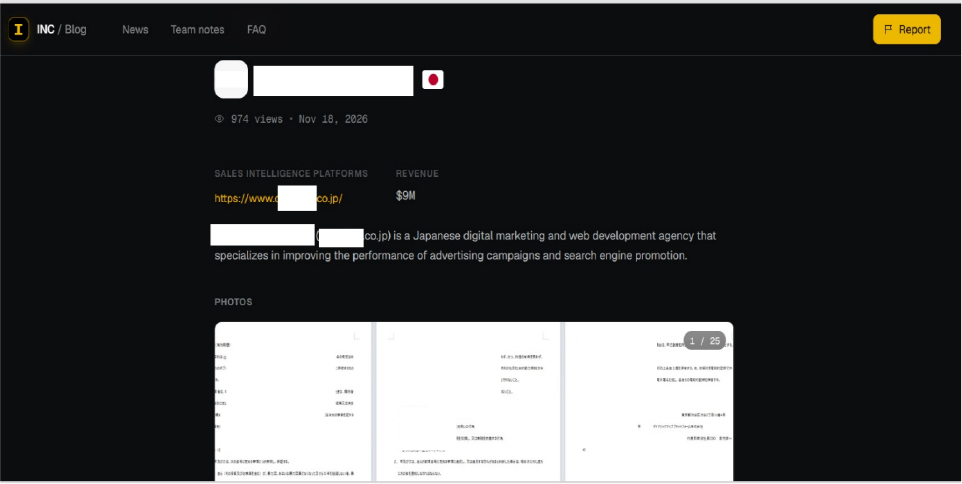
Source: Dark Web
Relevancy & Insights:
ETLM Assessment:
Based on recent assessments by CYFIRMA, INC Ransomware represents a significant threat within the evolving landscape of ransomware attacks. Its use of strong encryption methods and double extortion tactics highlights the increasing sophistication of cybercriminal operations. Organizations are advised to enhance their cybersecurity measures by implementing robust defenses against phishing attacks, maintaining updated security protocols, and monitoring for unusual network activity to mitigate risks associated with this and other ransomware variants. Continuous vigilance is essential to protect against the threats posed by emerging ransomware groups like INC Ransomware.
Unauthorized Initial Network Access to a Japanese Pharmaceutical and Manufacturing Enterprise Advertised on a Leak Site
Summary
The CYFIRMA research team identified a post on a dark web cybercrime forum advertising the sale of initial access to a large Japan-based enterprise operating in the pharmaceutical and manufacturing sectors. According to the advertisement, the seller claims to have obtained privileged access to the organization’s internal network through an SSL VPN connection with Super Administrator privileges and High Availability (HA) Primary access. The targeted enterprise is reportedly valued at over USD 8 billion, employs approximately 5,000–10,000 personnel, and maintains an internal network comprising more than 100 active devices, including servers, endpoints, and corporate assets. The advertisement further claims that the compromised environment provides access to an extensive Active Directory (AD) infrastructure, including user accounts, computer objects, and Organizational Units (OUs), with local administrator accounts identified within the network.
Alleged Access and Compromised Infrastructure
Based on the information shared in the forum advertisement, the seller claims to possess the following access and capabilities:
Financial Details
According to the advertisement, the initial network access is being offered for USD 30,000, with the price negotiable for serious buyers. Payment is requested exclusively in Bitcoin (BTC), with an escrow-based transaction accepted.
Potential Business Impact
If the advertised access is genuine, the exposure could create significant cybersecurity risks for the targeted enterprise, particularly due to the claimed privileged VPN access and extensive internal network visibility. Potential consequences include:
This report is based on claims and screenshots published in the cybercrime forum advertisement. The authenticity of the advertised access, the seller’s actual privileges, the claimed network size, and the extent of internal access have not been independently verified. The USD 30,000 asking price is the seller’s claim, not a confirmed transaction value.
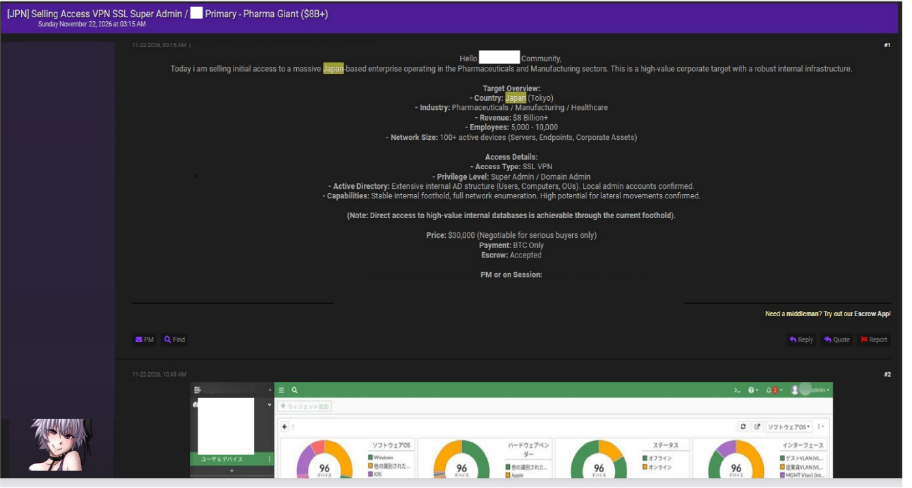
Source: Underground Forums
Relevancy & Insights:
Financially motivated cybercriminals are continuously looking for exposed and vulnerable systems and applications to exploit. A significant number of these malicious actors congregate within underground forums, where they discuss cybercrime and trade stolen digital assets. Operating discreetly, these opportunistic attackers target unpatched systems or vulnerabilities in applications to gain access and steal valuable data. Subsequently, the stolen data is advertised for sale within underground markets, where it can be acquired, repurposed, and utilized by other malicious actors in further illicit activities.
ETLM Assessment:
The threat actor is assessed as an active and capable cybercriminal entity primarily involved in data-leak and information-extortion activities, with multiple indications of unauthorized access to systems and the subsequent dissemination or sale of compromised data through underground forums. Their activities demonstrate the evolving sophistication of organized cybercriminal networks and highlight the increasing risk of sensitive information being exploited for financial gain, fraud, and follow-on attacks. Organizations should strengthen their cybersecurity posture through continuous monitoring, proactive threat intelligence, robust access controls, enhanced data protection, and timely defensive measures to safeguard sensitive information and critical infrastructure.
Recommendations: Enhance the cybersecurity posture by:
The CYFIRMA research team identified a post on a dark web cybercrime forum advertising the sale of privileged network access to a South Korean branch of a large multinational corporation operating in the Food & Beverage and Manufacturing sectors. According to the advertisement, the seller claims to possess initial access through a FortiGate SSL VPN connection with Super Administrator privileges, reportedly providing root/domain administrator-level access and control over the organization’s network perimeter. The targeted enterprise is claimed to generate annual revenue exceeding USD 107.8 billion, employ more than 10,000 personnel, and maintain an internal network comprising over 190 active devices, including servers, endpoints, and corporate assets. The advertisement further claims that the compromised environment provides extensive visibility into the internal Active Directory infrastructure, including user accounts, computer systems, and Organizational Units (OUs). Screenshots published alongside the advertisement reportedly demonstrate access to an internal device inventory dashboard displaying approximately 191 devices across different hardware and operating system categories.
Alleged Access and Compromised Infrastructure
Based on the information shared in the forum advertisement, the seller claims to possess the following access and capabilities:
Financial Details
According to the advertisement, the initial network access is being offered for USD 55,000, with the price negotiable for serious buyers.
Potential Business Impact
If the advertised access is genuine, the exposure could create significant cybersecurity risks for the targeted enterprise and its associated business operations. The claimed administrator-level privileges and visibility into internal infrastructure could potentially enable further compromise of corporate systems.
Potential consequences include:
This report is based on information and screenshots published in the cybercrime forum advertisement. The authenticity of the advertised access, claimed administrator privileges, network size, device inventory, and actual level of compromise have not been independently verified. The USD 55,000 asking price represents the seller’s claim and does not confirm that a transaction has occurred.
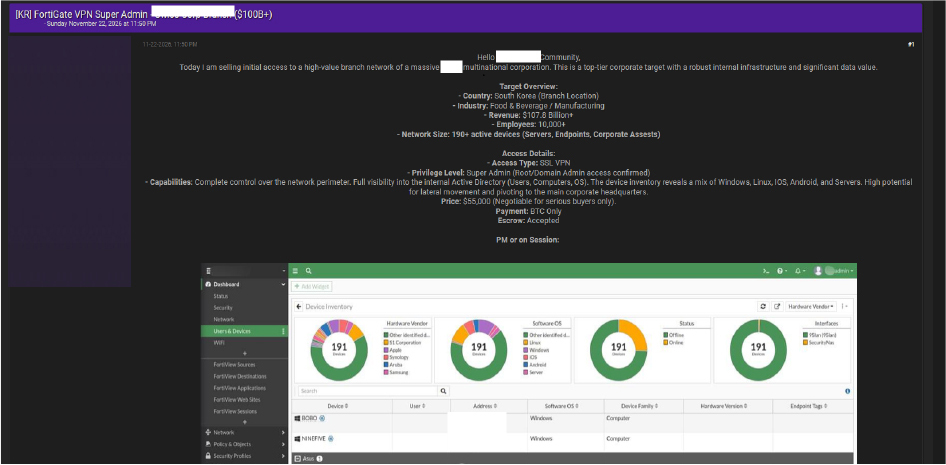
Source: Underground Forums
STRATEGIC RECOMMENDATIONS
MANAGEMENT RECOMMENDATIONS
TACTICAL RECOMMENDATIONS
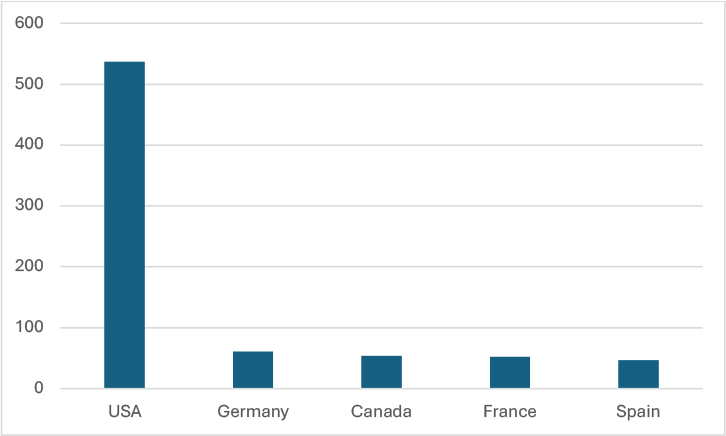
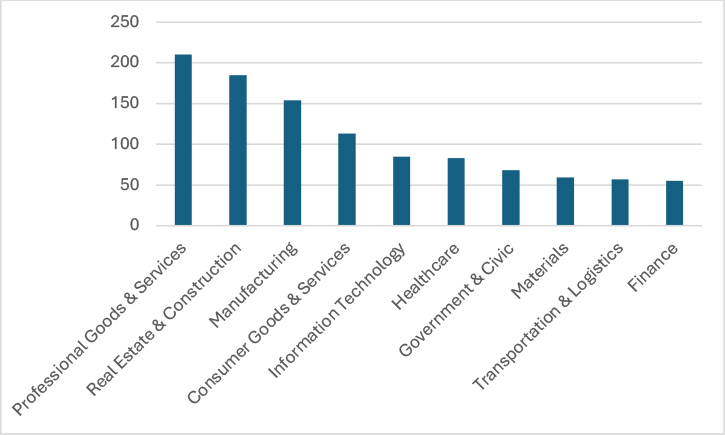
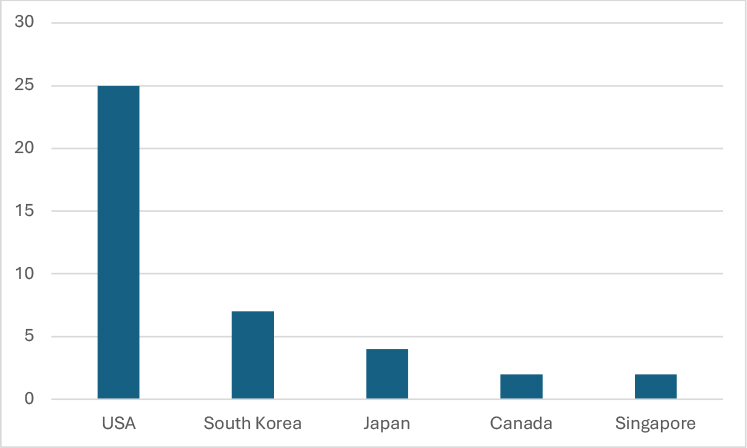
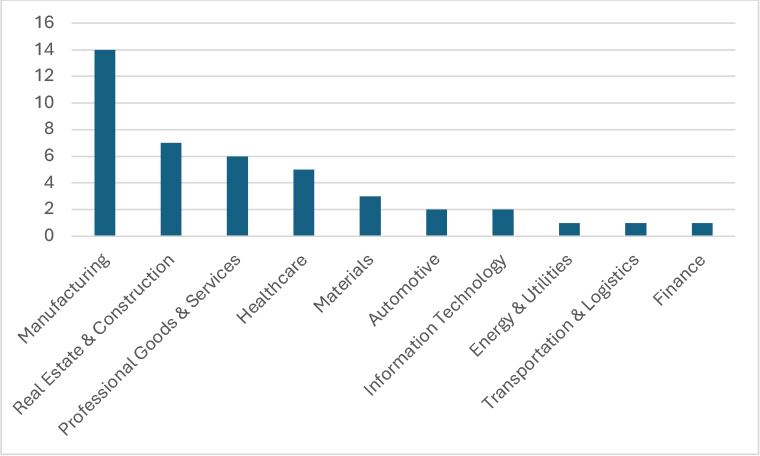
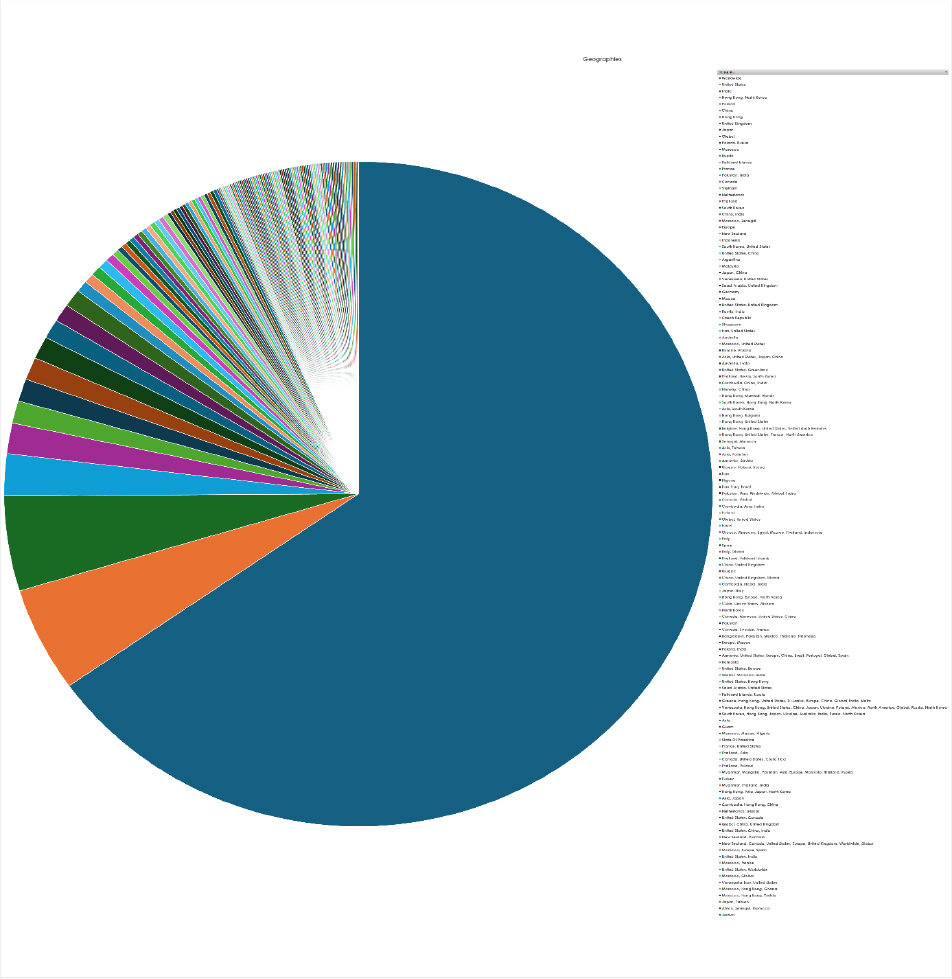
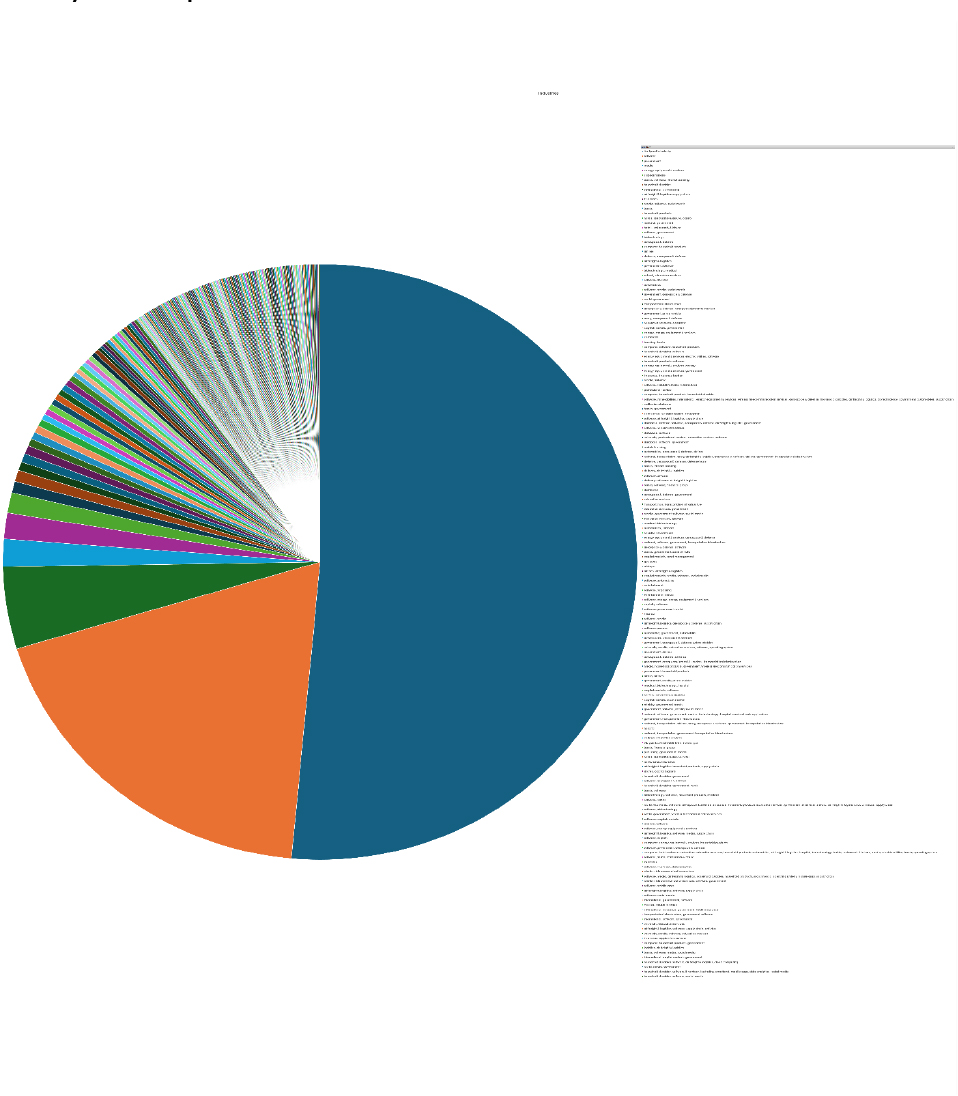
Please find the Geography-Wise and Industry-Wise breakup of cyber news for the last 5 days as part of the situational awareness pillar.
Geography-Wise Graph
Industry-Wise Graph
For situational awareness, intelligence, and specific insights mapped to your organisation’s geography, industry, and technology, please access DeCYFIR.
