
CYFIRMA Research finds that government is the most-reported victim sector in both countries. The incidents that hurt government most began at the public sector’s edges – a school server, a remote-access account, a supplier’s patient portal, a contractor’s Teams channel, and an AI agent – not in hardened departmental cores.
National agency data, verified incidents and CYFIRMA monitoring, each with its own reporting period
1,500+
Incidents responded to by ASD, up more than 20% (1,524 reported) · Reporting period: FY2025–26
32% / 16%
Federal and state/local government shares of ASD incident responses · Reporting period: FY2025–26
369
NZ incidents of potential national significance; 86 with suspected state links · Reporting period: FY2025/26
22%
Commonwealth entities at Essential Eight Maturity Level 2 · Reporting period: 2025
108 days
Average time for government bodies to notify the OAIC, vs 3 days for companies · Reporting period: 2022 –H1 2026
60
Underground posts tagged Government & Civic (58 AU, 2 NZ) –CYFIRMA monitoring · Reporting period: 29 Apr – 26 Oct 2026
4
Government & Civic-tag-screened ransomware listings from 10 candidates –2 with confirmed access · Reporting period: October 2025 –October 2026
21
Dashboard campaigns matching ANZ and government tags; 5 Salt/Volt-linked, 2 APT40 · Reporting period: Active in the assessment period
Reporting periods differ: figures from different sources should not be added together or compared directly.
01
Most-reported victim on both sides of the Tasman
48% of ASD incident responses; NZ public administration top in NCSC triage.
02
Decisive weaknesses sat at the federated edge
School servers, remote access, supplier portals, and contractor channels.
03
Patching directives without verification failed
ASD alert relayed the same day in Victoria; a school server was still compromised.
04
AI changed the government incident model
An AI model accessed non-public Services Australia files; a second state case followed.
05
State actors target the infrastructure government depends on
Router and covert-network advisories co-sealed by ASD and NCSC-NZ; Salt Typhoon in NZ.
06
CYFIRMA monitoring confirms direction, not new victims
Chatter peaked in Oct 2026; 4 Government & Civic-tag-screened listings; Salt/Volt in 5 tracked campaigns.
Reporting duties raise government counts – read as concentration of reported activity, not relative weakness
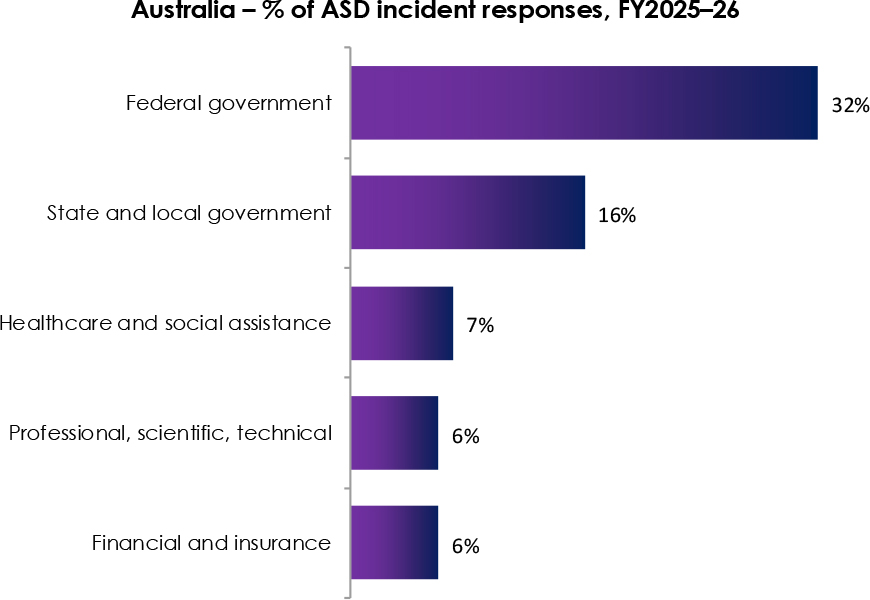
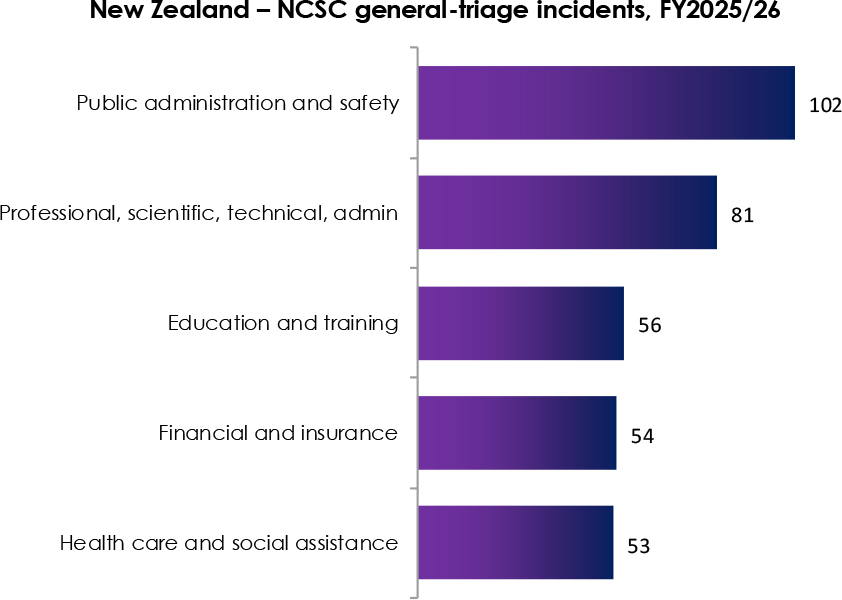
Assessment: Government is the largest reported victim group in both national datasets. NCSC states that public administration experienced “a third” of nationally significant incidents, while its chart shows 15% – both reported; no count derived.

Global activity: BADCANDY on Cisco IOS XE (400+ AU devices), FortiBleed credential campaign, PHP2Shell
ANZ government footprint: Precautionary outages of federal and council websites; NSW RFS breached via remote access

Global activity: Extortion groups and infostealers target sensitive records at scale
ANZ government footprint: Victorian and Queensland student data; Manage My Health with Health NZ held responsible

Global activity: Salt Typhoon, Volt Typhoon, FSB Center 16, and China-nexus covert networks
ANZ government footprint: Salt Typhoon observed in NZ; ASIO: probing of AU telecom and critical infrastructure

Global activity: Faster vulnerability discovery and exploit development; agentic AI misuse
ANZ government footprint: AI-model access to Services Australia and NSW NPWS services (Jun 2026)
Assessment (High confidence): the ANZ government threat is driven far more by global campaigns exploiting common technology and suppliers than by ANZ-specific targeting – so joint advisories are directly actionable, and exposure depends on how fast each agency closes the gaps they describe.
DOES THIS AFFECT ME?
HOW EXPOSED AM I?
WHAT SHOULD I DO NOW?
KEY FIGURES
DOES THIS AFFECT ME?
HOW EXPOSED AM I?
WHAT SHOULD I DO NOW?
KEY FIGURES
Of 12 entries, 11 are placed within October 2025 – October 2026; the NZ contractor case is reported for FY2025/26 without an exact event date. Entries include access incidents, insider activity, fraud, and precautionary patching.
| Event date | Entity | Country | What happened | Status |
| By 6 Nov 2025 | Victorian Department of Education | AU | Unpatched school server used to reach a database of current and former students | Confirmed |
| Late Dec 2025 | Manage My Health / Health NZ | NZ | Stolen Lumma credentials; 99,000+ patients; Health NZ and operator in breach (C2) | Confirmed |
| Mar 2026 | Hutt City Council | NZ | Phishing gave access to a small number of mailboxes; up to 732 people affected | Confirmed |
| Apr 2026 | NSW Treasury | AU | Alleged insider transfer to an external server; no external compromise | Confirmed |
| Apr–May 2026 | Queensland Department of Education | AU | Canvas/QLearn supplier breach – staff and student data since 2020 | Confirmed |
| 18 Jun 2026 | Services Australia | AU | AI model accessed non-public Medicare statistics files; no patient records | Confirmed |
| Jun 2026 | NSW National Parks and Wildlife Service | AU | AI model gathered non-public summary fire statistics | Confirmed |
| Jun 2026 | NSW Rural Fire Service | AU | Compromised account via remote access; historical files likely taken; Nova claim | Confirmed |
| Jul–Sep 2026 | Christchurch City Council (also Wellington, Auckland) | NZ | Fake payment QR codes on parking meters | Confirmed |
| FY2025/26; event month unknown | Unnamed contractor to NZ government | NZ | NCSC case study: Teams helpdesk impersonation and data exfiltration; precise date unknown | Confirmed; date unclear |
| Early Oct 2026 | Mandurah SES unit (WA) | AU | Unauthorised access to a server with pre-2022 records; ransomware claim | Confirmed |
| 21–23 Oct 2026 | Federal and council websites | AU | Taken offline to patch PHP2Shell – no known successful exploitation in Australia | Precautionary |
Chronology of reported events; two leak-site claims are listings only. The NZ contractor case has no disclosed event month.
Nov 2025 –Australia
Victorian DoE –school server exploited
Jan 2026 –Australia
South West Development Commission –Lynx listing only
Mar 2026 –New Zealand
Hutt City Council –phishing
Apr 2026 –Australia
NSW Treasury –alleged insider
Apr–May 2026 –Australia
Queensland DoE –Canvas supplier breach
Jun 2026 –Australia
Services Australia –AI-agent access; NSW NPWS –AI-agent access; NSW Rural Fire Service –remote-access compromise
Jul–Sep 2026 –New Zealand
Christchurch council meters –QR-code phishing
Sep 2026 –Australia
Transport for NSW –Clop listing only
Oct 2026 –Australia
Mandurah SES –server accessed; federal and council websites –PHP2Shell precaution
Date not specified (FY2025/26) – New Zealand: Contractor to government organisations – Teams impersonation; outside the 11 in-period dated entries
12 government-related entries grouped by primary route (8 Australia, 4 New Zealand); 11 placed in-period and one NZ contractor event reported without an exact date
At least 3 access cases involved a supplier, SaaS platform, or contractor (one NZ contractor case has no exact date); vendor involvement at NSW RFS remains possible.
Moderate confidence, small sample: the common factor is not the technique but the location – every route bypassed hardened departmental cores.
TIMELINE
WHAT WAS EXPOSED
LESSONS FOR EVERY DEVOLVED ESTATE
TIMELINE
WHAT WAS EXPOSED
LESSONS FOR EVERY DEVOLVED ESTATE
New Zealand – late December 2025 – C2 incident
Key facts: 99,000+ patients’ data stolen; C2 (NCSC highly significant); 2 compliance notices
Australia – June 2026 – also listed by Nova
Key facts: 1 compromised account; ~300 GB Nova claim (unverified); no operational impact
Confirmed = government-relevant activity confirmed; Indirect = advisory, listing or indirect evidence; None found = nothing in reviewed sources. Table covers actors tied to register entries or tag-screened listings; J Group, Kazu, and Interlock appear only in the related listings on slide 29
| Actor | Origin | Motivation | Australia | New Zealand | Confidence | Observed activity |
| Salt Typhoon | PRC state | Espionage | Confirmed | Confirmed | High | ASIO; observed in NZ |
| Volt Typhoon / covert networks | PRC state | Pre-positioning | Confirmed | Indirect | High | ASIO; AA26-113A |
| Leviathan (APT40) | PRC state | Espionage | Indirect | None found | Moderate | 2 tracked campaigns; ASD-led 2024 advisory |
| FSB Center 16 | Russia state | Espionage | Indirect | Indirect | High | AA26-194A co-sealed |
| LAUNDRY BEAR | Russia state | Espionage | Indirect | None found | Moderate | ASD advisory |
| DPRK IT workers | North Korea | Revenue, extortion | None found | Indirect | Moderate | NCSC case study |
| ARMORY CASTLE | Suspected PRC | Espionage | None found | None found | Moderate | BeyondTrust exploitation |
| ShinyHunters | Criminal | Extortion | Confirmed | Indirect | Moderate | QLD DoE via Canvas |
| Nova | Criminal | Ransomware | Confirmed | None found | Low (claim) | NSW RFS |
| The Gentlemen | Criminal | Ransomware | Confirmed | None found | Moderate | Mandurah SES |
| INC Ransom | Criminal | Ransomware | Indirect | Indirect | Moderate | Mastercom; joint advisory |
| Clop | Criminal | Mass exploitation | Indirect | None found | Low | Transport for NSW listing |
| Lynx | Criminal | Ransomware | Indirect | None found | Low | SWDC listing |
CYFIRMA early-warning campaign tracking: first and last seen dates; actor names as attributed in the dataset
| Campaign | Actors (dataset attribution) | First seen | Last seen | Grouping |
| mailman | Leviathan | Feb 2020 | Oct 2026 | Leviathan (APT40) |
| reliable | Leviathan | Jan 2021 | Oct 2026 | Leviathan (APT40) |
| think pocket | MISSION2074 | Aug 2021 | Apr 2026 | Other China-nexus |
| KDX-M7 | MISSION2074, Stone Panda | Mar 2023 | Apr 2026 | Other China-nexus |
| meteor | Lazarus Group, MISSION2074 | Apr 2023 | Oct 2026 | Other China-nexus |
| territorial integrity | Mustang Panda | Apr 2023 | Oct 2026 | Other China-nexus |
| Citrix (lists NZ) | NSCN2301 | Jul 2023 | Oct 2026 | Other China-nexus |
| Ephemeris | TICK | Jun 2024 | Oct 2026 | Other China-nexus |
| hwasong | APT27, Lazarus, Oilrig | Jun 2024 | Oct 2026 | Other China-nexus |
| Stealth Attack | MISSION2074 | Aug 2024 | Aug 2026 | Other China-nexus |
| Tumen | FIN7, Lazarus Group | Aug 2024 | Oct 2026 | Other origin |
| Dragon Emperor | Stone Panda | Sep 2024 | Jan 2026 | Other China-nexus |
| Thunderstorm | Volt Typhoon, Emissary Panda | Sep 2024 | Oct 2026 | Salt / Volt Typhoon-linked |
| Red River | CCEN2403, CCVN2401 (Vietnam) | Oct 2024 | Oct 2026 | Other origin |
| Blue Yonder | Volt Typhoon, MISSION2074 | Nov 2024 | Oct 2026 | Salt / Volt Typhoon-linked |
| Hegemon | Volt Typhoon, Earth Estries +3 | Dec 2024 | Sep 2026 | Salt / Volt Typhoon-linked |
| Victory | Stone Panda, TA505 | Jan 2025 | Oct 2026 | Other China-nexus |
| free market | CCVN2501 (Vietnam) | Jun 2025 | Sep 2026 | Other origin |
| Dunan | Salt + Volt Typhoon, MISSION2074 | Nov 2025 | Apr 2026 | Salt / Volt Typhoon-linked |
| Dominion | Salt Typhoon, MISSION2074 | Jan 2026 | Oct 2026 | Salt / Volt Typhoon-linked |
| June 2026 Minjun | APT43, Lazarus Group | Oct 2026 | Oct 2026 | Other origin |
Grouping: 5 Salt / Volt Typhoon-linked, 2 Leviathan (APT40), 10 other China-nexus, 4 other origin. 14 carry the standard Government & Civic tag; 7 only granular government tags (both counted). First seen in the window: Dunan (Nov 2025), Dominion (Jan 2026), June 2026 Minjun (Oct 2026).
Country and sector fields describe broad target lists (5–18 countries) – co-occurrence is not evidence that an ANZ agency was attacked.
| Campaign | Actors (dataset) | Tooling | Targeted technology | NZ | Public corroboration | Decision |
| Dunan | Salt + Volt Typhoon | SNAPPYBEE, China Chopper | OS, web apps | – | Salt Typhoon in NZ; ASIO probing; SNAPPYBEE–Salt link | Relevant · Moderate |
| Dominion | Salt Typhoon | MoonBounce | OS, web apps | – | Salt Typhoon corroborated; MoonBounce publicly tied to APT41 | Relevant · Low–Mod |
| Thunderstorm | Volt Typhoon, Emissary Panda | Volt | Routers, VPN, web apps | – | Volt Typhoon named by ASIO; edge focus | Relevant · Moderate |
| Hegemon | Volt Typhoon, Earth Estries +3 | Cobalt Strike, Winnti, Zingdoor | Routers, VPN, monitoring | – | Edge and network infrastructure | Relevant · Moderate |
| Blue Yonder | Volt Typhoon, MISSION2074 | ShadowPad, Mirai, Volt | Web apps, supply-chain software | – | Volt Typhoon named by ASIO; active to Oct 2026 | Relevant · Moderate |
| mailman, reliable | Leviathan (APT40) | None named | Remote access, VPN, Exchange | – | ASD-led 2024 advisory on APT40 targeting Australia | Relevant · Moderate |
| Citrix | NSCN2301 | Cobalt Strike Beacon, PlugX | Remote desktop, cloud security | Yes | None found for ANZ government | Context · Low |
| Victory | Stone Panda, TA505 | Clop, Lodeinfo | App infrastructure, DB, OS | – | Clop mass-listing pattern; no link | Context · Low |
| 12 others | MISSION2074, Mustang Panda, Lazarus, TICK… | PlugX, Winnti, Lodeinfo | Mostly web apps | – | Broad lists; Mustang Panda 2026 activity elsewhere | Context · Low |
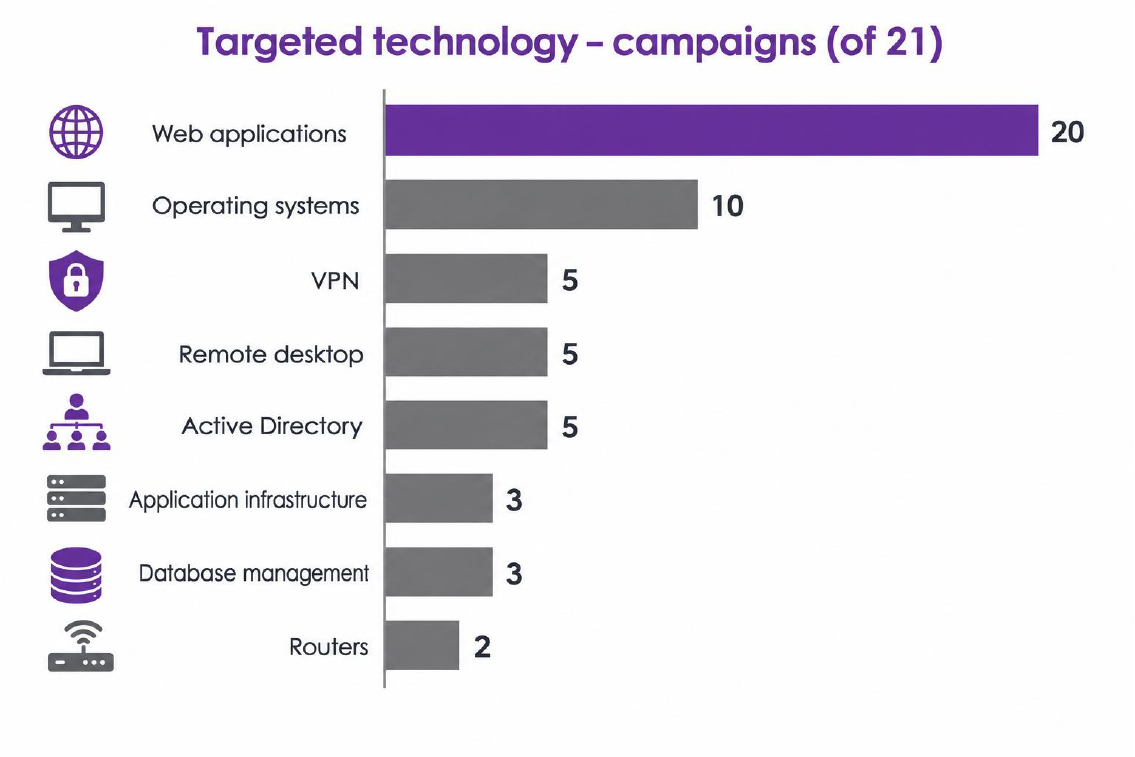
ACTOR ORIGIN
17 of 21 tag-matched campaigns list a China-nexus actor in the dataset; 4 have other origins. This does not establish ANZ agency intrusions.
RECURRING TOOLING
Basis: “Observed” = seen in ANZ incidents or advisories; “Campaign tooling” = associated with tracked campaign tooling, not observed in an ANZ incident
| Tactic | ID | Technique | Where evidenced | Basis |
| Initial Access | T1190 | Exploit Public-Facing Application | Victorian DoE; BADCANDY | Observed |
| Initial Access | T1078 | Valid Accounts | Manage My Health; NSW RFS; FortiBleed | Observed |
| Initial Access | T1133 | External Remote Services | NSW RFS | Observed |
| Initial Access | T1566 | Phishing | Hutt City Council | Observed |
| Initial Access | T1566.004 | Spear phishing Voice | NZ contractor (Teams) | Observed |
| Credential Access | T1110.003 | Password Spraying | FortiBleed | Observed |
| Persistence | T1505.003 | Web Shell | BADCANDY; China Chopper | Observed |
| Persistence | T1542.001 | System Firmware | MoonBounce | Campaign tooling |
| Defence Evasion | T1562 | Impair Defenses | NZ contractor | Observed |
| Defence Evasion | T1574.002 | DLL Side-Loading | SNAPPYBEE | Campaign tooling |
| Collection | T1602 | Data from Configuration Repository | FSB Center 16 routers | Observed |
| Command and Control | T1090.003 | Multi-hop Proxy | China-nexus covert networks | Observed |
| Exfiltration | TA0010 | Technique not specified | Victorian DoE; NZ contractor; NSW Treasury | Observed |
Grouped by technology so agencies can find their platforms; ASD exposure figures cover all sectors
| Technology | Vulnerability / campaign | Exploitation status | ANZ government evidence | Priority |
| Cisco IOS XE | CVE-2023-20198 – BADCANDY web shell | Actively exploited (ASD, 31 Oct 2025) | 400+ AU devices potentially compromised since Jul 2025 | Critical |
| Fortinet firewalls / VPN | FortiBleed credential exposure, password spraying | Active campaign (ACSC, 18 Jun 2026) | Australia among affected countries | Critical |
| PHP web runtimes | CVE-2026-109618 / -109619 – PHP2Shell | Critical alert 21 Oct 2026 | Government sites offline for patching; no known AU exploitation | Critical |
| BeyondTrust Remote Support | CVE-2026-102764 auth bypass | Exploited since 29 Aug 2026 | No ANZ government victim found | High |
| Zimbra Collaboration Suite | CVE-2025-66376 – LAUNDRY BEAR zero-day | Exploited from Jul 2025 | ASD advisory; no ANZ government victim found | High |
| Edge routers | FSB Center 16 – SNMP/TFTP, Smart Install | AA26-194A (Jul 2026) | Co-sealed by ASD and NCSC-NZ | High |
| SOHO routers, IoT, NAS | China-nexus covert networks | AA26-113A (Apr 2026) | Co-sealed by AU and NZ | High |
SAAS PLATFORMS
SPECIALIST SUPPLIERS
CONTRACTORS
REMOTE-ACCESS VENDORS
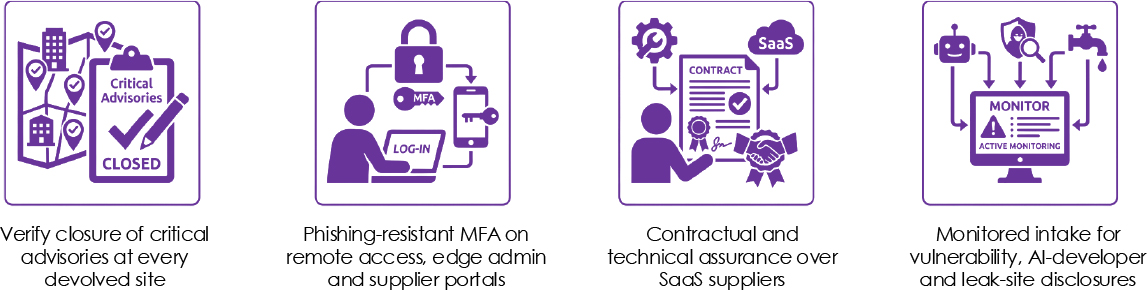
NCSC root causes across supplier incidents: no MFA; over-permissioned access; poor segmentation.
CYFIRMA underground and dark-web monitoring, 29 Apr – 26 Oct 2026 (six 30-day windows) – mentions, not confirmed compromises
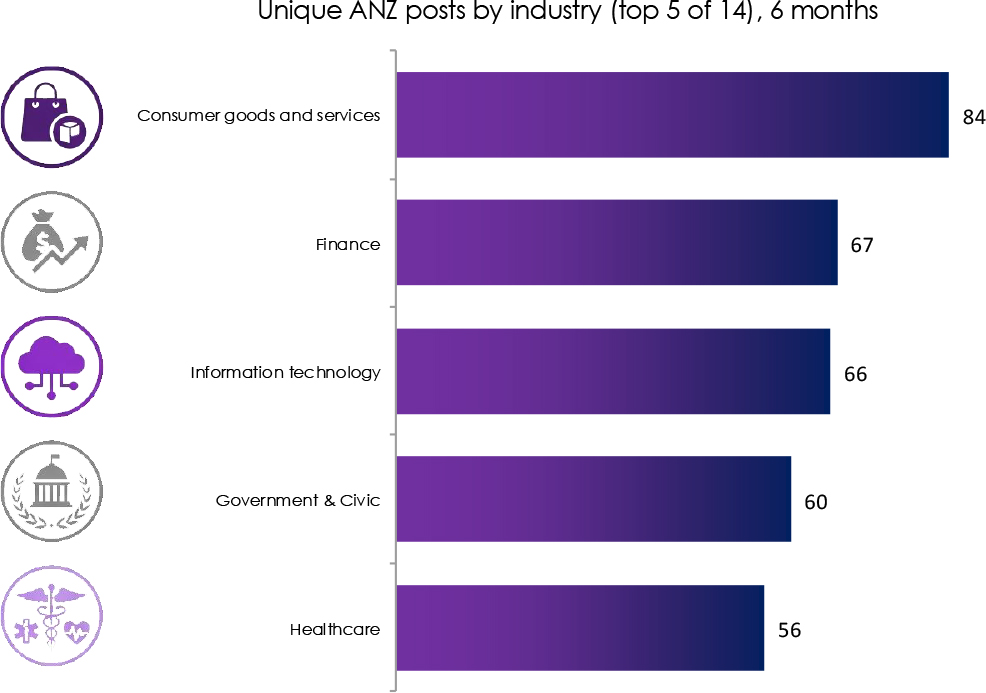
KEY FIGURES
ANALYST ASSESSMENT
Unique posts per 30-day window, 29 Apr – 26 Oct 2026 – covers half of the assessment window; not extrapolated
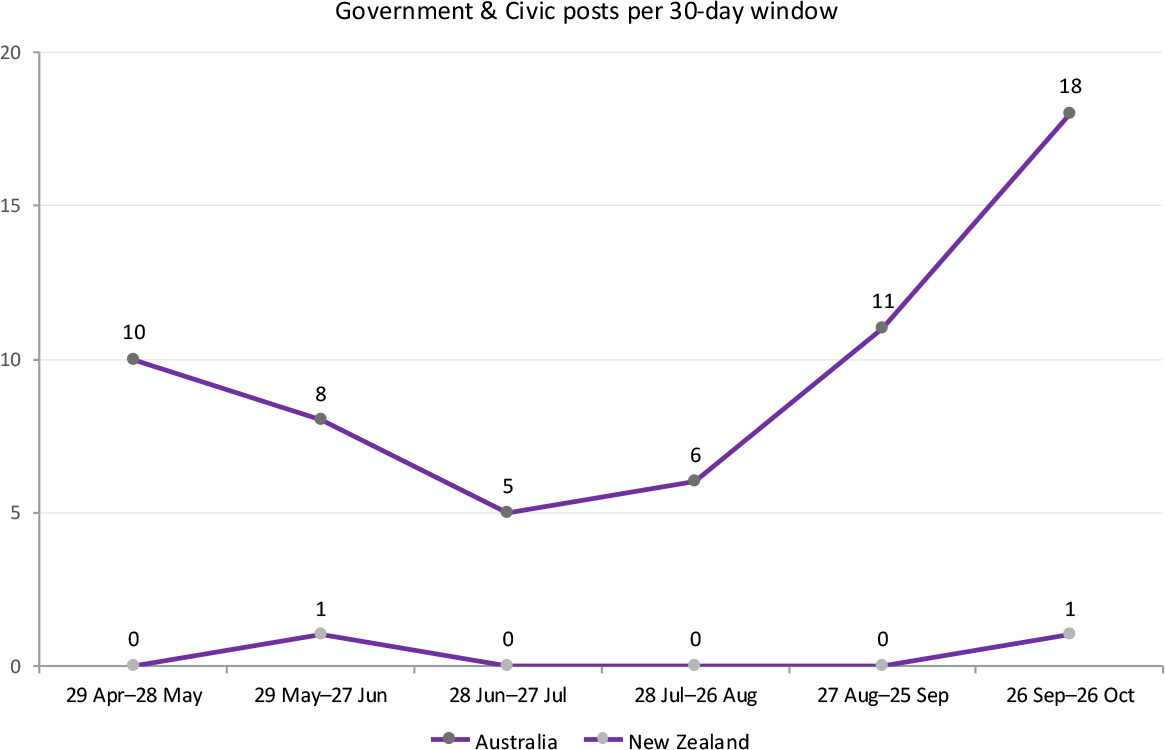
LATE-PERIOD RISE
Last three windows: 36 posts vs 24 in the first three. Final window: 19 posts (18 AU, 1 NZ).
MOSTLY UNCATEGORISED
18 of the 19 final-window posts carry no threat category –a rise in mentions, not in attacks.
JUNE RANSOMWARE CLUSTER
5 ransomware-tagged posts, 13–26 Jun 2026 –the same weeks Nova listed NSW data. No victim names: link unconfirmed.
Categorised posts only (11 of 60); a post can carry several categories
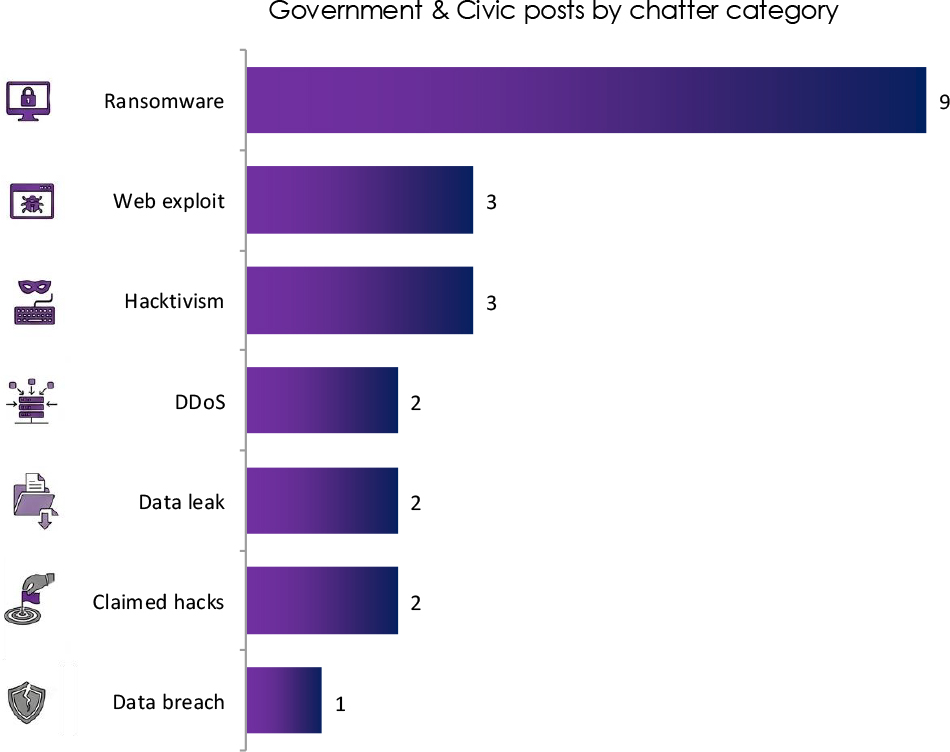
UNCATEGORISED POSTS
49 of 60 government posts have no threat-category keyword. Categories come from keyword tagging, not analyst verification.
NOTABLE CLUSTERS AND DATA QUALITY
April – October 2026 | Keyword-tagged CYFIRMA monitoring observations
CYFIRMA RESEARCH ASSESSMENT
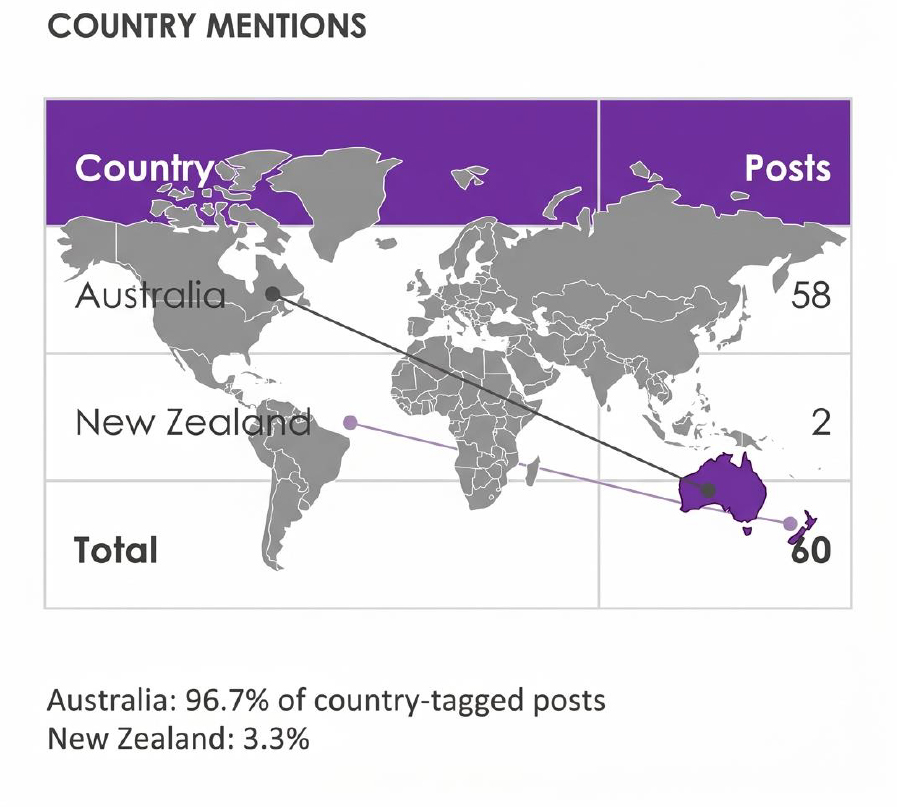
CYFIRMA monitoring recorded 60 Government & Civic-tagged underground posts, including 58 referencing Australia and two referencing New Zealand. The distribution reflects geographic mentions within the monitored dataset, not confirmed government compromises or vulnerable systems.
MONITORING OBSERVATION
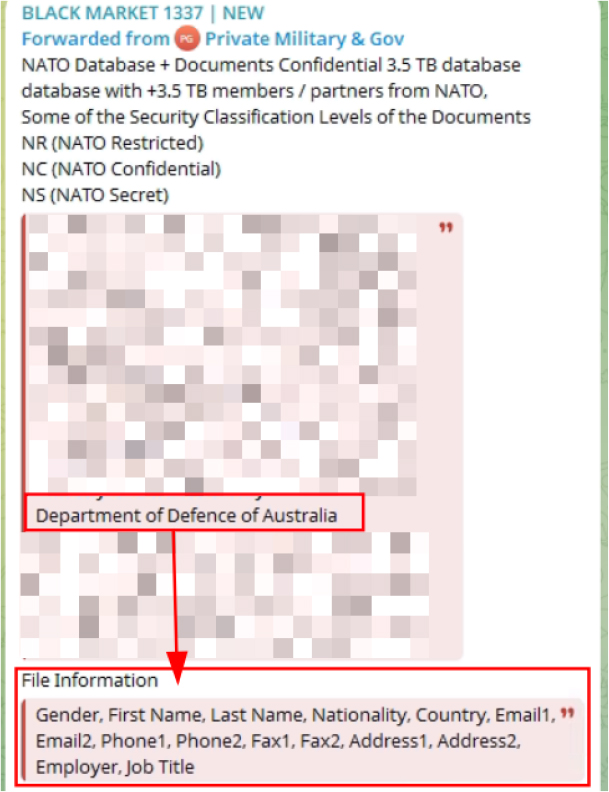
CYFIRMA researchers observed a Telegram-forwarded advertisement for a purported 3.5 TB NATO-related dataset that references Australia’s Department of Defence. The post is reported here as a standalone observation and is not included in the Government & Civic post counts. Monitoring is ongoing to establish the source of the material and assess any implications for Australian government entities.
CYFIRMA leak-site dataset – a listing is an allegation, not a confirmed breach
SCREENING STAGES (RECORDS)
WHY 6 CANDIDATES DID NOT QUALIFY
| Listing date | Organisation | Group | Status | Notes |
| 5 Jan 2026 | South West Development Commission (WA) | Lynx | Listing only | No statement; Lynx posted ~20 victims that day |
| 26 Jun 2026 | NSW Rural Fire Service | Nova | Corroborated | Compromised remote-access account; ~300 GB claim unverified |
| 23 Sep 2026 | Transport for NSW | Cl0p | Listing only | 1 of 23 victims posted that day – access method not established |
| 3 Oct 2026 | Mandurah SES unit (WA) | The Gentlemen | Corroborated | Server with pre-2022 records accessed; operations unaffected |
AUSTRALIA VS NEW ZEALAND
RELATED LISTINGS OUTSIDE THIS TAG-FILTERED COUNT
Confidence: High
NCSC: most persistent and capable actor in NZ. ASIO: Salt Typhoon probed AU telecom; sabotage threshold reached. 17 of 21 tracked campaigns China-nexus.
Confidence: High
FSB Center 16 router advisory (Jul 2026); LAUNDRY BEAR Zimbra zero-day; NZ joined pro-Russia hacktivist warning (Dec 2025).
Confidence: High (fact)
IT worker infiltrated a large NZ business with a local laptop facilitator, then attempted extortion.
Confidence: Moderate
NCSC aware of state-sponsored espionage against South Pacific governments and infrastructure.
Confidence: Low
Industry assessed elevated risk to Australia; no verified ANZ government impact. 3 hacktivism-tagged government posts in six months.
Confidence: High
PRC group used an AI model to run parts of an espionage campaign (cited by NCSC); AI-agent access to AU government services.

Feb 2026 (NZ)
Cyber Security Strategy 2026–2030 and Action Plan

6 Mar 2026 (AU + NZ)
Joint INC Ransom advisory (with Tonga CERT)

1 May 2026 (NZ)
IPP 3A in force – notice of indirect collection

May 2026 (AU)
Cyber Incident Review Board established

Jun–Jul 2026 (AU)
ASD Essentials consultation (successor to E8)
31 Aug 2026 (AU)
Privacy Act Tranche 2 draft – 72-hour notification

Sep 2026 (NZ)
Compliance notices to Health NZ and Manage My Health

24 Sep 2026 (AU)
PM&C rapid review of AI-incident arrangements

31 Dec 2026 (VIC)
OVIC recommendations due (Department of Education)
ASSESSMENT
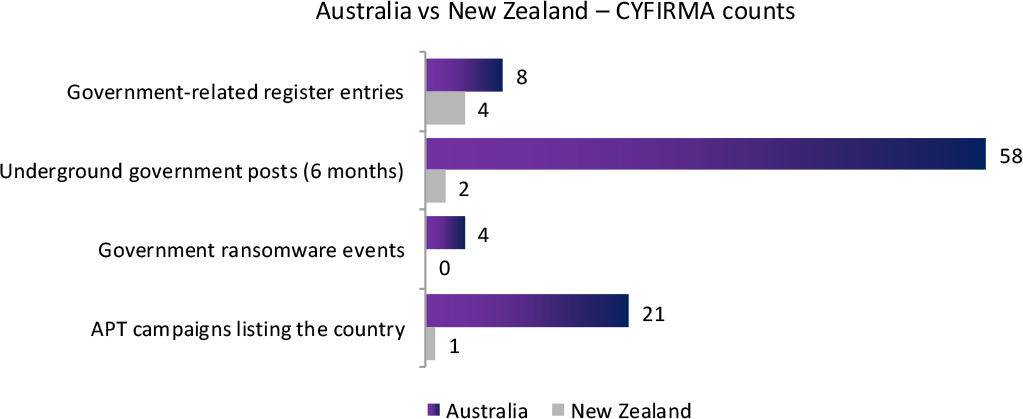
Australia’s larger, more devolved public sector produces more incidents, chatter, and listings. NZ’s most serious incidents came through suppliers, which monitoring can miss.
| Dimension | Australia | New Zealand |
| National incident data | Federal 32% + state/local 16% of ASD responses | Public administration top triage sector (102) |
| State actors | ASIO: Salt and Volt Typhoon probing | 86 state-linked incidents; Salt Typhoon observed |
| Dominant failure mode | Devolved estates, remote access, insider | Supplier platforms and identity |
| Legislation | Cyber Security Act, CIRB, Tranche 2 draft | Strategy 2026–30, IPP 3A, CI regulation in development |
CYFIRMA Research analyst judgement grounded in the period evidence – not a statistical score
| Threat | Likelihood | Impact on government | Trend | Basis |
| Edge-device and remote-access exploitation | High | High | Rising | BADCANDY, FortiBleed, NSW RFS, AA26-194A, edge focus of tracked campaigns |
| Credential theft and infostealers | High | High | Steady (high) | Lumma Stealer alerts, Manage My Health, Hutt City Council |
| Supplier and SaaS compromise | High | High | Rising | Canvas/QLearn, Manage My Health, IKAD, Mastercom, NZ contractor |
| State-sponsored espionage and pre-positioning | High | High | Steady | 86 state-linked NZ incidents; ASIO statements; 17 of 21 campaigns China-nexus |
| Ransomware and extortion against agencies | Moderate | Moderate–High | Steady | 4 government leak-site events, 2 corroborated, peripheral systems |
| AI-agent and AI-accelerated exploitation | Moderate | Moderate–High | Emerging | Services Australia and NSW NPWS cases; PHP2Shell response |
| Hacktivism and DDoS | Low–Moderate | Low | Low | 3 hacktivism and 2 DDoS government posts; no verified impact |
AI will keep compressing exploit timelines
Expect more precautionary takedowns of government web services. (Confidence: High)
More AI-agent incidents are likely to be disclosed
Scale cannot be estimated from public data. (Confidence: Moderate)
Supplier and SaaS compromise remains the main route to mass data loss
Nothing in the period suggests a reversal. (Confidence: High)
State edge-device and telecom activity will continue
Detection gaps where agencies depend on carriers and MSPs. (Confidence: High)
Regulatory pressure on government will rise
Tranche 2, CIRB, PM&C AI review, NZ CI regulation. (Confidence: Moderate)
Overseas conflicts may cause short hacktivist spikes
Little evidence of ANZ government impact so far. (Confidence: Low)
Monitoring mentions, ransomware leak-site listings, and campaign target tags are not confirmed intrusions. The supporting Word report and internal evidence registers retain full references.
