
The cyber threat landscape across the United Kingdom and Ireland remains highly dynamic, shaped by geopolitical instability, expanding digital interconnectivity, and increasingly aggressive adversarial activity. As globally connected economies with significant financial, technological, and critical infrastructure assets, both countries continue to face elevated exposure to ransomware, espionage, disruptive cyber operations, and large-scale data compromise.
During the assessment timeframe, threat activity demonstrated a strong shift toward data-centric and operationally disruptive attacks targeting sectors critical to economic stability and public services. Financial institutions, telecommunications providers, technology organizations, healthcare entities, and government-linked environments sustained targeting by both financially motivated and state-aligned threat actors. Concurrently, geopolitical tensions continued to drive hacktivist activity and influence-focused operations targeting public-facing services and critical infrastructure.
The assessment indicates an increasingly converged threat environment in which cybercrime, espionage, and geopolitical operations overlap. This evolution reflects a broader transition toward persistent, intelligence-driven campaigns aimed at disrupting operations, monetizing stolen data, and maintaining strategic access within critical digital ecosystems.
The United Kingdom and Ireland continue to face an increasingly aggressive and data-centric cyber threat environment shaped by geopolitical tensions, ransomware proliferation, and state-sponsored cyber activity. The UK remains a high-priority target due to its strategic role within NATO, global finance, and critical digital infrastructure, while Ireland’s position as a major European technology and cloud hub makes it an attractive target for espionage, credential theft, and supply chain compromise operations.
Ransomware groups, including Qilin, DragonForce, Cl0p, Akira, and The Gentlemen, maintained sustained activity across the region, primarily targeting finance, technology, telecommunications, professional services, healthcare, and government sectors. Simultaneously, state-linked actors continued pursuing long-term espionage and infrastructure-focused operations, while hacktivist groups increasingly targeted public-facing services through disruptive campaigns aligned with geopolitical developments.
Threat actors consistently leveraged phishing, credential abuse, exploitation of internet-facing systems, and social engineering as primary intrusion vectors. The continued circulation of UK and Ireland-related credentials, enterprise databases, and access logs across underground forums highlights a growing emphasis on data monetization and unauthorized access operations. Overall, the regional threat landscape reflects a convergence of cybercrime, espionage, and disruption-focused activity, reinforcing the need for resilience-driven cybersecurity strategies across critical sectors.
The United Kingdom and Ireland occupy strategically significant positions within the Euro-Atlantic region, making both countries increasingly exposed to cyber-enabled espionage, disruption, and influence operations. The United Kingdom, as a leading NATO member, nuclear power, and major financial center, remains a high-priority target for state-sponsored threat actors seeking to undermine Western political, military, and economic interests. Simultaneously, Ireland’s position as the “western gateway” of the European Union and a major hub for global technology firms has elevated its importance within the global digital ecosystem, particularly due to the concentration of transatlantic submarine cables and hyperscale data infrastructure.
Russia continues to represent the most immediate geopolitical cyber threat to the region, particularly amid ongoing tensions surrounding the Ukraine conflict and broader NATO support activities. Russian-linked actors have increasingly focused on critical infrastructure, undersea communication systems, public services, and disinformation campaigns designed to erode societal cohesion and create operational disruption.
At the same time, China is viewed as the most significant long-term strategic cyber challenge, with advanced threat groups conducting intellectual property theft, telecommunications targeting, and long-term “living off the land” operations aimed at maintaining persistent access within critical national infrastructure and technology ecosystems.
North Korea and Iran further contribute to the evolving threat landscape through financially motivated cybercrime, social engineering, surveillance activity, and disruptive cyber operations. North Korean actors continue targeting financial institutions, cryptocurrency platforms, and technology environments to generate illicit revenue, while Iran-linked groups increasingly leverage hacktivist-aligned operations and influence campaigns targeting organizations perceived as supportive of Western geopolitical interests. In parallel, rising geopolitical instability, maritime security concerns, and growing dependency on digital infrastructure continue to increase the attack surface across both the UK and Ireland, particularly within finance, telecommunications, government, transportation, and critical infrastructure sectors.
The adversarial landscape in the UK and Ireland is driven by a mix of cybercriminal groups, state-sponsored actors, and hacktivists. The UK remains the primary target due to its strong economy and geopolitical relevance, while Ireland faces lower but increasing exposure as a tech hub. Activity is largely centered around data breaches, data leaks, and ransomware, with dominant groups such as Qilin, DragonForce, Cl0p, Akira, and The Gentlemen shaping the threat environment.
Attackers commonly use phishing, credential theft, and exploitation of internet-facing systems to gain access, often supported by social engineering and initial access brokers. Post-compromise, they rely on persistence, lateral movement, and stealth techniques, with ransomware groups increasingly adopting double extortion. At the same time, nation-state actors continue long-term espionage, targeting government and critical infrastructure.
Sector-wise, activity is concentrated in Finance, IT, Telecommunications, and Professional Services, while Government, Education, and Healthcare face consistent but moderate targeting. Ireland shows a more sporadic, incident-driven pattern, with peaks in data breaches and limited ransomware activity. Overall, the landscape reflects a data-focused and evolving threat environment, where financial gain, espionage, and disruption remain key drivers.
APT28
APT28 is a Russian state-sponsored group also known as Fancy Bear, Sofacy, and Pawn Storm. The cyber espionage group is linked to military intelligence that continues to actively target the UK. The group has recently conducted large-scale operations by exploiting vulnerable internet routers to enable DNS hijacking. By modifying router DNS and DHCP settings, APT28 redirects internet traffic through attacker-controlled infrastructure, allowing covert monitoring and interception of communications.
The group’s primary technique in this campaign involves DNS hijacking combined with adversary-in-the-middle (AitM) attacks. APT28 compromises routers by exploiting known vulnerabilities in devices like TP-Link or MikroTik, then manipulates DNS resolution so users are silently redirected to malicious servers. This enables the theft of sensitive data such as passwords, authentication tokens, and email credentials without user interaction. The activity is largely opportunistic, where the actor first compromises a wide range of devices and then filters high-value targets such as government or enterprise users.
This campaign poses a significant risk to UK organizations as it allows large-scale credential harvesting, data interception, and potential deeper network compromise. By operating at the network infrastructure level, APT28 can remain stealthy while gaining access to critical systems and communications.
APT29
APT29, also known as Cozy Bear, Midnight Blizzard, BlueBravo, is a Russian state-sponsored cyber espionage group linked to the Russian Foreign Intelligence Service (SVR). The group is known for conducting highly targeted and stealthy operations focused on long-term intelligence collection. Its primary motivation is espionage, particularly against government bodies, diplomatic entities, and policy-making institutions in countries like the United Kingdom.
APT29 primarily targets government agencies, foreign affairs departments, think tanks, and organizations involved in international relations within the UK. The group commonly uses spear-phishing and sophisticated social engineering to gain initial access, followed by using custom malware and legitimate administrative tools to maintain persistence. It is known for stealth techniques such as low-and-slow operations, encrypted communications, and living-off-the-land methods to avoid detection.
GALLIUM
GALLIUM is a China-linked cyber espionage group that continues to conduct targeted operations against telecommunications, financial institutions, and government organizations. Recent third-party reporting highlights the group’s use of a stealthy remote access trojan known as PingPull, reinforcing its role as a persistent threat across Europe and other regions. The group’s activity, targeting high-value sectors and leveraging techniques associated with Chinese state-backed actors, indicates a strong focus on long-term intelligence collection and strategic surveillance.
In this campaign, GALLIUM deploys the PingPull malware, a highly covert RAT capable of executing commands and maintaining remote control over compromised systems. The malware communicates with command-and-control servers using multiple protocols, including ICMP, HTTP(S), and raw TCP, making detection significantly more difficult. Notably, the use of ICMP tunneling allows malicious traffic to blend with normal network activity, enabling stealthy persistence. Once deployed, PingPull can run commands, establish reverse shells, and maintain long-term access within targeted environments.
Recent activity shows that GALLIUM has expanded its targeting beyond telecommunications to include financial and government sectors, increasing its operational scope. This shift highlights an evolving threat landscape where the group is broadening its intelligence collection efforts across multiple critical industries.
APT15
APT15, also known as Ke3Chang, RedLima, and Nylon Typhoon, is a China-linked cyber espionage group known for conducting long-term intelligence-gathering operations against government, defence, and diplomatic entities. The group’s primary objective is espionage, focusing on the collection of sensitive political, military, and strategic information. It has been active across multiple regions, including Europe, with targeting aligned to China’s geopolitical interests.
APT15 primarily targets government organizations, diplomatic missions, defence contractors, and critical infrastructure sectors within the UK. The group typically gains initial access through spear-phishing campaigns and exploitation of vulnerabilities in internet-facing systems. It is known for deploying backdoors and web shells, leveraging stolen credentials, and using legitimate administrative tools to move laterally and maintain persistence while avoiding detection.
Handala Hack Team
Handala Hack Team is an Iran-aligned hacktivist group known for conducting cyber operations targeting organizations perceived as supportive of Western and Israeli interests. The group primarily engages in disruptive and psychologically impactful campaigns involving website defacements, data leaks, credential exposure, and Distributed Denial-of-Service (DDoS) attacks. Handala frequently leverages social media and underground platforms to publicly claim responsibility for attacks and amplify geopolitical narratives.
The group has increasingly targeted government entities, public services, telecommunications providers, and critical infrastructure organizations across Western countries, including the United Kingdom. Their operations often combine hacktivist-style disruption with information operations intended to generate reputational damage and public attention. Handala has also been associated with credential harvesting, unauthorized access attempts, and the publication of allegedly stolen data to support broader geopolitical messaging objectives.
Lazarus Group
Lazarus Group, a North Korea–aligned threat actor also known as Diamond Sleet, has recently conducted targeted cyber espionage operations against European defence organizations, including those linked to the drone (UAV) sector. According to the security research community, these activities are reportedly part of the long-running “Operation DreamJob” campaign, where the group aims to steal sensitive data and proprietary manufacturing knowledge. The targeting of UAV-related organizations suggests alignment with North Korea’s strategic objective to enhance its domestic drone capabilities.
The campaign primarily relies on advanced social engineering, where victims are approached with fake job offers and tricked into downloading malicious files disguised as recruitment materials. Once executed, these files reportedly deploy malware such as the ScoringMathTea remote access trojan, providing attackers full control over compromised systems. Lazarus also uses techniques like trojanized open-source software, DLL side-loading, and multi-stage loaders to evade detection and maintain persistence within targeted environments.
This activity poses a significant risk to UK and European defence and technology sectors, particularly those involved in UAV development and military supply chains. The primary objective is the theft of intellectual property, sensitive technical data, and manufacturing processes, which can be leveraged to advance North Korea’s military programs.
FIN7
FIN7, also known as Carbon Spider, is a financially motivated Russian cybercriminal group known for conducting highly organized and sophisticated cyber operations. The group operates with a strong focus on financial gain, targeting organizations to steal payment data, conduct fraud, and deploy ransomware. It has demonstrated a structured, enterprise-like operational model and continues to target regions including the UK.
FIN7 primarily targets financial institutions, retail, hospitality, and enterprise sectors within the UK. The group relies heavily on spear-phishing and social engineering to gain initial access, often delivering malicious payloads through attachments or links. It is known to use tools and malware such as BitRAT, AsyncRAT, and Cobalt Strike to establish remote access, execute commands, and move laterally within compromised environments. The group also abuses legitimate administrative tools and stolen credentials to maintain persistence and evade detection.
FIN6
FIN6, also known as Skeleton Spider, is a financially motivated cybercriminal group that has evolved from payment card theft operations to advanced social engineering campaigns. Recent activity shows the group impersonating job seekers on professional platforms such as LinkedIn and Indeed to specifically target recruiters and HR personnel. This shift highlights a strategic move toward exploiting human trust within recruitment processes to gain initial access to enterprise environments.
FIN6 initiates contact with recruiters by posing as legitimate candidates and building rapport before delivering phishing messages containing fake resume links. These links often lead to attacker-controlled websites hosted on trusted cloud infrastructure, designed to mimic personal portfolio pages. To evade detection, the URLs are non-clickable, forcing manual entry, and the sites use traffic filtering, CAPTCHA checks, and environmental fingerprinting to ensure only real targets receive the malicious payload. Once accessed, victims download malware such as the More_eggs backdoor, enabling credential theft, remote access, and follow-on attacks including ransomware. FIN6 has also been associated with other cybercriminal groups like Cobalt Group.
NoName057
NoName057(16) is a pro-Russian hacktivist group that has been actively targeting the United Kingdom as part of broader operations against NATO-aligned countries. According to recent advisories, the group has been conducting sustained cyber campaigns against both government and private sector organizations perceived as hostile to Russian geopolitical interests. Its activity has been ongoing since 2022 and remains persistent, with the UK identified as a frequent target due to its support for Ukraine.
The group primarily conducts Distributed Denial-of-Service (DDoS) attacks aimed at disrupting online services rather than gaining unauthorized access. These attacks focus on overwhelming websites and digital infrastructure, particularly targeting local government portals and critical infrastructure operators. NoName057(16) leverages coordinated campaigns and tools like DDoSia, often using a crowdsourced model to amplify attack traffic, making even technically simple attacks capable of causing significant disruption.
Scattered Spider:
Scattered Spider is a financially motivated cybercrime group known for conducting highly targeted intrusions using advanced social engineering techniques. The group has gained prominence for its role in high-impact attacks against large enterprises, particularly in Western countries including the United Kingdom. Its primary objective is financial gain, often achieved through data theft, extortion, and collaboration with ransomware operations.
Scattered Spider primarily targets telecommunications, technology companies, and enterprise organizations within the UK. The group is well known for abusing identity and access management systems, often impersonating employees to trick IT help desks into resetting credentials or bypassing multi-factor authentication (MFA). It leverages techniques such as SIM swapping, phishing, and social engineering to gain initial access, followed by using legitimate administrative tools and remote access frameworks to move laterally and maintain persistence.
Qilin
Qilin is a financially motivated ransomware group operating under a ransomware-as-a-service (RaaS) model. The group targets organizations globally, including the United Kingdom, with the primary objective of financial extortion. It employs double extortion tactics, encrypting systems while also exfiltrating sensitive data to pressure victims into paying ransom demands.
Qilin primarily targets enterprise organizations across sectors such as healthcare, manufacturing, and professional services within the UK. The group gains initial access through phishing campaigns, exploitation of internet-facing vulnerabilities, and the use of stolen credentials. It leverages remote access tools, credential harvesting, and lateral movement using legitimate administrative utilities before deploying ransomware across the network. Between January and May 2026, Qilin has been actively targeting organizations across the UK and Ireland, with approximately 24 victims identified in the United Kingdom and 1 victim in Ireland.
DragonForce
DragonForce is a financially motivated ransomware group operating under a ransomware-as-a-service (RaaS) model. The group is known for targeting organizations globally, including the United Kingdom, with the objective of financial extortion. It employs double extortion tactics, where data is encrypted and simultaneously exfiltrated to pressure victims into paying ransom demands.
DragonForce primarily targets enterprise organizations across sectors such as manufacturing, professional services, and critical infrastructure. The group typically gains initial access through phishing campaigns, exploitation of internet-facing vulnerabilities, and the use of compromised credentials. It leverages remote access tools, privilege escalation techniques, and lateral movement using legitimate administrative utilities before deploying ransomware across the network. Between January and May 2026, DragonForce has been observed targeting organizations in the UK, with approximately 12 victims identified during this period and no confirmed Ireland-based victims to date.
Cl0p
Cl0p is a financially motivated ransomware group operating under a ransomware-as-a-service (RaaS) model and is known for conducting large-scale extortion campaigns. The group primarily focuses on data theft and extortion rather than traditional file encryption in many of its recent operations. It has been highly active globally, including targeting organizations in the United Kingdom, with the objective of financial gain.
Cl0p typically targets large enterprises, financial institutions, and organizations relying on managed file transfer solutions. The group is known for exploiting vulnerabilities in widely used software such as file transfer platforms to gain mass access to multiple victims simultaneously. It leverages data exfiltration, credential access, and lateral movement techniques, often skipping encryption and directly threatening to leak stolen data to extort victims. Between January and May 2026, Cl0p has been associated with approximately 11 victims across the UK, with no confirmed Ireland-based victims to date.
Akira:
Akira is a financially motivated ransomware group operating under a ransomware-as-a-service (RaaS) model. The group has emerged as a prominent threat actor targeting organizations globally, including the United Kingdom. Its primary objective is financial extortion, achieved through double extortion techniques involving both data encryption and data exfiltration to pressure victims into paying ransom demands.
Akira primarily targets small to medium-sized enterprises across sectors such as manufacturing, professional services, and critical infrastructure. The group typically gains initial access through compromised credentials, exploitation of VPN vulnerabilities, and phishing campaigns. It leverages remote access tools, credential harvesting techniques, and lateral movement using legitimate administrative utilities before deploying ransomware payloads across the network. Between January and May 2026, Akira has been observed targeting organizations primarily across the UK, with approximately 7 victims identified during this period and no confirmed Ireland-based victims to date.
The Gentlemen
The Gentlemen is a financially motivated ransomware-as-a-service (RaaS) group that emerged in mid-2025 and has rapidly gained attention for its structured and scalable operations. The group primarily focuses on financial extortion through a double extortion model, where it not only encrypts victim data but also exfiltrates sensitive information to increase pressure on organizations to pay ransom demands.
The Gentlemen primarily targets enterprise organizations across sectors such as professional services, manufacturing, and business operations within the UK and Ireland. The group typically gains initial access through phishing campaigns, exploitation of internet-facing vulnerabilities, and the use of compromised credentials. It leverages remote access tools, credential harvesting, and lateral movement using legitimate administrative utilities before deploying cross-platform ransomware payloads across the network.
Between January and May 2026, The Gentlemen has been observed targeting organizations across the UK and Ireland, with approximately 7 victims identified in the United Kingdom and 2 in Ireland.
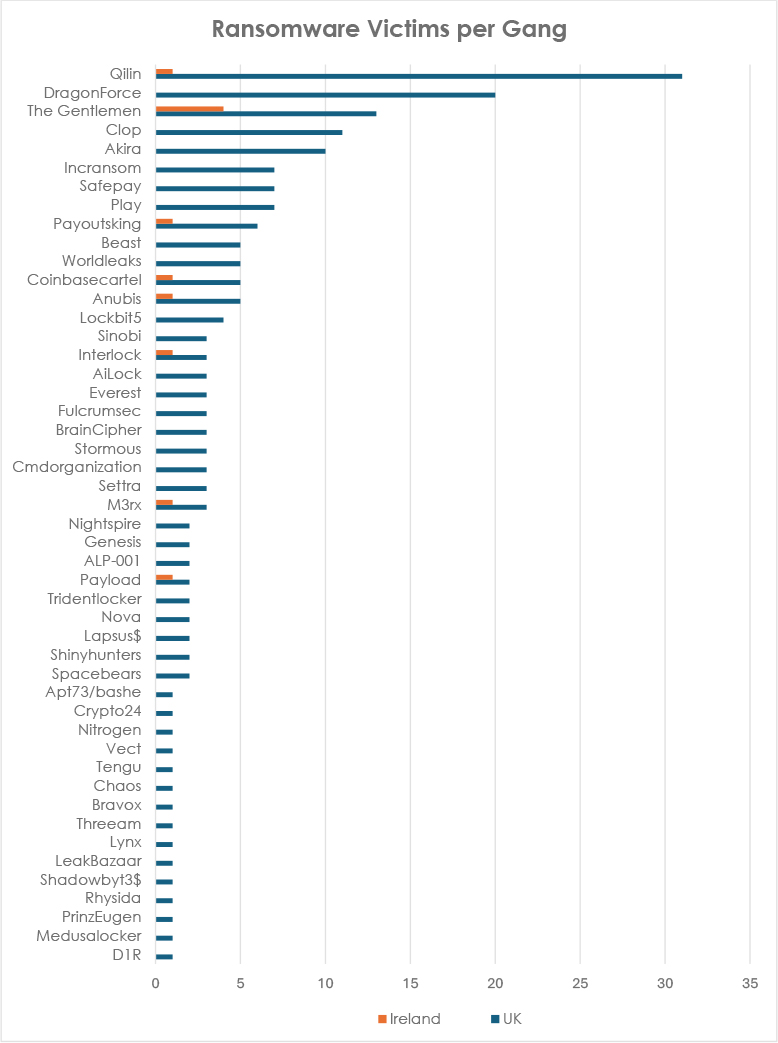
The distribution of ransomware victims across threat groups highlights a clear dominance of a few key actors within the UK and Ireland threat landscape.
Qilin emerged as the most active ransomware group, recording the highest number of publicly reported victims, followed by DragonForce and The Gentlemen, highlighting the continued dominance of well-established ransomware operations. Other prominent groups, including Clop, Akira, Play, SafePay, and Incransom, also maintained a consistent operational presence, while the remaining threat actors accounted for comparatively fewer victims. This distribution indicates that a limited number of ransomware groups continue to drive the majority of ransomware activity across the region.
A geographic comparison shows that the United Kingdom accounted for the overwhelming majority of reported victims, with nearly every ransomware group exhibiting a stronger operational footprint in the country. Ireland experienced considerably fewer reported incidents; however, groups such as The Gentlemen, Qilin, Interlock, M3rx, Payload, PayoutsKing, Anubis, and CoinbaseCartel continued to target organizations in the country, demonstrating that it remains within the operational scope of multiple ransomware campaigns despite the lower attack volume.
From a strategic perspective, the victim distribution reflects a mature and competitive ransomware ecosystem in which a handful of dominant groups continue to conduct large-scale operations while numerous smaller actors sustain a persistent threat through opportunistic attacks. This trend reinforces that ransomware remains a widespread and evolving threat, requiring organizations to adopt proactive monitoring, intelligence-led defenses, and resilient incident response capabilities to mitigate risks posed by both established and emerging ransomware operators.
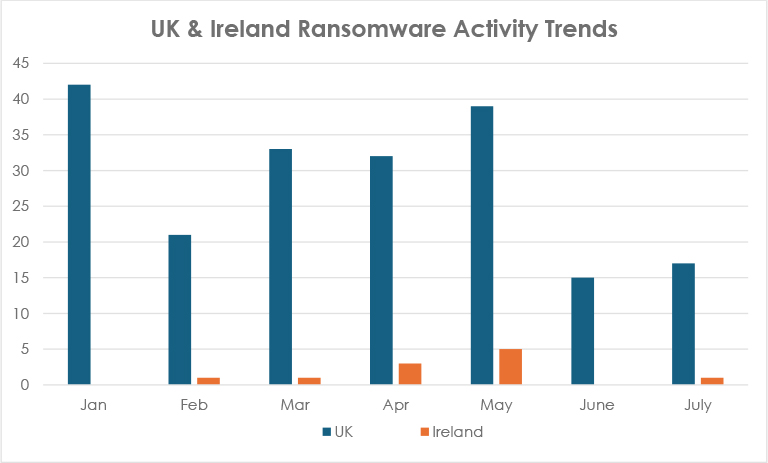
The monthly ransomware activity trend highlights a sustained and dynamic threat environment across the United Kingdom and Ireland throughout the reporting period. The United Kingdom consistently accounted for the highest volume of publicly reported ransomware victims, with notable peaks observed in January and May, indicating periods of intensified ransomware operations. Although victim volumes fluctuated between months, the absence of a sustained downward trend suggests that ransomware groups continued to operate at a persistent pace, maintaining pressure on organizations across the region.
Ireland experienced considerably lower ransomware activity; however, recurring victim disclosures throughout the reporting period demonstrate that the country remains within the operational scope of multiple ransomware groups. The increase observed in May represents the highest level of reported activity for Ireland, while the remaining months recorded isolated incidents. Despite the lower attack volume, the consistent presence of ransomware claims reinforces that organizations in Ireland remain vulnerable to opportunistic and targeted campaigns.
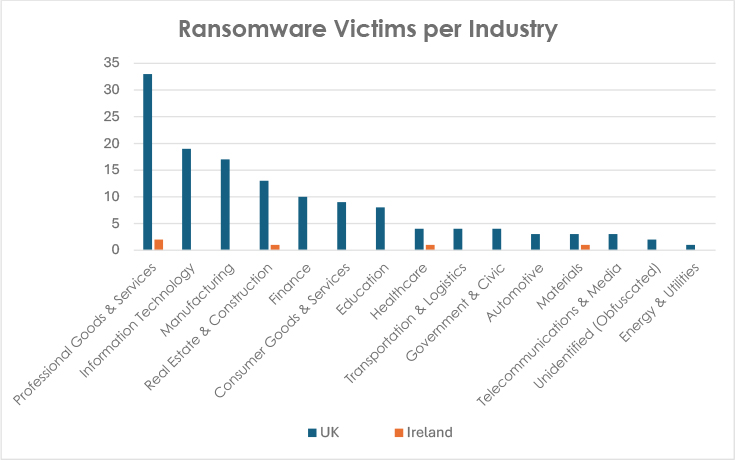
The sector-wise distribution indicates that ransomware operators primarily targeted commercial and business-focused industries across the United Kingdom and Ireland. The Professional Goods & Services sector recorded the highest number of victims, followed by Manufacturing, Real Estate & Construction, and Information Technology. Other frequently targeted sectors, including Education, Finance, Consumer Goods & Services, and Healthcare, also experienced notable ransomware activity, demonstrating that threat actors continue to focus on organizations that rely heavily on digital operations and manage valuable business or customer data.
The United Kingdom experienced significantly higher ransomware activity across all sectors than Ireland, reflecting a broader and more active threat landscape. Although the number of reported incidents in Ireland remained comparatively low, attacks were observed across multiple industries, indicating that ransomware groups continue to pursue opportunities regardless of sector or organizational size.
The distribution also suggests that ransomware groups are not restricting their operations to a specific industry. Instead, they are targeting organizations across a wide range of sectors, adapting their campaigns based on available attack opportunities and potential financial gain.
Reconnaissance and Network Mapping
Threat actors targeting the United Kingdom and Ireland conduct continuous scanning and reconnaissance of internet-facing systems, including VPN gateways, web applications, and cloud infrastructure. These activities are aimed at identifying exposed services, misconfigurations, and vulnerabilities to map network architecture. This phase enables attackers to build targeting intelligence and prepare for subsequent intrusion attempts.
Credential Theft and Spear-Phishing
Spear-phishing and credential harvesting remain primary intrusion vectors, particularly targeting employees in government, finance, and enterprise sectors. Advanced social engineering techniques, including impersonation via professional platforms and helpdesk manipulation, are used to obtain valid credentials. This enables attackers to bypass traditional security controls and establish legitimate access within targeted networks.
Supply Chain Compromise
Adversaries increasingly exploit third-party vendors, managed service providers (MSPs), and software supply chains to gain indirect access to primary targets. By leveraging trusted relationships within sectors such as technology, finance, and critical infrastructure, threat actors can infiltrate multiple organizations simultaneously. This approach enhances stealth and allows broader access across interconnected enterprise environments.
Exploitation of Internet-Facing Systems
Threat actors frequently exploit known vulnerabilities in publicly accessible systems such as VPN appliances, email servers, and web applications. Unpatched systems and weak configurations are commonly targeted to gain an initial foothold without requiring user interaction. This method is widely used by both nation-state actors and ransomware groups.
Malware Deployment and Persistent Access
Following initial compromise, attackers deploy backdoors, remote access tools, and malware to maintain long-term persistence. These payloads are often designed to operate stealthily, leveraging legitimate system tools to evade detection. Persistent access enables continuous monitoring, data exfiltration, and preparation for further malicious activities.
Lateral Movement and Privilege Escalation
Once inside a network, adversaries move laterally using stolen credentials and administrative tools to access high-value systems. Privilege escalation techniques are used to gain elevated access, allowing attackers to expand control across the environment. This stage is critical for identifying sensitive data and critical assets.
Data Exfiltration and Double Extortion
Financially motivated threat actors commonly exfiltrate sensitive data before deploying ransomware, enabling double extortion tactics. Stolen data is used to pressure victims into paying ransom demands under the threat of public exposure. This approach has become a dominant trend across ransomware operations targeting the UK and Ireland.
Service Disruption (DDoS and Hacktivism)
Hacktivist groups conduct Distributed Denial-of-Service (DDoS) attacks to disrupt public-facing services and create operational impact. These attacks primarily target government websites and critical infrastructure, often driven by geopolitical motivations. While less technically sophisticated, they can significantly affect service availability.
Dark Web Activity
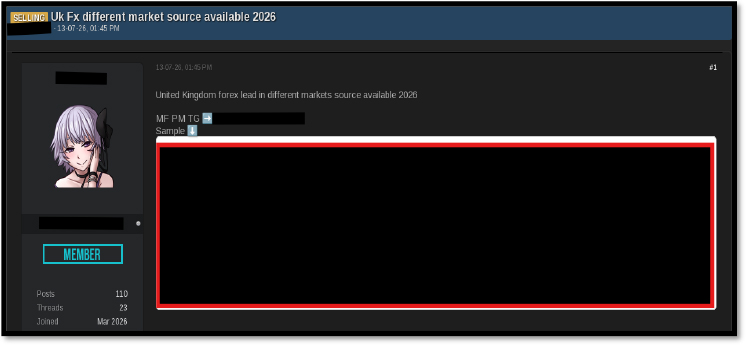
On 13 July 2026, a threat actor advertised an alleged United Kingdom financial services (foreign exchange/forex) lead database on a cybercriminal forum. According to the post, the dataset was claimed to contain 2026-dated marketing leads from multiple forex-related sources, including personally identifiable information (PII) such as names, email addresses, phone numbers, associated websites, and geographic information. A sample of the alleged data was shared to support the claim.
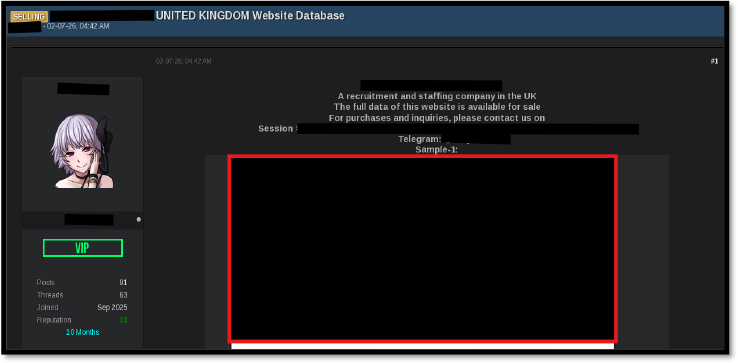
On 02 July 2026, a threat actor advertised the alleged database of a United Kingdom recruitment and staffing sector organization on a cybercriminal forum. According to the post, the actor claimed to be selling the organization’s full website database, which allegedly included candidate information and associated records. A sample containing an individual’s resume/CV was shared to support the claim, and interested buyers were instructed to contact the threat actor directly via Telegram.
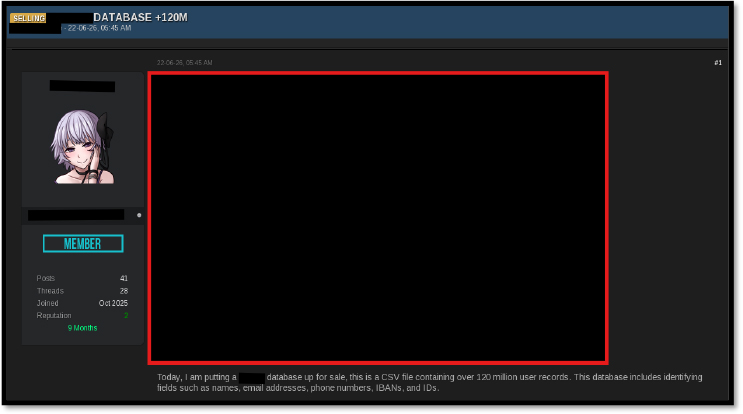
On 22 June 2026, a threat actor advertised the alleged database of a United Kingdom-based online gambling and betting sector organization on a cybercriminal forum. According to the post, the dataset was offered in CSV format and was claimed to contain more than 120 million user records, including personally identifiable information (PII) such as names, email addresses, phone numbers, identification details, IBANs, and other financial information. A sample of the alleged data was shared to support the claim, and interested buyers were instructed to contact the threat actor directly.
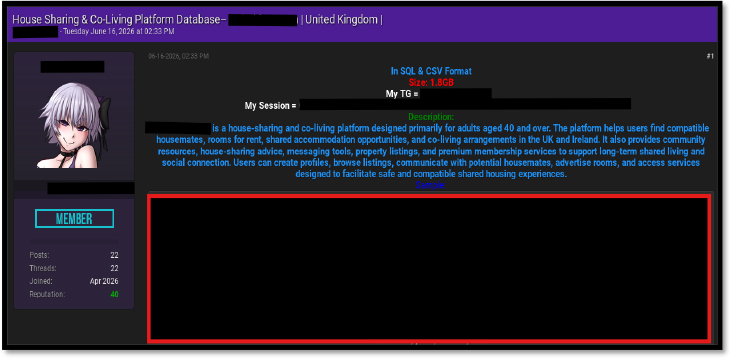
On 16 June 2026, a threat actor advertised the alleged database of a United Kingdom-based real estate and property rental sector organization on a cybercriminal forum. According to the post, the dataset was offered in SQL and CSV formats with a reported size of 1.8 GB and was claimed to contain user account information, including usernames, email addresses, hashed passwords, profile details, registration records, and other associated user data.
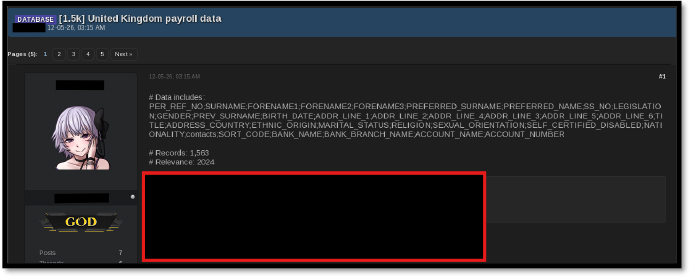
On 12 May 2026, a threat actor advertised an alleged United Kingdom payroll dataset on a cybercriminal forum. According to the post, the dataset reportedly contains approximately 1,563 records from 2024, including employee names, national identification numbers, dates of birth, residential addresses, contact details, payroll information, bank account details, and other personnel-related records.
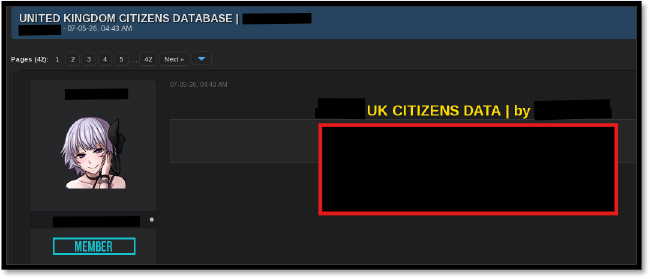
On 07 May 2026, a threat actor advertised an alleged United Kingdom citizen database on a cybercriminal forum. According to the post, the dataset was claimed to contain full identity information related to UK citizens and was made available through an external file-sharing platform. No sample data or sale price was provided in the post.
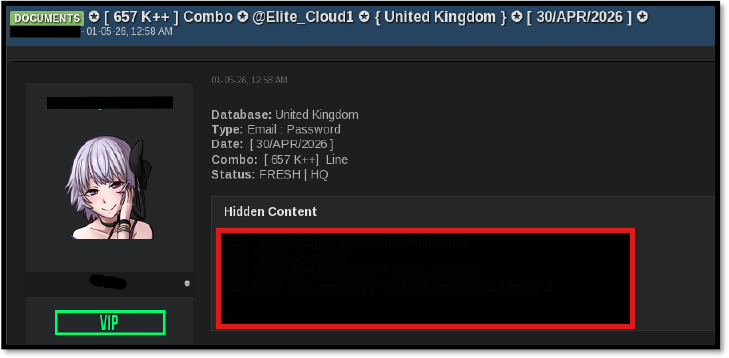
On 01 May 2026, a threat actor on a cybercriminal forum advertised a United Kingdom-based combo list allegedly containing over 657,000 records. The dataset was described as including email and password combinations in plain text format, with the actor claiming the database was “fresh” and high quality. Hidden download links were provided within the post, alongside references to additional credential logs. Such combo lists are commonly used for credential stuffing, phishing, and unauthorized account access campaigns, highlighting the continued circulation of compromised UK user credentials across underground communities.
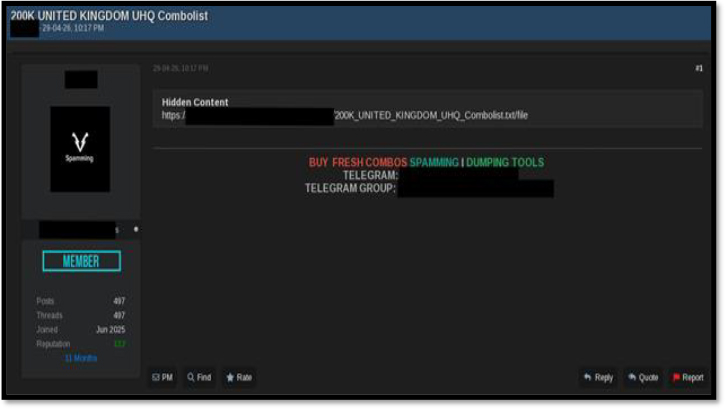
On April 29, 2026, a threat actor on a cybercriminal forum advertised a “200K United Kingdom UHQ Combolist,” allegedly containing a large volume of compromised UK-based credentials. The post promoted the dataset through a hidden download link and associated Telegram channels focused on spamming and credential-related activities. Such combolists typically contain email and password combinations aggregated from previous breaches and are commonly used for credential stuffing, account takeover attempts, and phishing campaigns. The incident highlights continued underground trading of compromised UK user credentials and the ongoing risk of unauthorized access to online accounts and services.
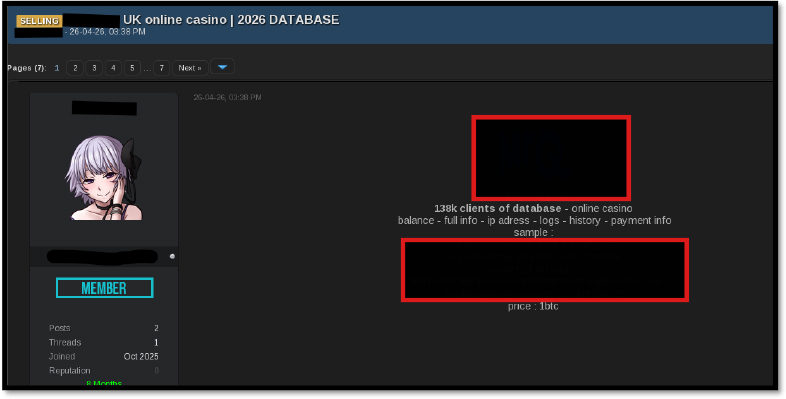
On April 26, 2026, a threat actor on a cybercriminal forum advertised the sale of an alleged database belonging to an online gaming and gambling platform. The actor claimed the dataset contained records associated with approximately 138,000 users and included account balance information, personal details, IP addresses, activity logs, and transaction history. The database was offered for sale in exchange for cryptocurrency, with sample records shared to substantiate the claim. The incident highlights the continued targeting of online gaming platforms by cybercriminals seeking to monetize customer and financial data.
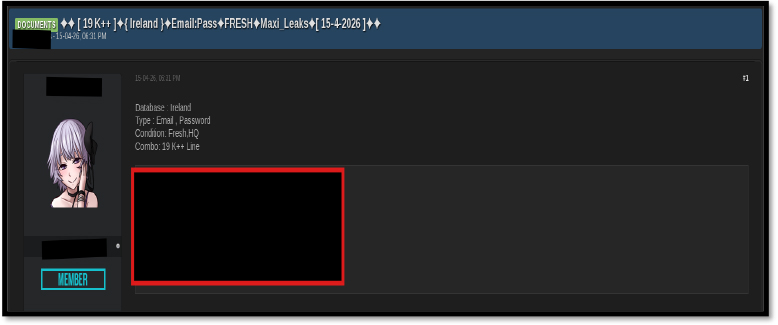
On April 15, 2026, a threat actor on a cybercriminal forum advertised an alleged Ireland-based combo list containing over 19,000 email and password combinations. The dataset was described as “fresh” and high quality, with multiple download links shared within the post. Such combo lists are commonly leveraged for credential stuffing, phishing campaigns, and unauthorized account access attempts targeting online services and enterprise environments. The incident highlights the continued circulation and monetization of compromised Irish user credentials across underground cybercriminal communities.
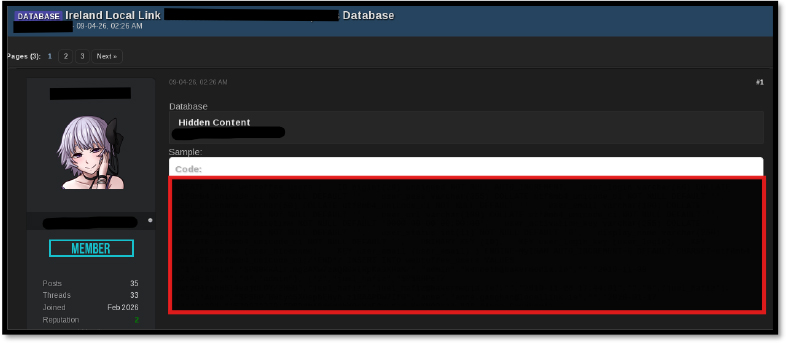
On April 9, 2026, a threat actor on a cybercriminal forum advertised an alleged WordPress database belonging to a transportation services platform. The actor shared a downloadable database link and sample records, claiming the dataset contained website backend information and user account data, including usernames, email addresses, registration details, and other account-related information. The incident highlights the continued targeting of internet-facing web applications and content management systems for data theft and unauthorized access.
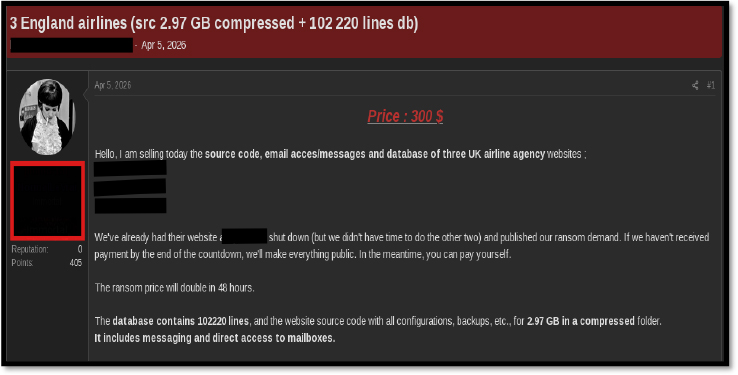
On April 5, 2026, a threat actor on a dark web forum claimed to be selling source code, database contents, email access, and communications allegedly obtained from multiple aviation-related websites. The actor stated that the dataset comprised approximately 2.97 GB of compressed data, including over 102,000 database records, configuration files, and backups. The post also claimed direct access to email accounts and alleged service disruption affecting the targeted websites. The data was offered for sale with threats of public disclosure, highlighting the continued targeting of aviation and transportation-sector organizations by cybercriminals.
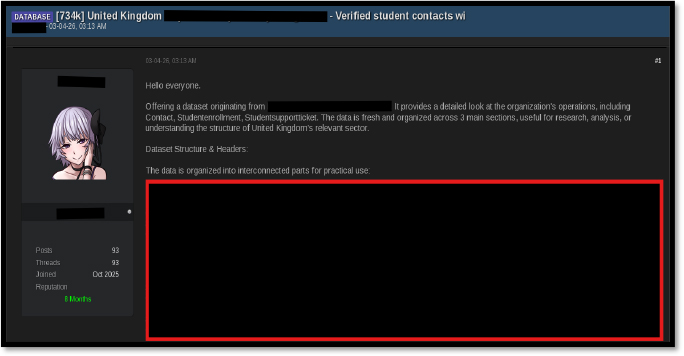
On 03 April 2026, a threat actor advertised an alleged database belonging to a United Kingdom education sector organization on a cybercriminal forum. According to the post, the dataset was claimed to contain approximately 734,000 verified student contact records, including prospective and current student information, enrollment and academic records, and student support ticket data. The actor also shared sample data and file-sharing links to support the claim.
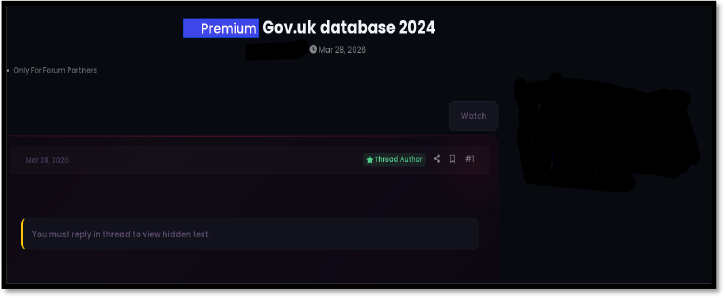
On March 28, 2026, a threat actor on a cybercriminal forum advertised an alleged government-related database. The listing was restricted to select forum members, and details regarding the dataset were concealed, preventing independent verification of its authenticity and contents. The post nevertheless reflects ongoing threat actor interest in acquiring and monetizing data associated with government entities.
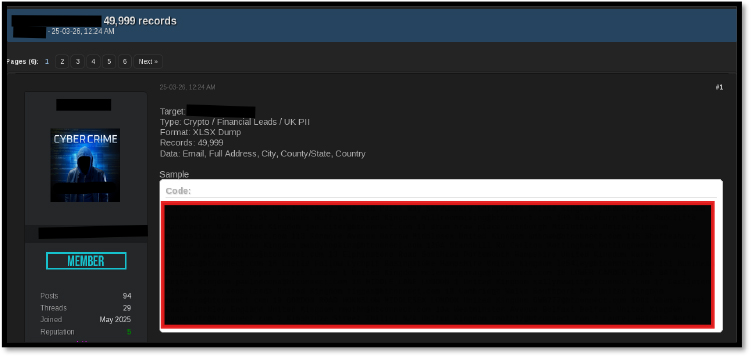
On March 25, 2026, a threat actor on a cybercrime forum advertised the sale of an alleged dataset containing approximately 49,999 records. The actor claimed the data included personally identifiable information (PII), such as email addresses, full names, physical addresses, and location details associated with financial and cryptocurrency-related individuals. Sample records were shared to support the claim. The incident highlights the continued underground trade in sensitive personal data and its potential use in fraud, phishing, and other financially motivated cybercrime activities.
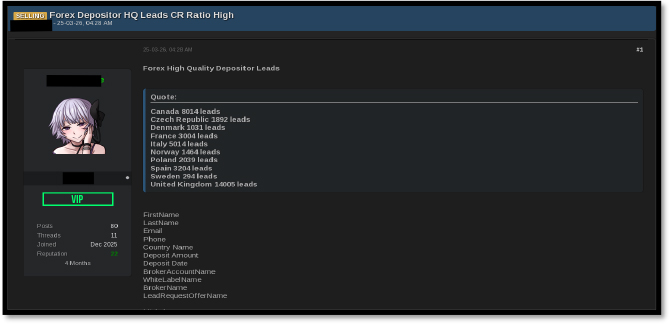
On March 25, 2026, a threat actor on a cybercriminal forum advertised the sale of an alleged dataset containing approximately 14,000 financial trading-related records. The actor claimed the data included personal and financial information, such as names, email addresses, phone numbers, deposit amounts, broker details, and account-related records. The listing highlights ongoing underground market activity involving sensitive financial data and demonstrates continued threat actor efforts to monetize customer information for financially motivated purposes.
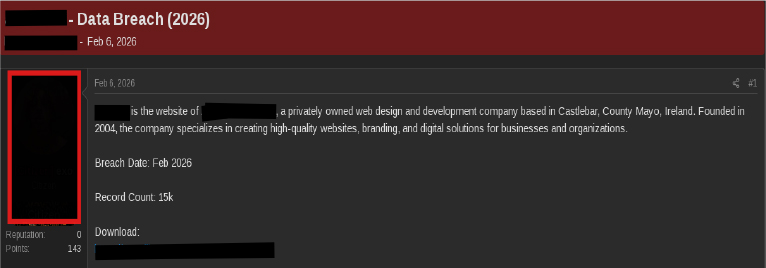
On February 6, 2026, a threat actor on a cybercriminal forum advertised an alleged data breach involving an Irish web design and development company. The actor claimed that approximately 15,000 records had been compromised and shared a download link for the purported dataset. The post publicly identified the incident as a data breach and alleged unauthorized access to organizational data.
Hacktivism
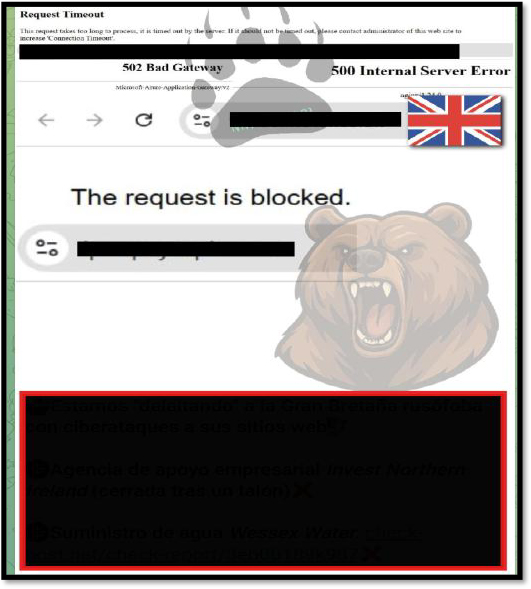
On May 2, 2026, a hacktivist group claimed responsibility for cyberattacks targeting multiple organizations across the United Kingdom’s utilities, financial services, technology, and public sectors. The group shared screenshots allegedly demonstrating website outages and service disruptions. Although the timing and impact of the attacks could not be independently verified, the claim highlights the continued targeting of UK-based organizations supporting critical services and infrastructure by ideologically motivated threat actors.
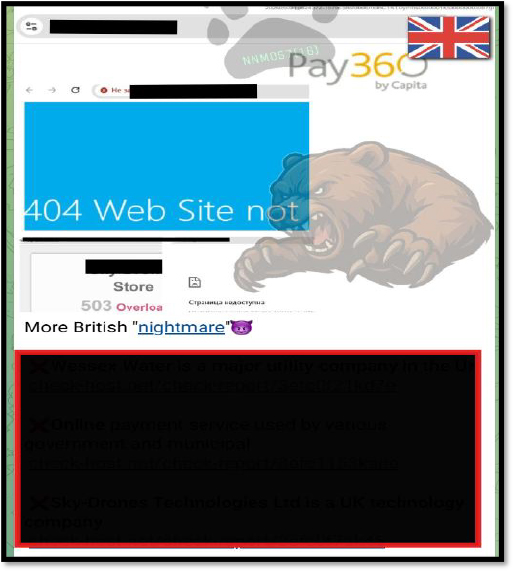
On April 28, 2026, a hacktivist group claimed responsibility for cyberattacks targeting multiple organizations across the United Kingdom and Ireland, including entities operating within the utilities and public sectors. The group shared screenshots allegedly showing website errors and service disruptions affecting public-facing online services. The activity appears consistent with Distributed Denial-of-Service (DDoS) attacks intended to disrupt service availability. The claim highlights the continued targeting of organizations supporting critical services and infrastructure across the United Kingdom and Ireland by ideologically motivated threat actors.
The monthly distribution of threat-related chatter in the UK shows that data breaches and data leaks are consistently the most dominant categories across all months. January records the highest level of activity, particularly for data breaches, followed by a gradual decline in the following months. Data leaks also remain significantly high throughout, indicating ongoing exposure of sensitive information. This pattern highlights that data-centric threats continue to be the primary focus for threat actors, with a strong emphasis on stealing and exposing information rather than solely disrupting services.
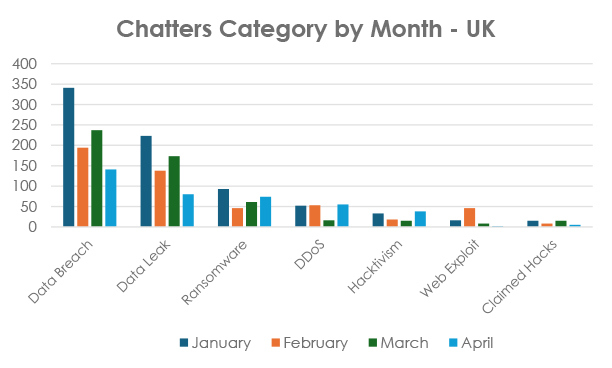
Ransomware activity remains moderate but steady, with slight fluctuations across months, suggesting continuous but campaign-driven operations. In comparison, DDoS and hacktivism-related chatter remain relatively low yet persistent, reflecting ongoing but less impactful disruptive activities. A noticeable spike in web exploit activity during February indicates a temporary surge in vulnerability exploitation, possibly linked to newly disclosed flaws. Overall, the data suggests that the UK threat landscape is heavily driven by data compromise, supported by consistent ransomware activity and periodic exploitation trends.
The Ireland chatter distribution shows a low-volume but event-driven threat landscape, with activity concentrated in specific categories rather than being consistently spread across all threat types. Data breaches dominate the dataset, with a sharp spike in February, significantly higher than all other categories and months. This indicates that Ireland experienced a notable surge in data exposure incidents during that period, while other months show minimal activity. Ransomware activity remains relatively low, with only small occurrences across February, March, and April, suggesting a limited but ongoing presence of financially motivated attacks.
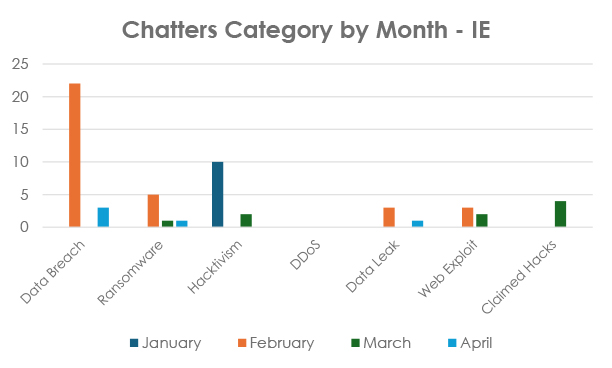
Hacktivism shows a distinct pattern, peaking in January and then dropping off in later months, indicating short-term or campaign-driven activity rather than sustained operations. Other categories such as data leaks and web exploits appear intermittently, with minor spikes in February and March, reflecting opportunistic exploitation rather than large-scale campaigns. DDoS activity is notably absent, suggesting either low targeting or lack of visibility. Additionally, claimed hacks appear only in March, indicating isolated reporting or disclosure events. Overall, the data suggests that Ireland faces targeted and irregular cyber activity, with occasional spikes driven by specific incidents rather than continuous high-volume threat operations.
The industry-wise chatter trends for the UK indicate that Finance was the most targeted and discussed sector for most of the reporting period, consistently recording the highest activity from January through March, before Information Technology overtook it in April, followed by a gradual decline in subsequent months. Information Technology and Telecommunications & Media also show strong and sustained chatter, reinforcing their importance as high-value targets due to their role in managing digital infrastructure and sensitive data. Professional Goods & Services and Government & Civic sectors follow closely, reflecting continued interest from threat actors in organizations that support critical business operations and public services.
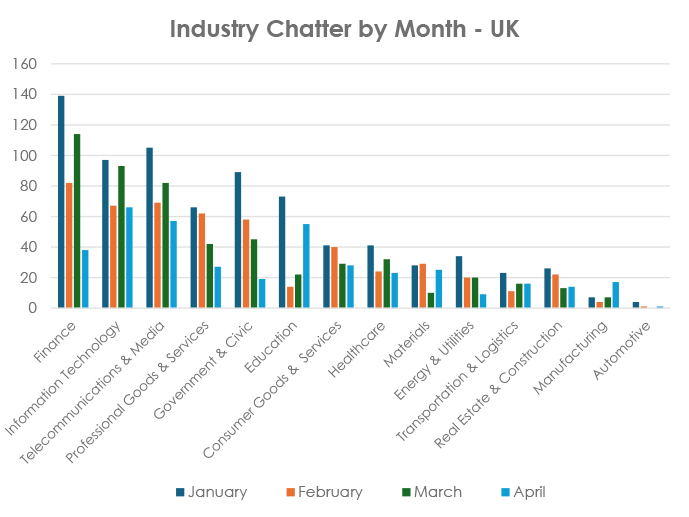
Mid-level activity is observed across sectors such as Education, Consumer Goods & Services, and Healthcare, indicating consistent but less intense targeting compared to top-tier industries. These sectors still hold significant value due to the sensitive nature of data they manage. Meanwhile, Materials, Energy & Utilities, and Transportation & Logistics show moderate to lower levels of chatter, suggesting opportunistic or secondary targeting. At the lower end, Real Estate & Construction, Manufacturing, and Automotive record minimal activity, indicating either reduced attacker focus or lower visibility of incidents.
A clear trend across all industries is the decline in chatter from January to April, which may suggest a shift in attacker strategies, reduced reporting, or a transition toward more targeted and stealthy operations. Overall, the data highlights that financial, technological, and communication-driven sectors remain the primary focus, while other industries continue to face varying levels of threat exposure within the UK cyber landscape.
The industry-wise chatter distribution for Ireland reflects a low-volume but concentrated threat landscape, with activity largely peaking in February across multiple sectors. Information Technology emerges as the most targeted sector, showing the highest spike, followed by Government & Civic and Professional Goods & Services, indicating that attackers are focusing on sectors that manage critical infrastructure and sensitive data. Finance and Education also show moderate activity, particularly in February, suggesting targeted but not sustained campaigns against these industries.
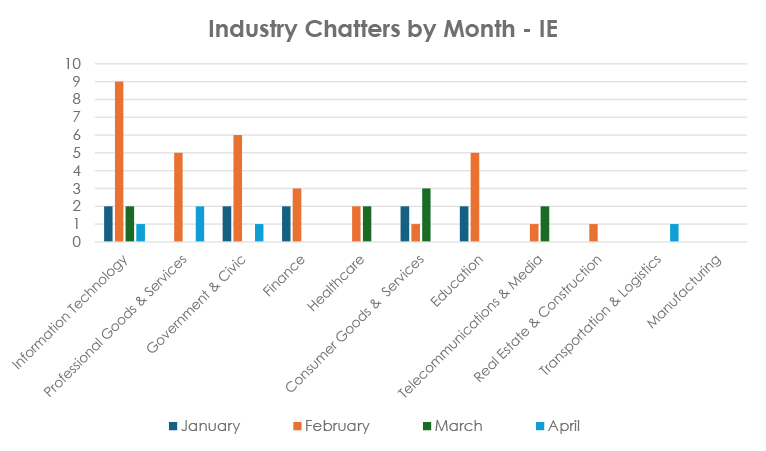
Other sectors such as Healthcare and Consumer Goods & Services display limited but consistent activity across a few months, while Telecommunications shows minor spikes, mainly in March. Industries like Real Estate, Transportation & Logistics, and Manufacturing record minimal to almost no activity, indicating either lower targeting priority or limited visibility. Overall, the data suggests that Ireland experiences sporadic, incident-driven targeting, with a strong emphasis on high-value sectors like IT and government, rather than widespread or continuous threat activity across all industries.
Critical vulnerabilities affecting enterprise applications, security appliances, and cloud environments remained a major cybersecurity concern across the United Kingdom and Ireland. Multiple vulnerabilities disclosed during the reporting period enabled remote code execution (RCE), authentication bypass, sandbox escape, and privilege escalation. Several of these flaws were actively exploited shortly after disclosure, increasing the risk of system compromise and unauthorized access.
Many critical vulnerabilities were identified in the n8n workflow automation platform, affecting Git nodes, Form nodes, Merge nodes, and Python execution components. These vulnerabilities allowed attackers to execute arbitrary commands, bypass restrictions, and access sensitive data. Security products from Cisco and Fortinet were also impacted by vulnerabilities affecting VPN and WebVPN services, enabling authentication bypass and remote code execution.
Additionally, critical vulnerabilities impacted VMware virtualization products and technologies associated with Meta and Vercel. These flaws exposed organizations to risks, including hypervisor compromise, malware deployment, and unauthorized server-side code execution. The observed activity highlights the importance of timely patching and monitoring of internet-facing systems.
| CVE ID | CVSS Score | Affected Product | Vendor | Exploit | Threat Actor |
| CVE-2026-21877 | 10.0 | n8n Workflow Automation Platform (Git Node) | n8n | – | – |
| CVE-2025-55182 | 10.0 | React Server Components (RSC) and Next.js App Router | Meta, Vercel | Link | Exploited by Earth Lamia & Jackpot Panda |
| CVE-2025-68668 | 9.9 | n8n Workflow Automation Platform (Python Code Node) | n8n | Link | – |
| CVE-2025-20333 | 9.9 | Cisco Secure Firewall ASA and FTD Software (WebVPN Component) | Cisco | – | UAT4356 |
| CVE-2024-23113 | 9.8 | FortiOS, FortiProxy, FortiPAM, and FortiSwitchManager | Fortinet | Link | – |
| CVE-2026-27493 | 9.5 | n8n Workflow Automation Platform (Form Node) | n8n | – | – |
| CVE-2026-25053 | 9.4 | n8n Workflow Automation Platform (Git Node) | n8n | – | – |
| CVE-2026-25052 | 9.4 | n8n Workflow Automation Platform | n8n | – | – |
| CVE-2026-25056 | 9.4 | n8n Workflow Automation Platform (Merge Node – SQL Query Mode) | n8n | – | – |
| CVE-2025-22224 | 9.3 | VMware ESXi, Workstation, Fusion, Cloud Foundation, and Telco Cloud Platform/Infrastructure | VMware | – | – |
| CVE-2025-20363 | 9.0 | Cisco Secure Firewall ASA, FTD, IOS, IOS XE, and IOS XR Software | Cisco | – | UAT4356 |
The observed threat activity across the United Kingdom and Ireland indicates a persistent and evolving cyber threat environment driven by financially motivated ransomware groups, hacktivist operations, and state-aligned threat actors. The United Kingdom continues to experience higher threat exposure due to its large digital footprint, concentration of critical industries, and geopolitical relevance, while Ireland remains susceptible to targeted and opportunistic activity, particularly within technology and government-linked sectors.
Threat actors demonstrated a strong focus on data-centric operations, including credential theft, data breaches, underground data sales, and ransomware-driven extortion. The continued presence of UK-related databases, combo lists, and enterprise records on underground forums suggests ongoing efforts to monetize stolen information and facilitate unauthorized access operations. Concurrently, hacktivist groups continued to target public-facing services and critical infrastructure entities through disruptive campaigns, primarily leveraging Distributed Denial-of-Service (DDoS) techniques.
The activity further indicates increasing convergence between cybercrime, disruption operations, and espionage-oriented campaigns, with adversaries utilizing phishing, exploitation of internet-facing systems, and social engineering as primary access vectors. Overall, the threat landscape reflects a sustained focus on high-value sectors, including finance, information technology, telecommunications, government, and professional services, reinforcing the need for continued monitoring, resilience, and proactive defensive measures across both the UK and Ireland.
Immediate Actions
Strengthen Critical Infrastructure Security
Ransomware and Financial Cybercrime Mitigation
Sector-Specific Protections
Social Engineering, Hacktivist, and DDoS Preparedness
Emerging Threat Monitoring
Identity & Access Security
Vulnerability & Patch Management
