

Securing AI-Driven Digital Enterprise : From Reactive Defense to Predictive and Preemptive Cyber Resilience
Operationalizing Continuous Threat Exposure Management (CTEM) and External Threat Landscape Management (ETLM) to Defend the 2026 Attack Surface
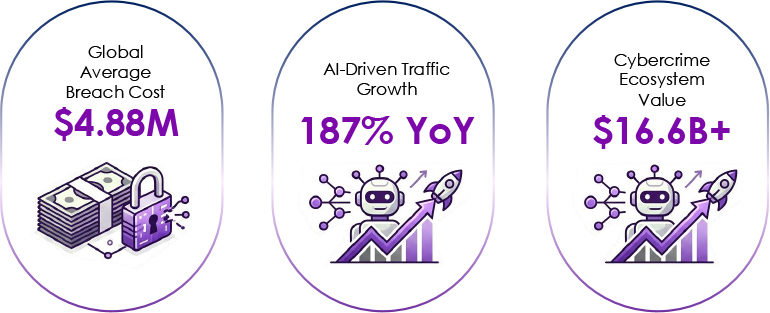

Adversaries have weaponized Al to automate reconnaissance and execute autonomous multi-stage actions. Agentic Al web traffic grew 7,851% in a single year.

61% of vulnerabilities are weaponized within 48 hours. Traditional signature-based detection and human response average 196 days to identify a breach.

Defensive structures relying on Point-in-time scanning and manual SOC triage are mathematically incapable of stopping 2026 threat campaigns.
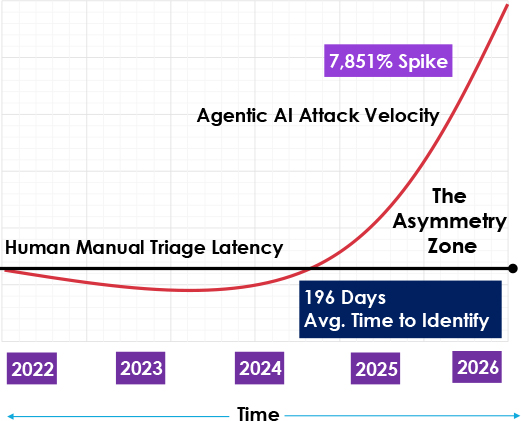
AI is both a powerful business enabler and a formidable adversarial weapon.





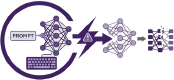
“The democratization of AI is dramatically lowering the barrier to sophisticated cyber attacks.”
Most organizations still operate with fragmented and disconnected security ecosystems:
These systems often work in isolation with minimal contextual correlation.

| Challenge | Impact |
| Alert Fatigue | Teams overwhelmed with noise |
| Siloed Intelligence | No unified view of risk |
| Reactive Response Cycles | Always playing catch-up |
| Limited External Visibility | Blind spots across the attack surface |
| Poor Business Risk Prioritization | High-impact risks get lost |
| Lack of Attacker Context | Unable to understand adversary intent |
Attackers operate holistically; they see the entire attack surface as one interconnected ecosystem. While defenders work in silos, adversaries:
“In a connected threat landscape, we need intelligence that works as holistically as the attackers do.”
| Legacy VM & Perimeter Defense | 2026 СTEM & Identity Defense | |
| Cadence | Periodic, Quarterly Scans. Point-in-time. | Continuous, Real-time Monitoring And Validation. |
| Scope | Narrow Focus On Software CVEs And Network Boundaries. | Identities, Saas Misconfigurations, Shadow Ai, External Exposures. |
| Threat Actor | Human Operators; Manual Exploitation. | Autonomous AI Agents; Automated Exploitation At Machine Speed. |
| Defense Strategy | Reactive Incident Response; Siloed Point-solutions. | Proactive Exposure Management; Zero Trust And Ai-native XDR. |
What is ETLM?
External Threat Landscape Management (ETLM) converges 9 critical intelligence pillars into a single unified operational framework, delivering continuous, outside-in visibility across the entire external attack surface.
| Discovery & Intelligence | Risk & Protection | Intelligence & Awareness |
| 1. Attack Surface Discovery & Intelligence | 4. Digital Risk & Identity Protection | 7. Third-Party Risk Management |
| 2. Vulnerability Intelligence & Threat Prioritization | 5. Situational Awareness & Emerging Threats | 8. Threat-Adaptive Awareness & Training |
| 3. Brand & Online Exposure Management | 6. Predictive Threat Intelligence | 9. Sector-Tailored Deception Intelligence |
Organizations need continuous visibility into:
“The goal is no longer simply detecting attacks. The goal is reducing exposure before attacks materialize.”
Unified Intelligence Across the External Threat Landscape
Strategic Differentiation
Unlike siloed tools, CYFIRMA’s DeCYFIR platform correlates intelligence across all 9 pillars to deliver:




Example Correlation
A phishing domain may correlate with

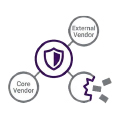


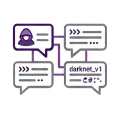
“The real advantage is not visibility alone – it is contextualized and correlated intelligence.”
Emerging AI Security Challenges
Organizations adopting AI are increasingly exposed to sophisticated new attack vectors:
Governance Challenges
Many organizations currently lack foundational controls:
How CYFIRMA Helps?
CYFIRMA is actively evolving its platform to address AI-native risks with:
“AI governance and AI cybersecurity are rapidly becoming board-level priorities.”
| SECTOR | VECTOR | TARGEТ | MANDATE |
| BFSI | Vector: Al Phishing (+1265%) | Target: Customer Data & APIs | Mandate: DORA ($6.08M breach cost) |
| Public Sector | Vector: Nation-State APTs (+110%) | Target: Citizen Data & CII | Mandate: NIS2 / CISA directives |
| Critical Infra | Vector: Ransomware-as-a-Service | Target: IT/OT Convergence | Mandate: National Security Directives |
| Conglomerates | Vector: M&A / Third-Party Vendor | Target: Subsidiary Networks | Mandate: Global Privacy Laws |
| Education | Vector: Identity Hijacking / Shadow IT | Target: Proprietary Research | Mandate: Data Sovereignty Laws |
What Organizations Require?
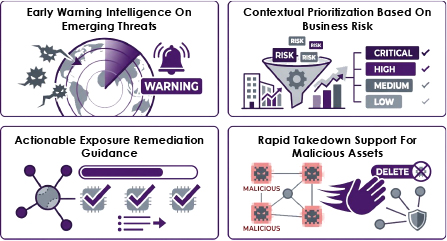
Business Outcomes
“Cybersecurity success is no longer measured by the volume of alerts but by the reduction in business impact.”

Threat actors use AI-generated voice and video to impersonate executives and bypass financial approval processes.
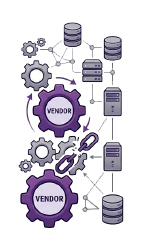
Compromised vendor credentials allow attackers to move laterally through trusted integrations.
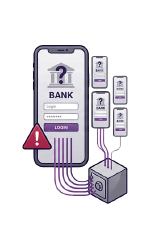
Fraudulent mobile apps mimic legitimate BFSI brands to steal customer credentials and data.
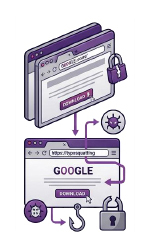
Attackers create lookalike domains and websites to distribute malware and launch phishing attacks.
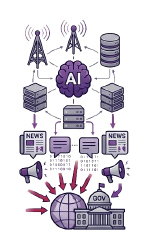
Public sector and government entities face coordinated synthetic media and misinformation campaigns.
“Modern attacks no longer rely on a single tactic; they intelligently combine AI, identity abuse, social engineering, and external exposures.”
Emerging Cybersecurity Trends






Security Evolution
| Aspect | Traditional Approach | Future State |
| Mindset | Reactive | Predictive |
| Structure | Siloed | Unified |
| Operations | Manual | AI-assisted |
| Focus | Internal | Outside-in |
| Measurement | Alert-centric | Context-centric |
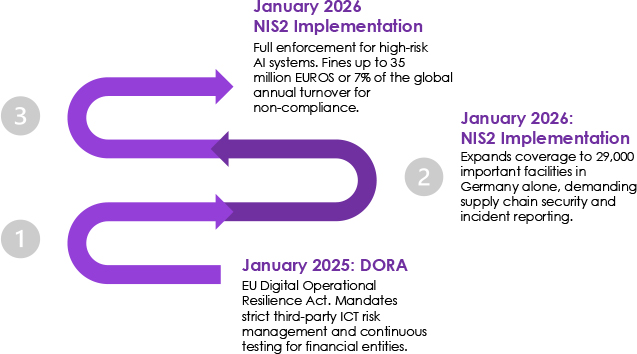

Regulatory Reality Check: 50% of large enterprises will face mandatory Al compliance audits by the end of 2026.
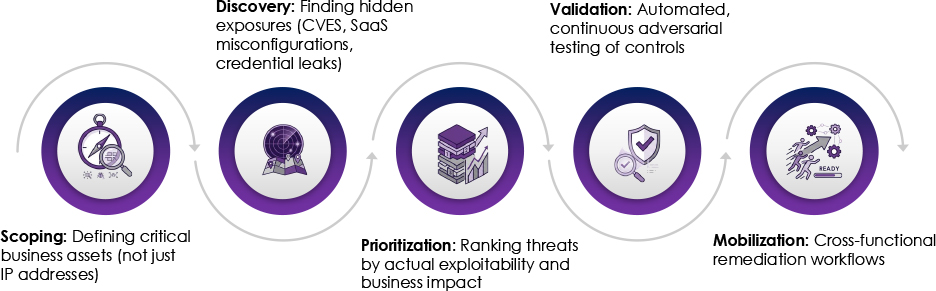
Moving Beyond Traditional Threat Intelligence
“CYFIRMA helps organizations move from fragmented monitoring to unified, predictive cyber resilience.”


Organizations cannot eliminate all cyber threats.
However, they can
“Cyber resilience starts with visibility beyond the perimeter.”
Note: The authenticity of the below breaches / access sale / hacktivist activity remains unverified at the time of reporting, as the claims originate solely from the threat actors.
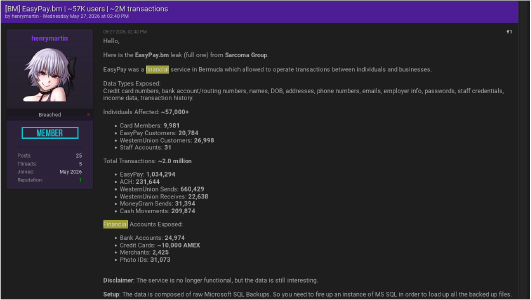
On 27 May 2026, a threat actor advertised an alleged EasyPay database containing over 57,000 user records and approximately 2 million financial transactions. Such financial and personal data can be leveraged to train AI models for fraud detection evasion, customer profiling, and highly targeted financial phishing campaigns.
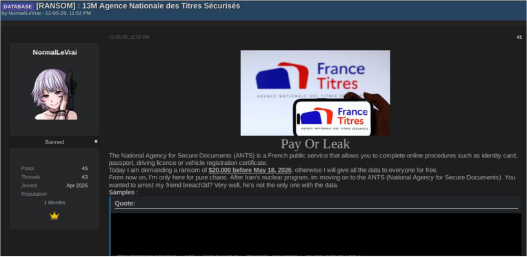
On 12 May 2026, a threat actor claimed to have stolen approximately 13 million records from France Titres (ANTS) and threatened to leak the data unless a ransom was paid. Large-scale identity and citizen datasets can be leveraged by AI systems to automate victim profiling, enhance extortion campaigns, and generate highly convincing phishing content.
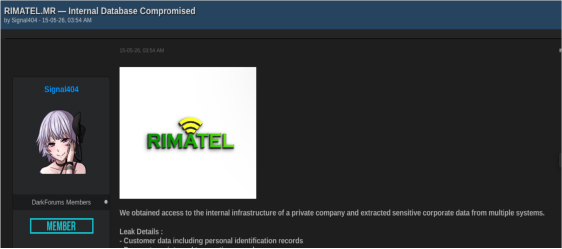
On 15 May 2026, a threat actor claimed to have compromised RIMATEL’s internal infrastructure and exfiltrated sensitive corporate and customer data. Such datasets can be leveraged by AI systems for automated intelligence gathering, organizational profiling, and more targeted cyberattack campaigns.
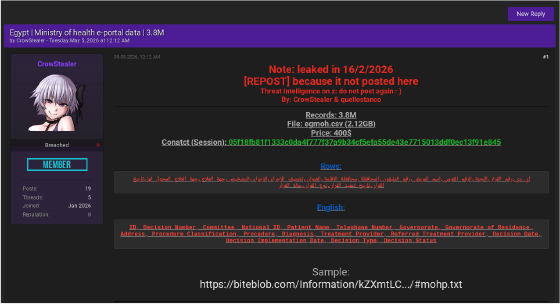
On 05 May 2026, a threat actor advertised an alleged 3.8 million-record Egypt Ministry of Health dataset containing patient and healthcare information. Such large datasets can be exploited to train AI models for identity profiling, fraud, and highly targeted phishing campaigns.
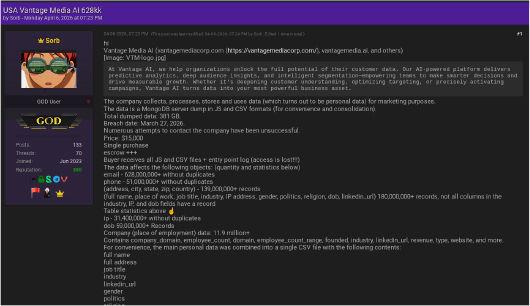
On 06 April 2026, a threat actor advertised an alleged 381 GB Vantage Media dataset containing millions of consumer and business records. Such large-scale datasets can be leveraged to train AI models for behavioral profiling, targeted advertising abuse, identity correlation, and highly personalized phishing campaigns.

On 27 January 2026, a threat actor advertised the sale of bank, cryptocurrency, virtual credit card (VCC), and casino accounts. Such compromised financial accounts can support AI-driven fraud operations, enabling automated account abuse, transaction fraud, and large-scale financial crime campaigns.
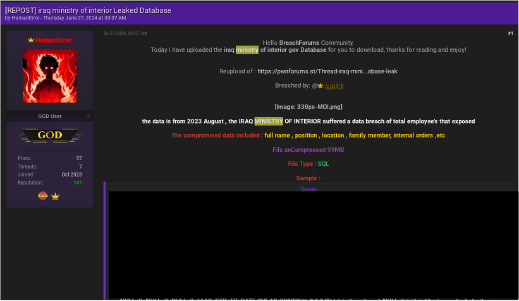
On 27 June 2024, a threat actor advertised an alleged Iraq Ministry of Interior database containing employee and personal information. Such government datasets can be leveraged by AI systems to automate personnel profiling, intelligence collection, and targeted social engineering campaigns.
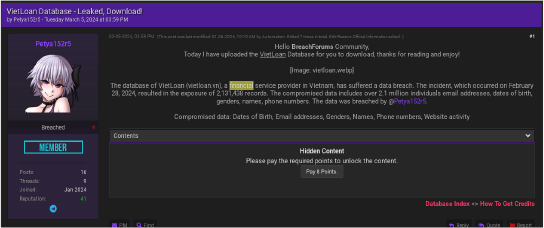
On 05 March 2024, a threat actor advertised an alleged VietLoan database containing over 2.1 million records, including email addresses, dates of birth, phone numbers, and demographic information. Such financial-sector datasets can be leveraged to train AI models for customer profiling, fraud targeting, and highly personalized phishing campaigns.
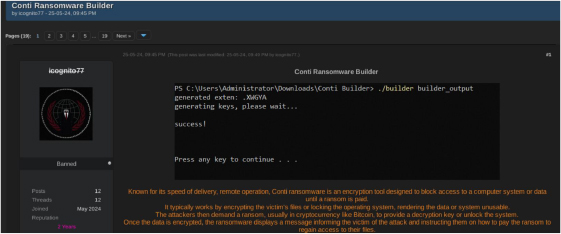
On 25 May 2024, a threat actor advertised a Conti Ransomware Builder capable of generating ransomware payloads. The availability of such tools, combined with AI-assisted coding and automation, lowers the barrier to entry for cybercriminals and accelerates ransomware development and deployment.
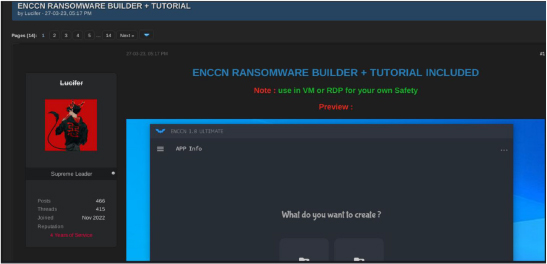
On 27 March 2023, a threat actor advertised the ENCCN Ransomware Builder alongside a tutorial for deployment. The availability of ransomware development frameworks can be further enhanced through AI-assisted automation, enabling faster payload customization, evasion, and large-scale ransomware operations.
