

The threat actor Silver Fox has been active since at least 2019–2020 and continues to evolve its tooling and targeting strategies, demonstrating an aggressive approach toward organizations. The group has also expanded its operational footprint, extending its activities across multiple countries in the APAC region.
Alias:
Void Arachne, SwimSnake, The Great Thief of Valley, UTG-Q-1000, Valley Thief
Motivation:
Financial Gains, Cyber Espionage, Identity Theft, Credential Compromise.
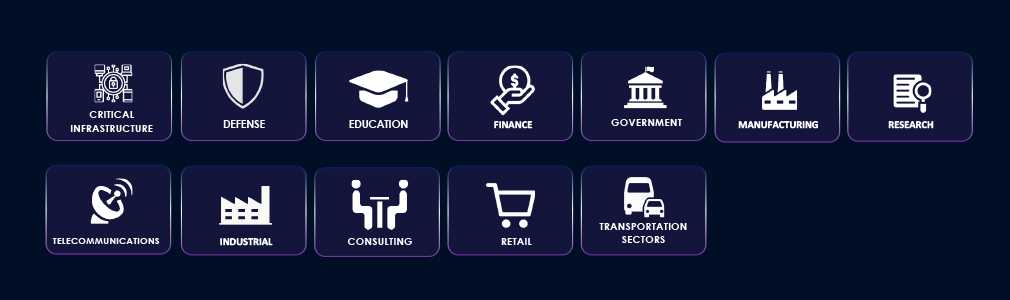
Targeted Industries:
Targeted Countries:
Brunei, Cambodia, China, East Timor, Hong Kong, India, Indonesia, Japan, Laos, Malaysia, Myanmar, Philippines, Singapore, Taiwan, Thailand, Vietnam, Russia, South Africa.

Target Technologies:
Sogou AI, Telegram, WPS Office, Youdao, and DeepSeek, Browsers, Social Media (Google Chrome, Watchdog Anti-Malware, Windows, Zemana Anti-Malware SDK.
Malware used by Silver Fox:
ValleyRAT, Gh0st RAT, HoldingHands RAT, ABCDoor backdoor
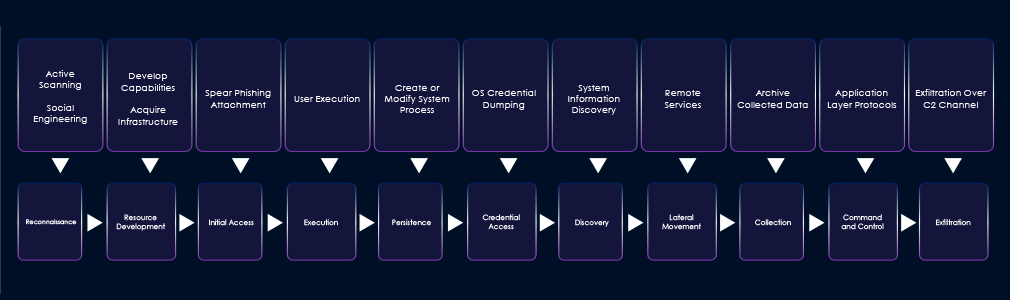
Deployment of Customized Malware Frameworks for Long-Term Access
Recent campaigns indicate that Silver Fox has expanded its use of customized malware families, loaders, and remote access tools designed to establish persistent access within targeted environments. These payloads often incorporate obfuscation, anti-analysis capabilities, and modular architectures that enable the actor to adapt operations according to victim profiles and mission requirements.
Targeting of Government, Critical Infrastructure, and Enterprise Networks
Silver Fox continues to focus on organizations associated with government operations, critical infrastructure, technology, telecommunications, defense-related entities, and strategic industries. The group’s targeting patterns suggest a sustained effort to obtain intelligence that supports long-term geopolitical and strategic objectives.
Sophisticated Social Engineering and Phishing Operations
Recent activity demonstrates extensive use of spear-phishing campaigns, malicious attachments, weaponized documents, and impersonation techniques. These operations are carefully tailored to targeted individuals and organizations, increasing the likelihood of successful initial compromise while minimizing suspicion.
Abuse of Trusted Software and Supply Chain Channels
The actor has increasingly leveraged trusted software ecosystems, software update mechanisms, and third-party service providers to facilitate malware delivery and network infiltration. This approach enables Silver Fox to bypass conventional security controls and gain access to highly secured environments.
Use of Multi-Stage Intrusion Methodologies
Following initial access, Silver Fox deploys multiple stages of malware, credential theft utilities, reconnaissance tools, and lateral movement frameworks. This structured approach allows the group to systematically expand access, identify valuable assets, and maintain operational flexibility throughout the intrusion lifecycle.
Advanced Credential Harvesting and Privilege Escalation Activities
Recent campaigns reveal extensive use of credential dumping tools, token theft techniques, and privilege escalation mechanisms. These capabilities allow the actor to obtain administrative control, move laterally across networks, and access sensitive systems while maintaining operational stealth.
Emphasis on Operational Security and Evasion
Silver Fox consistently employs sophisticated defense-evasion techniques, including encrypted communications, fileless execution methods, living-off-the-land binaries, and the abuse of legitimate administrative tools. These practices significantly reduce detection opportunities and complicate incident response efforts.
Long-Term Persistence Within Strategic Networks
Campaign observations indicate that Silver Fox prioritizes maintaining access over extended periods. The actor focuses on preserving covert footholds within compromised environments, enabling continuous intelligence collection and future operational flexibility without immediately revealing its presence.
Expansion of Strategic Cyber-Espionage Operations
Silver Fox increasingly demonstrates characteristics associated with long-term intelligence collection campaigns. The actor prioritizes strategic information gathering over disruptive or destructive activity, reflecting a strong espionage-driven operational model.
Growing Use of Multi-Layered Attack Chains
Recent operations show a shift toward more complex intrusion chains involving multiple malware families, staged payload deployments, and diverse persistence mechanisms. This layered approach enhances resilience and reduces dependence on any single tool or technique.
Increased Exploitation of Trust Relationships
The group continues to abuse trusted relationships between organizations, software vendors, and service providers. By exploiting established trust models, Silver Fox can infiltrate high-value targets while avoiding direct attacks against heavily defended systems.
Enhanced Focus on Stealth and Detection Avoidance
Operational patterns reveal a continued emphasis on minimizing forensic artifacts and avoiding security monitoring. The actor carefully manages command-and-control communications, malware deployment, and post-compromise activities to reduce exposure.
Expansion Across Strategic Sectors
Although government-related entities remain a priority, Silver Fox has broadened its targeting to include telecommunications, technology providers, research institutions, healthcare organizations, and critical infrastructure operators. This expansion reflects a growing interest in diverse intelligence sources.
Continuous Evolution of Malware Capabilities
The actor regularly updates its malware ecosystem, incorporating new persistence techniques, evasion capabilities, and command-and-control mechanisms. This ongoing evolution demonstrates a mature development cycle and a commitment to maintaining operational effectiveness.
Pre-Positioning Within High-Value Environments
Rather than pursuing immediate exploitation, Silver Fox increasingly focuses on establishing strategic footholds within critical networks. This approach enables future intelligence collection, operational flexibility, and rapid access when required.
Final Assessment
Silver Fox’s recent campaigns highlight a sophisticated and highly adaptive cyber-espionage operation focused on intelligence collection, long-term persistence, and strategic access. The group’s extensive use of customized malware, advanced social engineering, credential harvesting, and multi-stage intrusion methodologies demonstrates a mature operational framework capable of targeting high-value organizations across multiple sectors. Its continued emphasis on stealth, operational security, and sustained access positions Silver Fox as a significant and persistent advanced threat actor within the global cyber threat landscape.
| Tactic | ID | Technique |
| Initial Access | T1566.001 | Phishing: Spear Phishing Attachment |
| Initial Access | T1566.002 | Phishing: Spear Phishing Link |
| Execution | T1204.002 | User Execution: Malicious File |
| Execution | T1053.005 | Scheduled Task/Job: Scheduled Task |
| Execution | T1059.003 | Command and Scripting Interpreter: Windows Command Shell |
| Execution | T1059.001 | Command and Scripting Interpreter: PowerShell |
| Persistence | T1547.001 | Boot or Logon Autostart Execution: Registry Run Keys / Startup Folder |
| Persistence | T1053.005 | Scheduled Task/Job: Scheduled Task |
| Persistence | T1546 | Event Triggered Execution |
| Privilege Escalation | T1547.001 | Boot or Logon Autostart Execution: Registry Run Keys / Startup Folder |
| Privilege Escalation | T1053.005 | Scheduled Task/Job: Scheduled Task |
| Privilege Escalation | T1546 | Event Triggered Execution |
| Stealth | T1497 | Virtualization/Sandbox Evasion |
| Stealth | T1027 | Obfuscated Files or Information |
| Discovery | T1016 | System Network Configuration Discovery |
| Discovery | T1082 | System Information Discovery |
| Discovery | T1497 | Virtualization/Sandbox Evasion |
| Collection | T1113 | Screen Capture |
| Collection | T1115 | Clipboard Data |
| Command and Control | T1071.001 | Application Layer Protocols: Web Protocols |
| Command and Control | T1105 | Ingress Tool Transfer |
| Exfiltration | T1041 | Exfiltration Over C2 Channel |
