
Between 2025 and early 2026, Kenya experienced a notable rise in cyber threat activity affecting government institutions, financial organizations, and critical infrastructure sectors. Multiple ransomware groups, including Qilin, thegentlemen, Incransom, Lynx, Warlock, RansomHub, and Tengu, listed Kenyan organizations on leak portals, while underground forums and Telegram channels circulated credential databases, alleged mobile user datasets, government email access listings, and unauthorized infrastructure access offers. These activities indicate growing attention from financially motivated cybercriminal groups toward Kenya’s expanding digital ecosystem. In parallel, opportunistic attackers and hacktivist actors conducted over 120 website defacement incidents targeting Kenyan domains between May 2025 and March 2026, largely exploiting vulnerable CMS platforms, outdated plugins, and misconfigured hosting environments.
The cyber threat environment is further complicated by hacktivist campaigns and disruption-focused attacks, including the November 2025 defacement of more than 40 government websites, which temporarily disrupted public-facing services. At the same time, discussions within underground communities point to the increasing use of DDoS attacks targeting telecommunications providers, government portals, and financial platforms, highlighting the potential for service disruptions across the region. These incidents demonstrate how cyberattacks can extend beyond technical compromise to affect public service delivery, citizen data security, and trust in digital government systems. As Kenya continues accelerating digital transformation and expanding online public services, strengthening cybersecurity resilience across government and private sector infrastructure will be critical to protecting national stability and safeguarding citizen data.
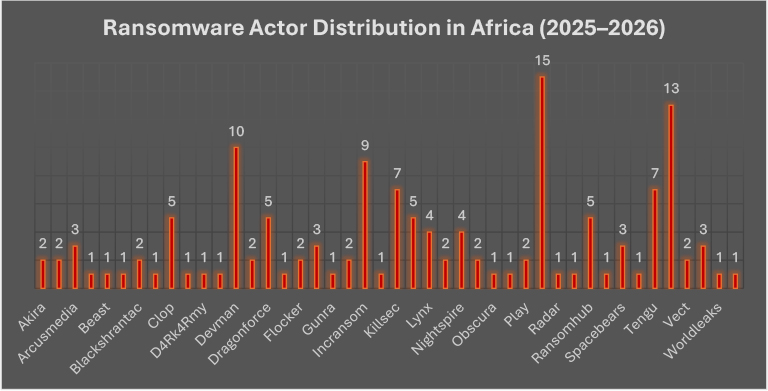
Between January 2025 and February 2026, multiple ransomware and data exposure claims targeting organizations in Kenya and Tanzania were observed across several ransomware leak portals. A total of 11 incidents were identified involving seven threat groups, including Qilin, thegentlemen, Incransom, Lynx, Warlock, RansomHub, and Tengu, with Qilin emerging as the most frequently observed actor. The attacks primarily targeted financial services, government institutions, technology providers, and critical infrastructure sectors such as energy and water utilities. Although most leak portal listings did not contain downloadable datasets and remain unverified, the activity indicates increasing ransomware actor interest in East Africa, particularly in sectors tied to finance, governance, and essential services. This trend highlights the growing exposure of organizations in Kenya and Tanzania to ransomware-driven extortion and data leak threats, reflecting the region’s expanding digital footprint and the opportunistic targeting patterns of global ransomware groups.
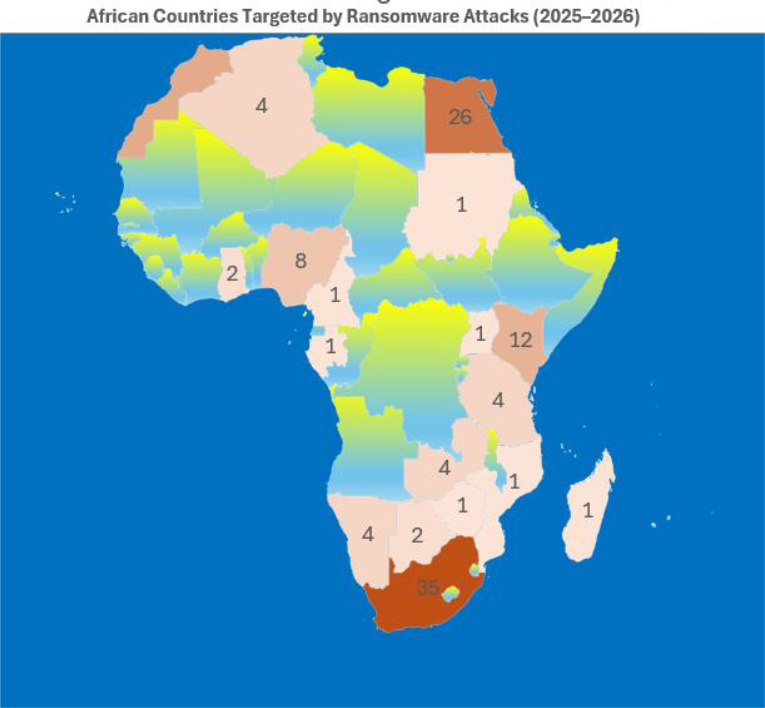
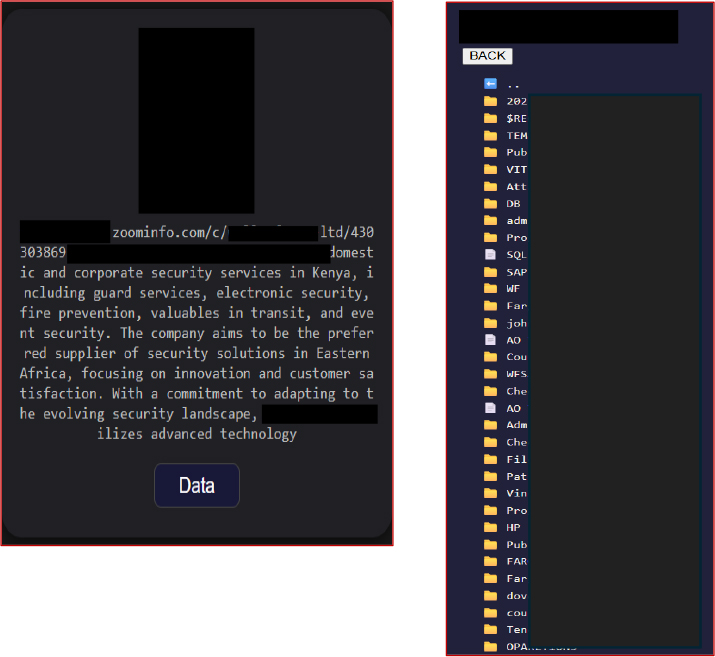
On 6 February 2026, a potential information exposure incident targeting a security services provider operating in Kenya was observed and attributed to the threat actor group “thegentlemen.” The organization operates within the physical and electronic security services sector, providing services such as guarding operations, electronic surveillance solutions, fire safety systems, valuables-in-transit services, and event security management. The listing appears to reference organizational and publicly available business information, suggesting possible reconnaissance or aggregation of company-related data rather than the confirmed release of sensitive internal datasets. At the time of detection, no verified evidence of internal records, customer data, or operational information being publicly leaked was identified. However, the presence of the organization in threat monitoring sources associated with the actor may indicate early-stage targeting or intelligence collection activity directed at the security and financial services ecosystem in Kenya, and continued monitoring is recommended to detect any escalations, such as credential exposure, data leaks, or infrastructure targeting.
On 26 January 2026, a potential information exposure incident targeting a government-linked organization operating within Kenya’s mining and mineral resources sector was observed and attributed to the threat actor group “tengu.” The organization is associated with national resource management and mineral investment activities, making it strategically significant within the country’s extractive industry. The listing referenced infrastructure associated with the organization; however, no confirmed publication of sensitive or internal datasets was identified at the time of detection. The activity may represent reconnaissance or data aggregation targeting government-linked mining infrastructure, which could potentially precede further cyber operations or attempts to expose organizational data. Continued monitoring is recommended to determine whether the activity evolves into data leaks, infrastructure targeting, or broader campaigns against Kenya’s mining and natural resources sector. Please note that no screenshots are available for this leak at present.
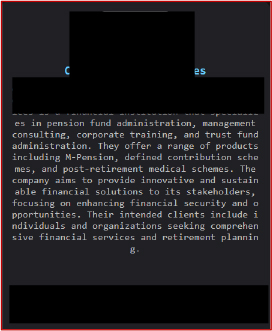
On 20 January 2026, a potential information exposure incident targeting a financial services organization operating in Kenya’s pension and asset management sector was observed and attributed to the threat actor group “thegentlemen.” The organization operates within the retirement fund administration and financial services industry, providing services related to pension management, trust fund administration, and financial planning. The listing referenced organizational information associated with the entity, but no confirmed publication of sensitive internal datasets or customer records was identified at the time of detection. The activity may represent reconnaissance or data aggregation targeting financial sector institutions in Kenya, potentially indicating early-stage targeting by the threat actor. Continued monitoring is recommended to determine whether the activity evolves into data leakage, credential exposure, or further targeting of financial service infrastructure.
On 8 January 2026, a potential information exposure incident targeting a government-linked organization operating within Kenya’s water distribution and public utilities sector was observed and attributed to the threat actor “blackshrantac.” The activity referenced infrastructure associated with the national water supply and distribution ecosystem, which forms a critical component of the country’s public utilities infrastructure. At the time of detection, no confirmed datasets or sensitive information were publicly verified, and attempts to access or download any associated data were unsuccessful. The listing was subsequently removed from the data leak platform, preventing further verification of the claimed exposure. The activity may represent reconnaissance or preliminary targeting of government-linked critical infrastructure, and continued monitoring is recommended to detect any escalation involving data leaks, infrastructure compromise, or further targeting of public utility services in Kenya. Please note that no screenshots are available for this leak at present.
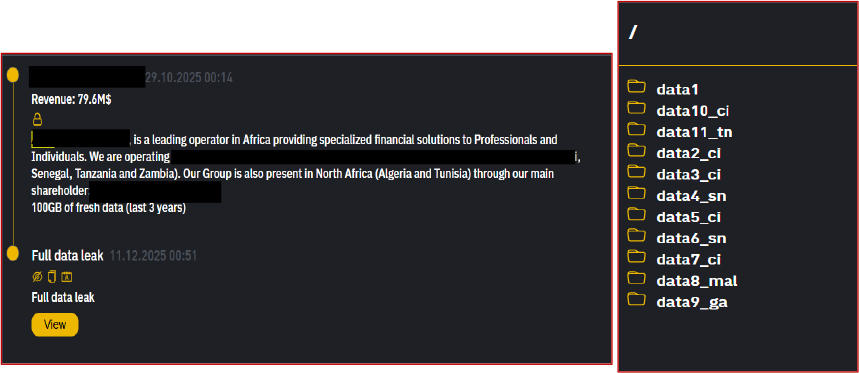
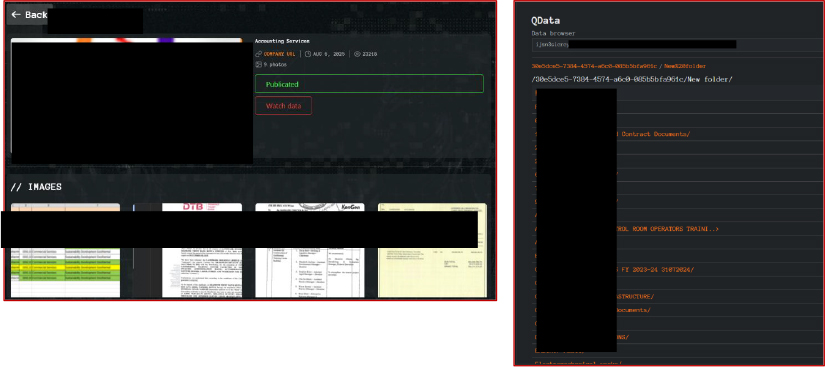
On 28 October 2025, the ransomware group Incransom listed a multinational financial services provider operating across several African countries on its data leak site, claiming a breach affecting the organization’s regional operations. The threat actor alleged the exfiltration of approximately 100 GB of data covering the previous three years, and the listing was later updated on 11 December 2025 to indicate a “full data leak.” Screenshots from the leak portal displayed directory structures and files allegedly associated with the organization, including folders labeled data1, data2_ci, data3_ci, data4_sn, data8_mal, data9_ga, data10_ci, and data11_tn, which appear to correspond to operational data from multiple country offices. Additional files visible in the preview included documents suggesting potential exposure of financial records, contractual agreements, and operational documentation. The leak portal also referenced the organization’s regional financial operations and multi-country presence, indicating that the entity may have been targeted due to its role within the African financial services ecosystem. While the screenshots provide partial indications of exposed directories and files, the complete dataset could not be independently verified during the analysis. Continued monitoring is recommended to assess the scope of the alleged data exposure and any potential impact on financial sector operations across the region.
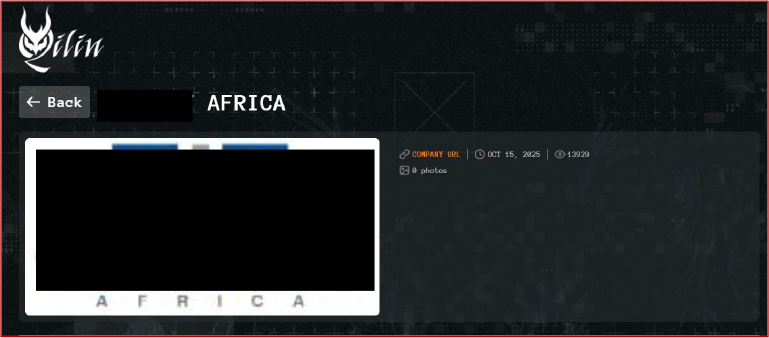
On 15 October 2025, the ransomware group, Qilin, claimed a breach involving a technology solutions provider supporting the insurance and financial services sector across Africa. The organization is known for delivering digital platforms and operational systems used by insurers, bancassurance providers, and pension administrators, enabling modernization of insurance and financial service operations across the region. The listing indicates potential targeting of the organization by the threat actor; however, no confirmed datasets or publicly accessible leaked data were observed at the time of analysis, and the claim could not be independently verified. The incident may represent an attempted ransomware-related data exposure or reconnaissance activity targeting technology providers within the financial services ecosystem. Continued monitoring is recommended to determine whether data samples, credential leaks, or additional disclosures emerge from the threat actor’s leak portal.
On 16 September 2025, a potential data exposure incident targeting an insurance services provider operating within the East African financial sector was observed and attributed to the threat actor group “Warlock.” The organization operates in the life insurance, pension management, and investment services industry, serving customers across the region. The listing referenced the entity on the threat actor’s leak monitoring sources; however, no datasets were available for download at the time of analysis, preventing independent verification of the claim. Additionally, the listing was later removed from the data leak site, further limiting the ability to determine whether any data was actually exposed. As a result, the breach claim remains unverified, though it may indicate reconnaissance or attempted ransomware-related targeting of the insurance sector in Kenya. Continued monitoring is recommended to identify any future disclosures, data samples, or related threat activity associated with the incident. Please note that no screenshots are available for this leak at present.
On 14 September 2025, the ransomware group Qilin listed a government entity responsible for political party registration and regulatory oversight in Kenya on its data leak site. The organization operates within the public governance and electoral administration sector, managing the registration and compliance framework for political parties under national legislation. The listing indicates that the entity may have been targeted by the threat actor; however, no datasets or downloadable files were available on the leak portal at the time of analysis, preventing independent verification of any claimed data exposure. Although the listing remains visible on the leak site, no supporting data samples or leaked documents are currently present, suggesting that the entry may represent an initial claim or placeholder rather than a confirmed data leak. Continued monitoring is recommended to determine whether the threat actor later publishes data samples, documents, or additional evidence related to the alleged compromise.
On 6 August 2025, the ransomware group Qilin listed a state-owned electricity generation provider operating within Kenya’s national energy infrastructure on its data leak site. The organization is a major power generation entity in East Africa, forming a critical component of the country’s electricity supply ecosystem. The leak portal displayed preview images of internal documents, including spreadsheets, official correspondence, procurement records, engineering diagrams, and government-related communications, suggesting potential exposure of operational and administrative documentation. Some of the visible materials appear to reference financial records, contractual agreements, internal project information, and communications involving government agencies and energy sector stakeholders. While the screenshots provide partial indications of internal documentation, the complete dataset was not fully accessible for download during analysis, preventing independent verification of the full scope of the alleged breach. The incident indicates potential targeting of critical energy infrastructure by a ransomware group, and continued monitoring is recommended to determine whether additional data or full datasets are released that could impact energy sector operations or infrastructure security in Kenya.
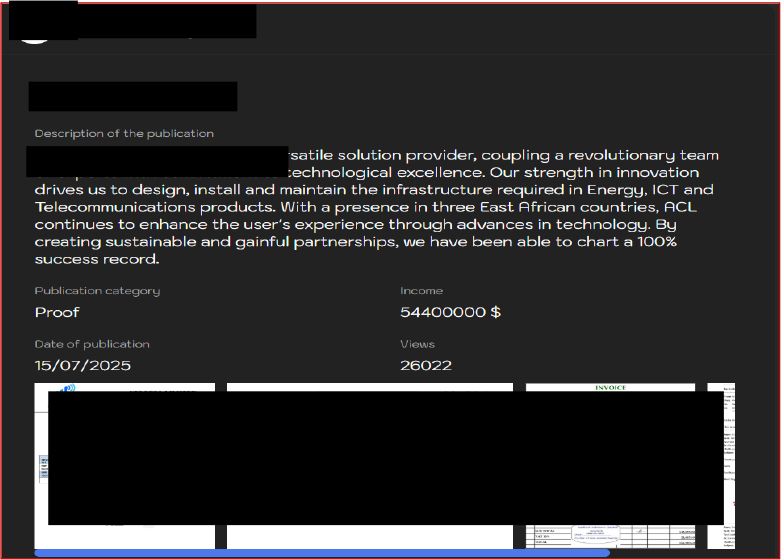
On 15 July 2025, the ransomware group Lynx listed a technology and infrastructure solutions provider operating within the energy, ICT, and telecommunications sectors in East Africa on its data leak site. The organization provides services related to system design, infrastructure deployment, and maintenance of technology platforms supporting regional telecommunications and energy infrastructure. The leak portal categorized the entry as “Proof,” indicating that the threat actor claimed to possess internal data associated with the organization. The listing also included general organizational information and estimated revenue figures, and attracted significant attention on the leak portal with over 26,000 views, suggesting notable interest within underground monitoring communities. However, no downloadable datasets or detailed document samples were available for verification during analysis, preventing confirmation of the scope or authenticity of the alleged breach. As a result, the claim remains unverified, though the listing indicates potential targeting of a technology and telecommunications infrastructure provider in Kenya, warranting continued monitoring for any further disclosures or publication of data samples.
On 6 January 2025, the ransomware group RansomHub reportedly listed a cloud service provider operating in Kenya as a potential victim on its data leak site, indicating possible targeting of cloud infrastructure within the country. However, during the analysis, the RansomHub data leak portal was not reachable, preventing verification of the listing or access to any associated data. As a result, no datasets, documents, or proof-of-compromise samples were available for review, and the alleged breach could not be independently validated. Due to the lack of accessible evidence and the unavailability of the leak portal at the time of investigation, the claim remains unverified, though it may indicate attempted ransomware targeting or reconnaissance activity against cloud service infrastructure in Kenya. Continued monitoring is recommended to determine whether the leak portal becomes accessible again or if data samples or additional disclosures emerge, confirming the incident.
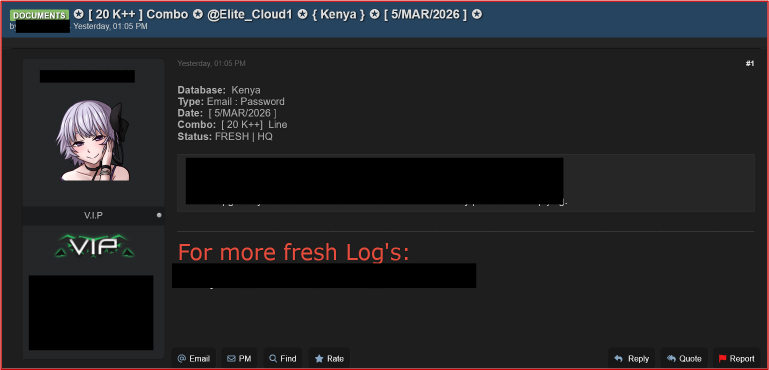
On 5 March 2026, a threat actor posted on a cybercrime forum claiming to possess a Kenya-based credential database described as a “20K++ combo,” indicating more than 20,000 records formatted as Email:Password pairs. Such datasets are commonly used in credential stuffing and account takeover attacks targeting online services. The listing identified Kenya as the targeted region and specified the dataset as containing email and password credentials, although the original breach source and the timeframe of data collection were not disclosed. No price was visible in the accessible portion of the post. The actor also referenced a Telegram channel where additional credential logs and similar datasets are reportedly distributed, indicating the use of multiple underground platforms to promote or share the data.
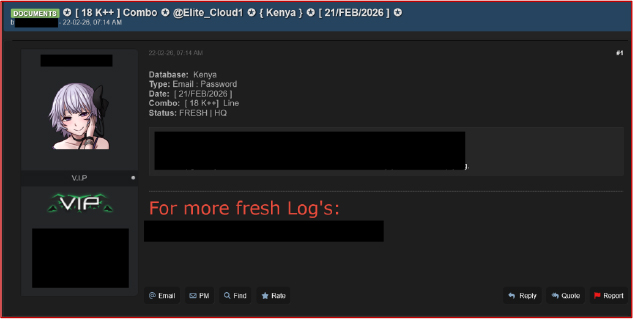
On 22 February 2026, a threat actor posted on a cybercrime forum claiming to possess a Kenya-based credential database described as an “18K++ combo,” indicating more than 18,000 records formatted as Email:Password pairs. Such datasets are commonly used in credential stuffing and account takeover attacks targeting online services. The listing identified Kenya as the targeted region and specified the dataset as containing email and password credentials, although the original breach source and the timeline of the credential collection were not disclosed. No price was visible in the accessible portion of the post. The actor also referenced a Telegram channel where additional credential logs and similar datasets are reportedly shared, indicating the use of multiple underground platforms to promote or distribute the data.
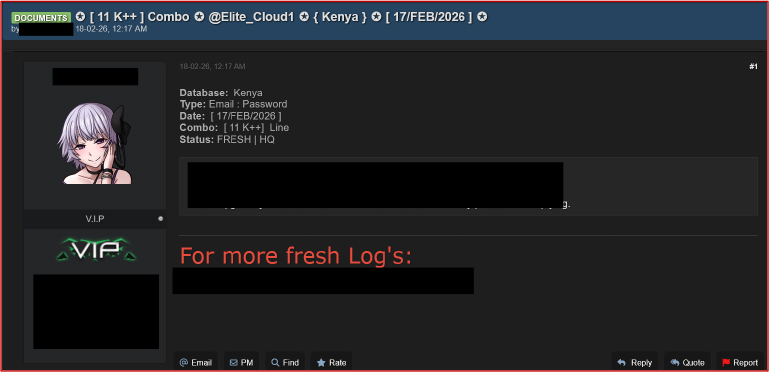
On 18 February 2026, a threat actor posted on a cybercrime forum claiming to possess a Kenya-based credential database described as an “11K++ combo,” indicating more than 11,000 records formatted as Email:Password pairs. Such datasets are commonly used in credential stuffing and account takeover campaigns targeting online services. The listing identified Kenya as the targeted region and specified the dataset as containing email and password credentials, though the original breach source and the timeline of the credential collection were not disclosed. No price was visible in the accessible portion of the post. The actor also referenced a Telegram channel where additional credential logs and similar datasets are reportedly shared, indicating the use of multiple underground platforms to promote or distribute the data.
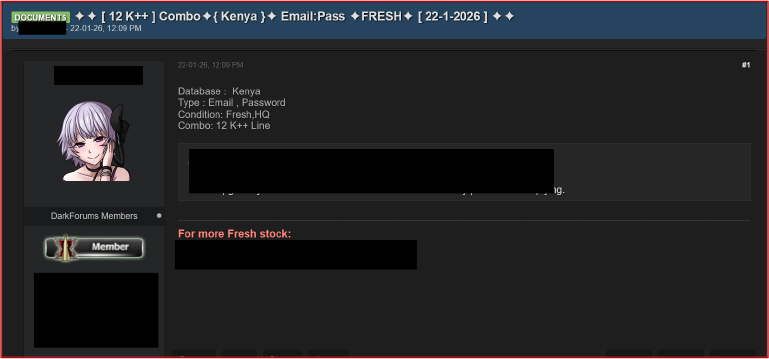
On 22 January 2026, a threat actor posted on a cybercrime forum claiming to possess a Kenya-based credential database described as a “12K++ combo,” indicating more than 12,000 records formatted as Email:Password pairs. Such datasets are commonly used in credential stuffing and account takeover campaigns targeting online services. The listing identified Kenya as the targeted region and specified the dataset as containing email and password credentials, though the original breach source and the timeline of the credential collection were not disclosed. No price was visible in the accessible portion of the post. The actor also referenced a Telegram channel where additional credential logs and similar datasets are reportedly distributed, indicating the use of multiple underground platforms to promote or circulate the data.
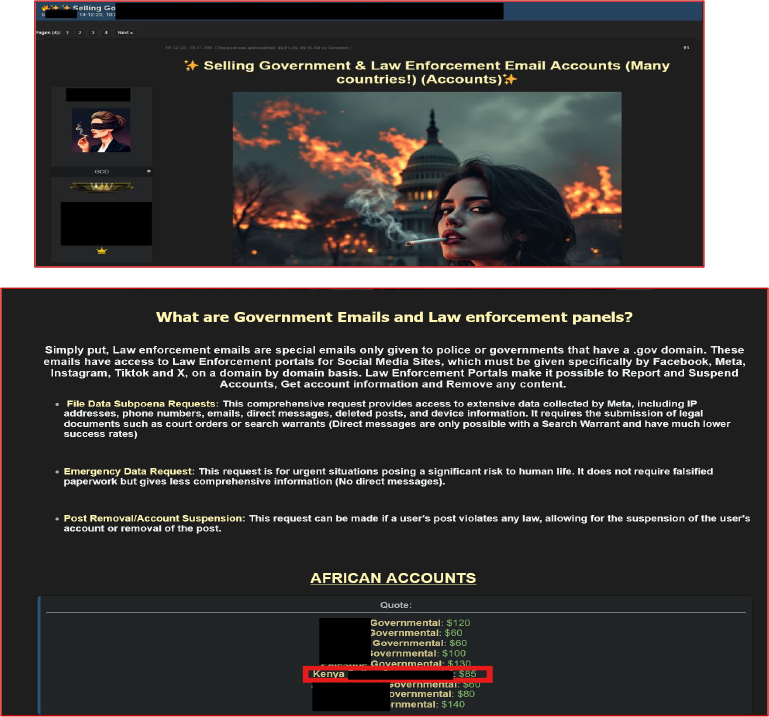
On 14 December 2025, a threat actor posted on an underground forum, advertising the sale of government and law enforcement–associated email accounts from multiple countries, including accounts linked to Kenyan government law enforcement entities. The listing indicated that these accounts were priced at approximately $85 under a section labeled “African Accounts.” The actor claimed that the email addresses were associated with official government domains and could potentially be used to interact with law enforcement request portals operated by major social media platforms. According to the advertisement, such access could enable the submission of user data requests, emergency disclosure requests, or content removal and account suspension requests through official law enforcement communication channels. This activity reflects ongoing underground marketplace trading of government-associated email credentials, which poses risks related to impersonation of law enforcement authorities, fraudulent legal data requests, and misuse of official communication channels.
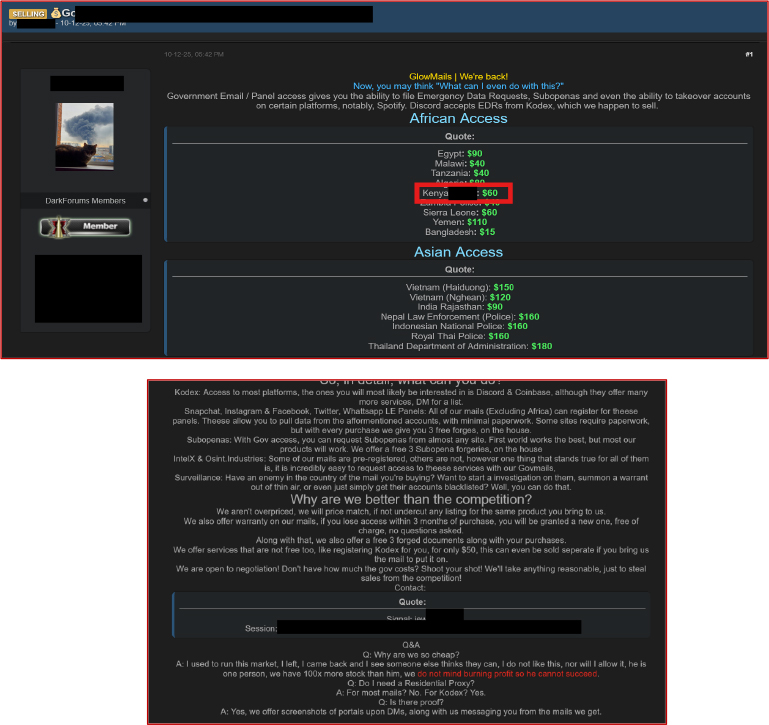
On 10 December 2025, a threat actor posted on an underground forum advertising the sale of government email accounts and law enforcement panel access from multiple countries, including accounts associated with Kenyan law enforcement entities. The listing offered access to government-linked email accounts priced at approximately $60 under an “African Access” section. The actor claimed that these accounts could potentially be used to submit Emergency Data Requests (EDRs), subpoenas, or other law-enforcement requests through platforms operated by major technology and social media companies. The advertisement also referenced additional services, including assistance with registering the emails on law enforcement request portals and providing supporting documentation, indicating attempts within underground markets to trade or exploit government-associated email credentials. Such access could potentially be misused for impersonation of law enforcement authorities, fraudulent legal data requests, or unauthorized access to platform user information.
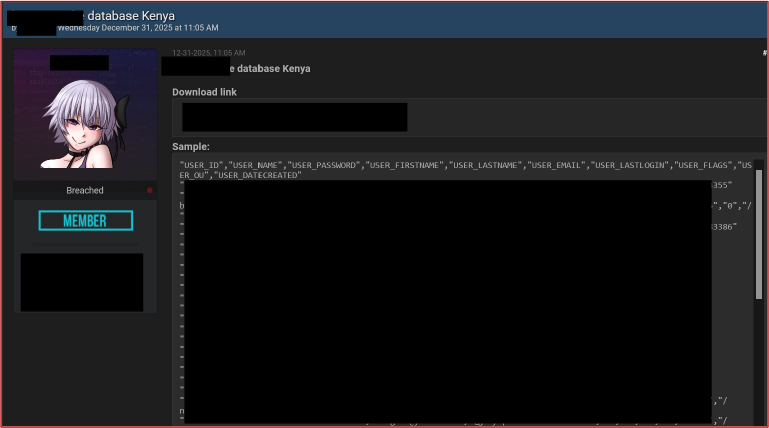
On 31 December 2025, a threat actor posted on a cybercrime forum claiming to possess a database associated with a state-linked electricity transmission operator within Kenya’s national energy infrastructure sector. The post described the dataset as containing user account–related information, including account identifiers and authentication-related fields typically associated with a web platform or newsletter management system. A small preview of the dataset structure was shared in the forum post to demonstrate the alleged access; however, no additional technical details regarding the source of the data or the method used to obtain it were disclosed. As a result, the authenticity and scope of the alleged dataset could not be independently verified at the time of analysis.
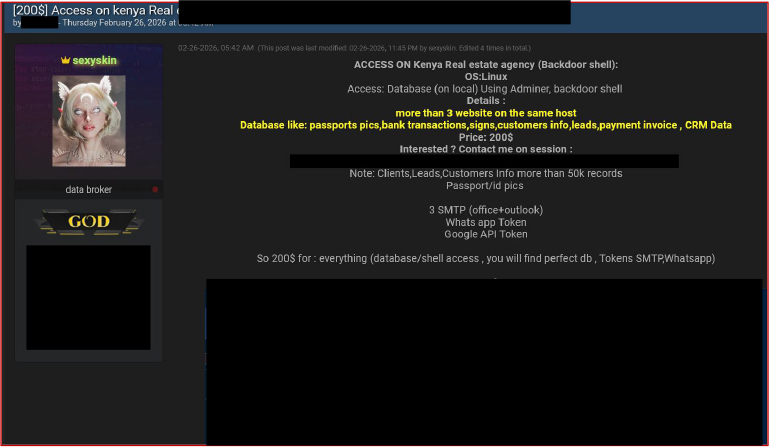
On 26 February 2026, a threat actor posted on a cybercrime forum advertising unauthorized access to a Kenya-based organization operating within the real estate sector. The listing offered backdoor shell access and local database access to a Linux server hosting multiple websites on shared infrastructure. According to the advertisement, the access could provide visibility into internal systems and associated databases, including customer and lead records, CRM data, payment invoices, transaction information, and identity document images, with the dataset reportedly containing more than 50,000 records. The post also referenced access to SMTP services and API tokens, which could potentially enable further exploitation of the compromised environment. The access was offered for approximately $200, and the listing included screenshots displaying database management interfaces and internal system panels, suggesting possible administrative-level access to backend systems.
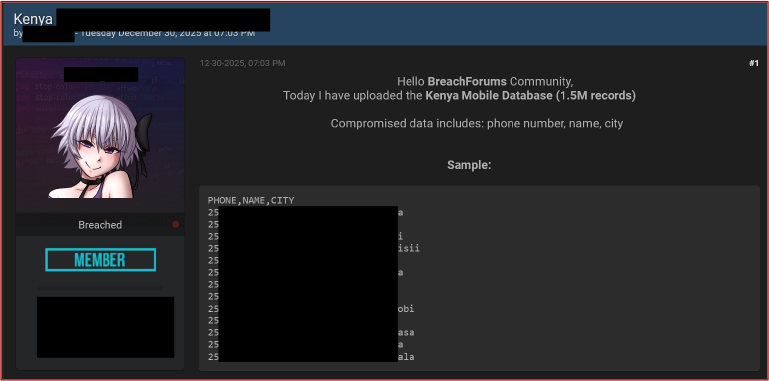
On 30 December 2025, a threat actor posted on an underground forum claiming to have uploaded a database containing approximately 1.5 million records of Kenyan mobile users. The dataset was described as including phone numbers, names, and city-level location information. A sample shared in the post showed records formatted as PHONE, NAME, CITY, with phone numbers beginning with Kenya’s international dialing code (+254) and entries referencing locations such as major urban centers within the country. The post did not disclose the original source of the dataset or the method used to obtain the data, leaving the origin and authenticity of the records unverified at the time of analysis.
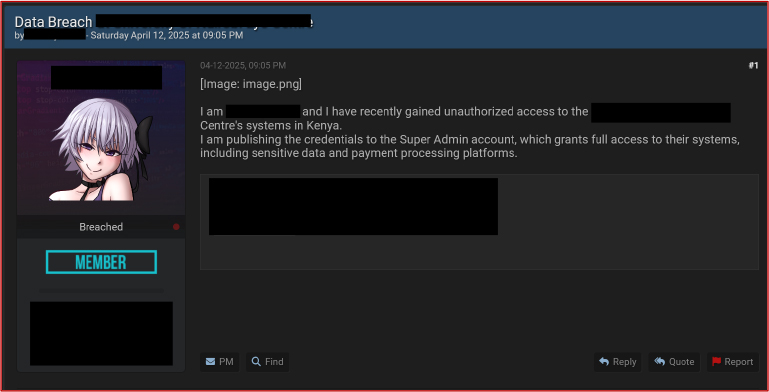
On 12 April 2025, a threat actor posted on an underground forum claiming to have gained unauthorized access to the systems of a medical and healthcare institution in Kenya. The actor stated that they possessed Super Admin account credentials, which could potentially provide full administrative access to the institution’s internal systems, including platforms that may manage operational data and payment processing services. The listing indicated that the administrative credentials were being shared or offered for sale, with additional details placed behind a credit-based access system on the forum. However, no verifiable proof of access or supporting technical evidence was publicly available, and the method used to obtain the alleged access was not disclosed, leaving the claim unverified at the time of analysis.
Discussions like this in underground Telegram groups and forums are significant in threat intelligence because they often act as early indicators of threat actor activity, attribution attempts, or reputation building within cybercriminal communities. Threat actors frequently use these spaces to claim responsibility for attacks, share leaked information, dox individuals, or discuss past operations, which helps researchers understand how attacks are perceived and propagated within underground ecosystems. Even when claims remain unverified, such conversations can reveal emerging actors, aliases, relationships between groups, or ongoing campaigns targeting specific regions such as Kenya. Monitoring these discussions provides contextual intelligence that helps analysts track narratives, identify potential future threats, and correlate chatter with real incidents, making underground communications an important component of threat landscape analysis and early-warning intelligence.
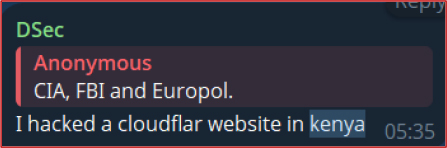
On 24 April 2026, a message posted in a private Telegram group indicated that the group DSec claimed responsibility for hacking a Cloudflare-protected website in Kenya. The post, shared under the alias “Anonymous,” referenced international agencies such as the CIA, the FBI, and Europol while stating that a website in Kenya had been compromised. However, the message did not include the targeted domain, technical details, or proof-of-compromise evidence, such as defacement links or leaked data. As a result, the claim currently remains unverified, and it may represent threat actor chatter or reputational messaging within underground Telegram communities. Further monitoring of Telegram channels and defacement or leak platforms is recommended to determine whether any supporting evidence or affected Kenyan domains emerge following the claim.
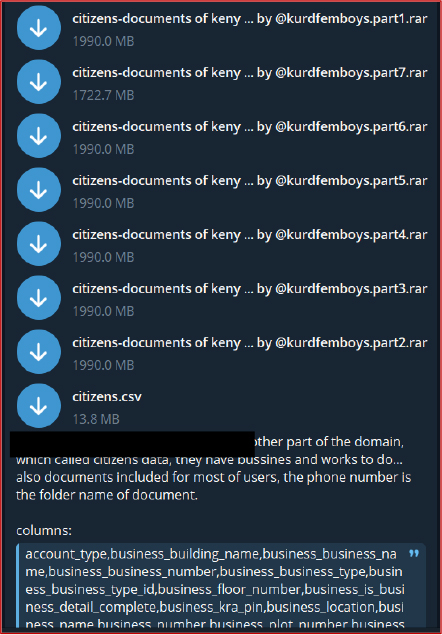
On 23 December 2025, a post on a Telegram channel claimed the release of a dataset allegedly containing Kenyan citizen and business registration data. The dump was attributed to a group identifying itself as “Femboooooyyyyyys” (also referenced as @kurdfemboys) and reportedly included structured records related to business registrations and associated user profiles. The dataset fields listed in the post include information, such as business registration details, company contact information, national ID references, phone numbers, email addresses, and document metadata. The post also stated that user documents were organized in folders named after phone numbers, suggesting that supporting documents may be associated with individual records. The dataset was reported to have been dumped on 13 December 2025, with the Telegram disclosure appearing on 23 December 2025. While the shared information suggests a large dataset containing personal and business-related records, the full dataset could not be independently verified during the analysis. If confirmed, the exposure could pose risks, including identity misuse, fraud, and targeted phishing campaigns affecting individuals and businesses in Kenya, and further monitoring is recommended to identify whether the data appears on additional leak platforms or underground forums.
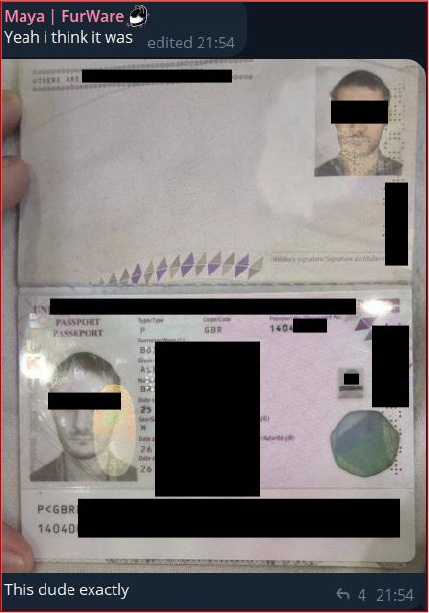
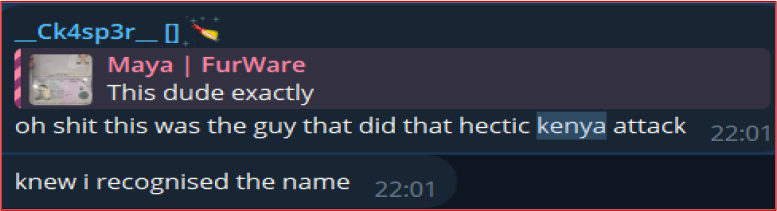
On 24 April 2026, a discussion observed in a Telegram channel referenced an individual allegedly linked to a previous cyberattack targeting Kenya, with participants stating that they recognized the name associated with the incident. The conversation mentioned the alias “Maya | FurWare” in connection with what users described as a “hectic Kenya attack.” Alongside the discussion, an image of a passport document was shared within the channel, apparently intended to identify or dox the individual being discussed. However, the authenticity of the passport image and the claims made in the Telegram conversation could not be independently verified, and no technical evidence, attack details, or infrastructure indicators were provided to substantiate the alleged involvement. The exchange appears to represent unverified chatter and attribution attempts within underground messaging channels, which are commonly used by threat actors or community members to speculate about responsibility for cyber incidents. Continuous monitoring of these channels is recommended to determine whether additional evidence, operational details, or corroborating indicators emerge linking the referenced alias to cyber activities targeting Kenyan entities.
On 03 July 2025, discussions observed within Telegram channels associated with the Keymous+ collective indicated ongoing Distributed Denial-of-Service (DDoS) operations targeting organizations across multiple regions, including North Africa and parts of the broader African digital ecosystem. The group has claimed involvement in hundreds of DDoS attacks against telecommunications providers, government portals, and financial platforms, focusing primarily on service disruption rather than clearly defined ideological objectives. Keymous+ reportedly operates through a dual operational structure, with one unit linked to data breach and leak activities and another dedicated to continuous DDoS campaigns, suggesting a coordinated approach combining disruption and data exposure. Discussions within underground communities also suggest a potential association with DDoS-for-hire infrastructure, which could enable scalable attacks against regional networks. The original Telegram post referencing the activity could not be displayed due to platform restrictions; however, the surrounding discussions highlight the growing DDoS threat landscape affecting African networks, including Kenya, where increased reliance on online government, financial, and telecom services makes these sectors particularly susceptible to disruption-based attacks.
The most prominent recent example of coordinated hacktivism occurred on November 17, 2025, when a group identifying itself as “PCP@Kenya” simultaneously defaced over 40 government websites.
Targets: High-profile platforms including the State House portal, and the ministries of Interior, Health, Education, ICT, and Tourism, as well as the Directorate of Criminal Investigations (DCI) and the Hustler Fund portal.
Tactics and Motives: The attackers replaced official government content with white supremacist and neo-Nazi propaganda, featuring slogans like “Access denied by PCP,” “White power worldwide,” and the coded reference “14:88 Heil Hitler”. While the government confirmed that no sensitive data was leaked, the motive appeared to be ideological propaganda and shock rather than financial gains.
Technical Vector: Preliminary assessments indicate the group exploited server-side vulnerabilities, specifically a pre-auth SQL injection vulnerability in FortiWeb (CVE-2025-25257), to inject code and redirect users to defaced pages.
Though often characterized by shock tactics rather than deep system penetration, hacktivist campaigns in Kenya have caused massive disruption to public services.
Service Unavailability: The November 2025 attack rendered critical services inaccessible for several hours, including immigration visa checks, loan applications, and county government portals.
Erosion of Trust: These breaches have significantly damaged the reputation of national sovereignty and eroded public confidence in the resilience of Kenya’s e-governance infrastructure.
Digital Activism vs. Harassment: Lawmakers have also reported facing an onslaught of digital activism following high-profile protests (such as those regarding the Finance Bill), which they claim sometimes borders on cyber harassment.
Analysis of publicly reported defacement records targeting Kenyan .co.ke domains between May 2025 and March 2026 indicates persistent opportunistic attacks conducted primarily by underground defacement actors and hacktivist groups. The majority of incidents involved mass defacement campaigns, proof-of-compromise file uploads, and index page replacements, suggesting exploitation of vulnerable CMS installations, shared hosting environments, and misconfigured servers rather than highly targeted intrusions.
During the observed period, over 120 defacement events affecting Kenyan domains were recorded in the dataset. The activity is dominated by a small number of recurring threat actors, with several conducting automated campaigns across dozens of websites within short timeframes.
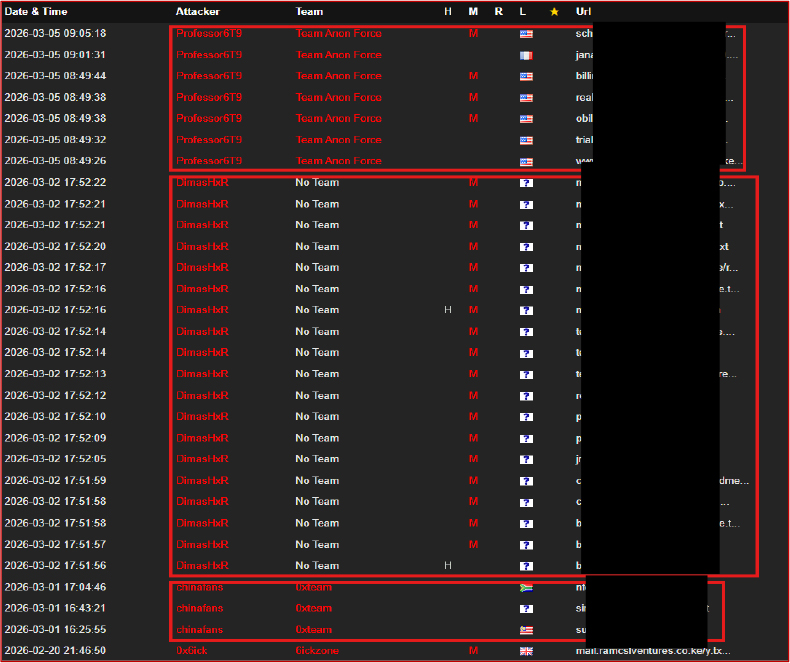
Screenshot: Public defacement archive showing multiple Kenyan.co.ke websites compromised between 2025 and 2026.
The actor chinafans, affiliated with the 0xteam hacking collective, was the most active entity targeting Kenyan infrastructure. The group conducted large-scale automated defacement campaigns, affecting approximately 60+ websites across multiple sectors, including media platforms, small businesses, and educational institutions.
The actor commonly deployed proof-of-compromise files named /0x.txt, which were uploaded to compromised web directories after gaining access. Several incidents also showed mass defacement and root-level access indicators, suggesting the attacker was able to modify server directories or exploit vulnerabilities, allowing deeper access to the hosting environment.
The pattern of activity indicates the likely exploitation of:
The scale and repetition of the attacks suggest automated vulnerability scanning followed by scripted exploitation.
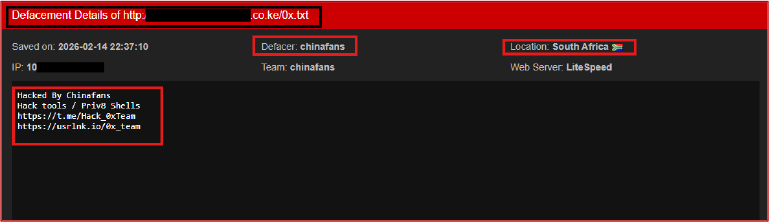
Screenshot: Example defaced Kenyan website attributed to the chinafans (0xteam) actor.
The actor DimasHxR was responsible for approximately 25–30 defacement incidents within the dataset. Their activity was characterized by rapid multi-domain defacements, often targeting mail servers and subdomains hosted under the same infrastructure.
Instead of traditional defacement pages, this actor typically uploaded files named /readme.txt or /a.html, which served as proof-of-access markers. In several cases, both root domains and associated subdomains were compromised simultaneously, indicating exploitation of shared hosting environments or centralized server vulnerabilities.
The attack pattern suggests the use of automated scripts targeting:
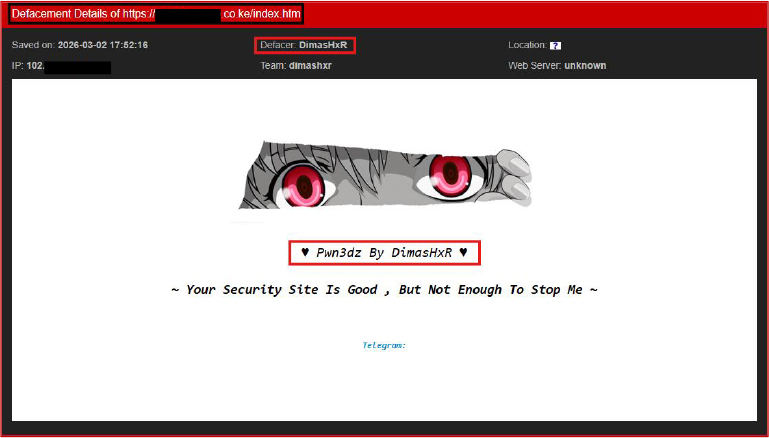
Screenshot: Example proof-of-compromise file uploaded by attackers to demonstrate successful access.
The actor Professor6T9, associated with Team Anon Force, conducted a coordinated defacement cluster in March 2026, targeting multiple subdomains belonging to the creativehaven.co.ke infrastructure. Within minutes, several subdomains were defaced using a signature file labeled Professor6T9.txt.
Approximately 6–7 websites were affected during this campaign. The rapid sequence of attacks indicates exploitation of centralized hosting or shared server access, allowing the attacker to modify multiple hosted services simultaneously.
This actor, linked to the BONDOWOSO BLACK HAT group, conducted full website compromises affecting several Kenyan domains. These incidents involved index page replacements and full-site defacements, suggesting the attacker had write access to web directories.
Although fewer incidents were recorded (around 6–7 sites), the presence of full hack indicators suggests deeper compromise compared to typical proof-of-file defacements.
Several additional actors were observed in isolated or small-scale incidents, including:
These actors typically conducted single-site or limited defacement clusters, indicating opportunistic exploitation rather than sustained campaigns. Such activity is commonly associated with underground defacement communities where attackers compromise vulnerable websites primarily to demonstrate access and gain visibility on public defacement archives. The attacks generally involved the upload of signature files or modification of index pages, with commonly observed indicators including:
The compromises likely exploited outdated WordPress installations, vulnerable CMS plugins or themes, unpatched PHP applications, misconfigured file permissions, and weaknesses in shared hosting environments, which are frequently targeted through automated scanning tools. Activity analysis indicates that a small number of actors account for the majority of incidents, with chinafans (0xteam) responsible for 60+ defacements, followed by DimasHxR with approximately 25–30 incidents, while Professor6T9 (Team Anon Force) and Mr Exsploit Wmc (BONDOWOSO BLACK HAT) were linked to around 6–7 incidents each. Other actors collectively accounted for 10–15 additional cases, bringing the total number of observed defacement incidents over 120. Overall, the activity suggests that automated exploitation dominates the defacement landscape targeting Kenyan web infrastructure, with shared hosting environments amplifying the impact by enabling multiple websites to be compromised through a single vulnerable server.
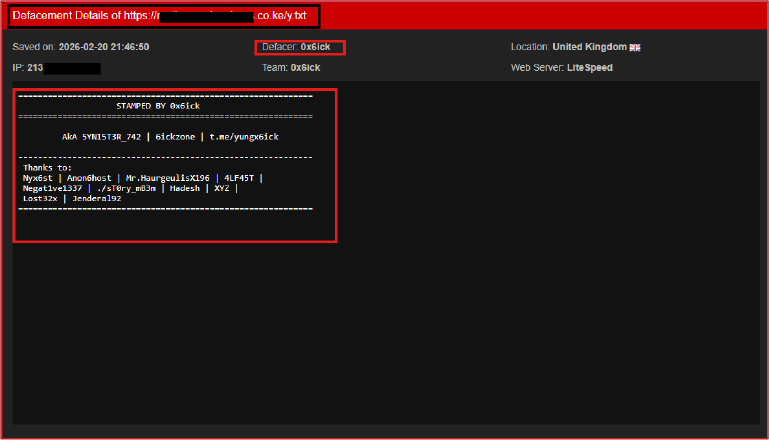
Screenshot: Example proof-of-compromise file uploaded by attackers to demonstrate successful access.
Social engineering has emerged as a critical initial access vector within the evolving East African cyber threat landscape, particularly as organizations strengthen perimeter defenses and patch externally exposed infrastructure. Rather than relying solely on technical vulnerabilities, threat actors increasingly exploit human behavior through phishing, spear-phishing, business email compromise (BEC), and impersonation campaigns designed to trick users into revealing credentials or executing malicious files. These operations often leverage compromised credentials harvested from infostealer malware, breached corporate email datasets, and browser session tokens circulating across underground forums and encrypted messaging platforms. The integration of artificial intelligence into phishing campaigns has further increased their effectiveness by enabling attackers to generate convincing phishing messages, mimic corporate communication styles, and conduct voice-based fraud using synthetic audio impersonating executives. In identity-centric digital environments where access to government platforms, telecom systems, and enterprise portals relies heavily on user authentication, compromised credentials function as direct access keys to internal systems, allowing attackers to bypass perimeter defenses and establish persistent access.
Associated Threat Actors Leveraging Social Engineering
TA505 (Financially Motivated Cybercrime Group)
FIN7 (Financially Motivated Intrusion Group)
Lazarus Group (North Korea-Linked Advanced Persistent Threat)
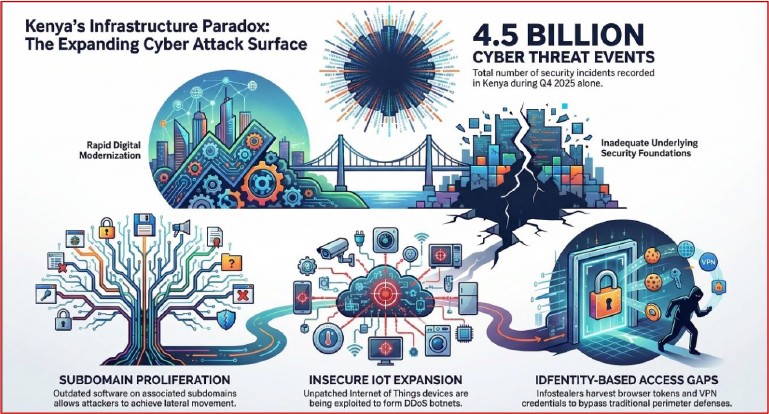
Kenya’s attack surface has expanded significantly due to rapid digital transformation, with the country recording over 4.5 billion cyber threat events in Q4 2025 alone. Much of this exposure is driven by organizations digitizing services faster than security frameworks are implemented, creating what analysts describe as an “Infrastructure Paradox” rapid modernization without adequate security foundations. Key drivers increasing the attack surface include:
Alongside the expanding attack surface, several high-impact technical vulnerabilities and outdated software deployments have been actively exploited to compromise Kenyan infrastructure. These vulnerabilities primarily enable remote code execution, credential theft, and network intrusion:
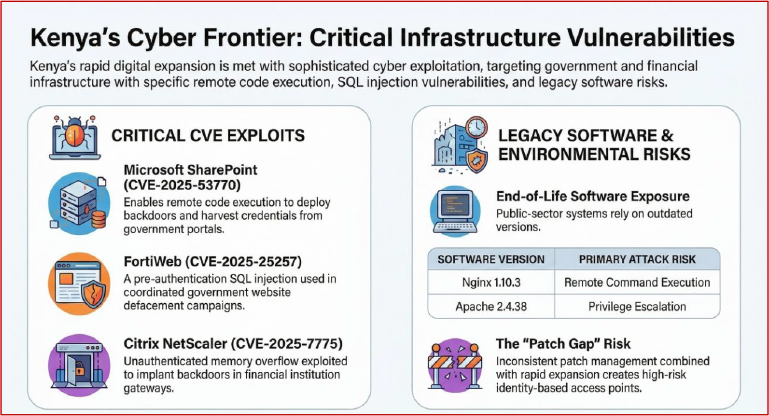
CVE-2025-53770 (Microsoft SharePoint): CVE-2025-53770 is a critical remote code execution vulnerability in Microsoft SharePoint caused by unsafe deserialization, allowing attackers to execute arbitrary code on vulnerable servers, deploy web shells, and extract authentication secrets used for further compromise of enterprise environments. Successful exploitation enables adversaries to harvest ASP.NET MachineKey values, maintain persistence, and conduct lateral movement within enterprise and government networks. Public reporting has linked exploitation campaigns to China-aligned threat actors, including Linen Typhoon, Violet Typhoon, and Storm-2603, which have leveraged the vulnerability to gain long-term access to SharePoint infrastructure and conduct follow-on intrusion activities.
Exploit / Reference (NVD): https://nvd.nist.gov/vuln/detail/CVE-2025-53770.
CVE-2025-25257 (Fortinet FortiWeb): CVE-2025-25257 is a pre-authentication SQL injection vulnerability affecting Fortinet FortiWeb appliances that allows unauthenticated attackers to execute arbitrary SQL queries through crafted HTTP requests, potentially resulting in authentication bypass and remote command execution. Exploitation of this vulnerability can allow adversaries to compromise web application firewall infrastructure, extract sensitive configuration data, and pivot into protected backend systems within enterprise environments. Although exploitation attempts were observed shortly after public disclosure, there is currently no publicly confirmed attribution linking the vulnerability to a specific advanced threat group, indicating that exploitation may be conducted opportunistically by multiple threat actors targeting exposed FortiWeb deployments.
Exploit / Reference (NVD): https://nvd.nist.gov/vuln/detail/CVE-2025-25257.
CVE-2025-7775 (Citrix NetScaler): CVE-2025-7775 is a memory corruption vulnerability affecting Citrix NetScaler ADC and Gateway appliances that can allow unauthenticated attackers to trigger a buffer overflow and execute arbitrary code on exposed gateway infrastructure. Successful exploitation may enable attackers to implant persistent backdoors, intercept authentication sessions, and compromise remote access gateways commonly used by financial institutions and enterprise networks. Security research has confirmed exploitation activity in the wild; however, there is currently no publicly confirmed attribution linking the vulnerability to a specific threat actor group, suggesting opportunistic exploitation by multiple intrusion operators targeting externally exposed NetScaler appliances.
Exploit / Reference (NVD): https://nvd.nist.gov/vuln/detail/CVE-2025-7775.
Legacy Software Exposure: Several public-sector systems continue to rely on outdated and end-of-life software versions, including Nginx 1.10.3 and Apache HTTP Server 2.4.38, which expose critical web infrastructure to multiple publicly documented vulnerabilities that can enable remote code execution, privilege escalation, and denial-of-service attacks. Older Nginx versions, such as 1.10.3, are affected by vulnerabilities, including CVE-2017-7529, which allows information disclosure through a crafted Range header request, potentially exposing sensitive memory data. Similarly, Apache HTTP Server 2.4.38 is affected by several vulnerabilities, including CVE-2019-0211, a local privilege escalation flaw that allows attackers with limited access to gain root privileges on vulnerable systems. Continued reliance on unsupported or outdated web server software significantly increases the attack surface, particularly when combined with weak patch management and exposed internet-facing services.
Exploit / Reference (NVD): https://nvd.nist.gov/vuln/detail/CVE-2017-7529, https://nvd.nist.gov/vuln/detail/CVE-2019-0211.
Together, these vulnerabilities, combined with rapid digital expansion and inconsistent patch management, create a high-risk environment where attackers can exploit both technical weaknesses and identity-based access points to compromise critical systems across Kenya’s digital ecosystem.
Successful cyberattacks targeting Kenyan organizations and digital infrastructure can have significant consequences for public services, national stability, and citizen data security:
Several high-visibility events and structural developments scheduled throughout 2026 present elevated opportunities for cyber threat actors seeking disruption, espionage, or financial gain. These events concentrate government officials, technology providers, financial institutions, and critical infrastructure stakeholders, making them attractive targets for cyber operations ranging from espionage campaigns to disruptive attacks such as ransomware and distributed denial-of-service (DDoS).
Large-scale technology and cybersecurity conferences scheduled in Nairobi and Mombasa represent high-profile environments where threat actors may attempt to disrupt proceedings, conduct espionage, or compromise participating organizations.
Key events include:
Kenya’s continued digital government transformation creates a sustained cyber risk environment as new platforms and services are deployed.
Key developments include:
Kenya’s highly digitized financial ecosystem remains a persistent target due to the high volume of daily transactions and the central role of mobile money services.
Key risk areas include:
Kenya’s tourism and travel infrastructure represent additional high-value targets due to their economic importance and reliance on digital booking and payment systems.
Key exposure periods include:
High-profile political and economic summits scheduled in the region also present potential cyber-attack opportunities due to the concentration of influential stakeholders.
Key event:
Primary Cyber Threats Anticipated in 2026
The following attack types are assessed as the most likely threats during these periods:
Assessment:
The convergence of large technology conferences, expanding digital government infrastructure, and high-volume financial platforms in 2026 significantly increases the region’s cyber risk exposure. Threat actors are likely to exploit these high-visibility events and digital expansion initiatives to conduct disruptive attacks, financial fraud operations, and intelligence-gathering campaigns.
The analysis indicates that Kenya’s digital ecosystem is becoming an increasingly attractive target for cybercriminal groups, hacktivists, and opportunistic attackers. Threat activity observed across ransomware leak portals, underground forums, and Telegram channels highlights sustained interest in Kenyan government services, financial institutions, telecommunications infrastructure, and critical national sectors. While several publicly observed breach claims remain unverified, the frequency of listings, credential databases, and underground discussions suggests a growing level of reconnaissance, access trading, and attempted intrusion activity directed at the country’s expanding digital infrastructure.
As Kenya accelerates digital government services, mobile financial platforms, and cloud adoption, the potential impact of cyber incidents on public service delivery, citizen data protection, and economic stability will continue to increase. Addressing these risks requires a coordinated cybersecurity approach combining stronger governance frameworks, proactive vulnerability management, continuous threat intelligence monitoring, and improved incident response capabilities across both government and private sectors. Strengthening these capabilities will be critical to ensuring that Kenya’s digital transformation is supported by resilient and secure cyber infrastructure.
To mitigate the growing cyber threat landscape targeting Kenya’s digital ecosystem, including ransomware activity, credential leaks, defacement campaigns, and infrastructure, targeting a layered approach combining strategic governance, operational coordination, and tactical security controls is essential.
